
Card manipulation is more than just entertainment—it’s an art form that blends dexterity, timing, and showmanship. Whether you're aiming to dazzle friends at a party or build a foundation for magic performance, mastering basic to advanced card techniques opens doors to endless possibilities. With consistent practice and the right approach, anyone can develop impressive card skills. This guide walks you through essential moves, training strategies, and professional insights to elevate your abilities.
1. Start with the Essentials: Grip and Control
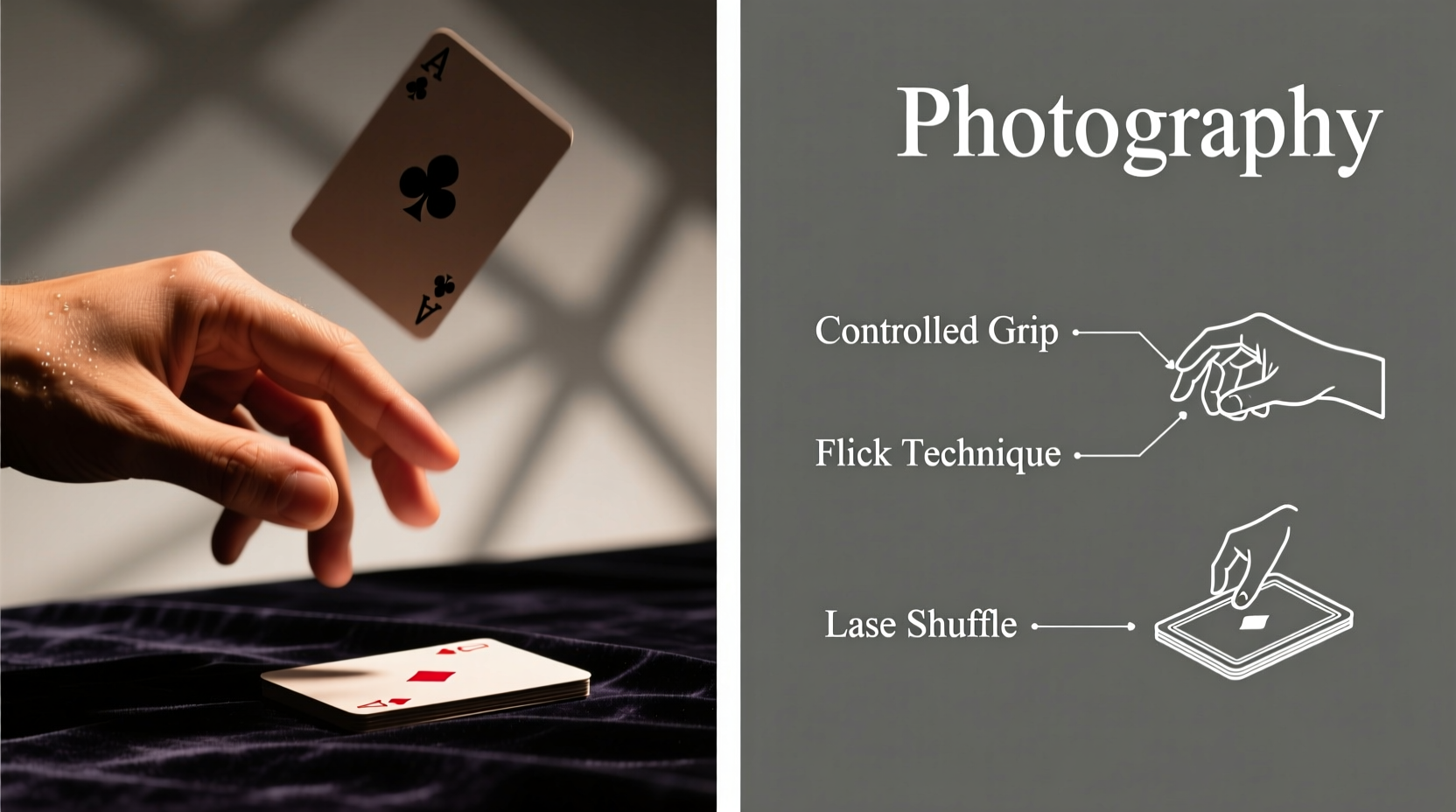
Before attempting flashy flourishes or illusions, you must establish control over the deck. The way you hold and handle cards determines your success in every subsequent technique. Begin with two fundamental grips:
- The Biddle Grip: Used in card cheating and magic, this grip allows subtle control of specific cards. Place the deck in your dominant hand, with your thumb on one long edge and fingers on the opposite. Apply slight pressure to control the top or bottom card.
- The Mechanics Grip: Ideal for shuffling and dealing, this grip offers stability. Hold the deck between your palm and fingers, using your thumb to release cards one by one during fanning or spreading.
2. Master Foundational Shuffles
Shuffling isn’t just about mixing cards—it’s a display of skill when done smoothly. Learn these three core shuffles in sequence:
- Riffle Shuffle: Split the deck into two halves. Curve the outer edges with your thumbs and release the cards so they interlace. Let them fall into a single pile. Beginners often drop cards unevenly; focus on symmetry and rhythm.
- Faro Shuffle: A perfect weave shuffle where cards alternate exactly one by one. It requires precision and is used in advanced magic. Practice with fewer cards (e.g., half a deck) to build accuracy.
- Overhand Shuffle: Simpler but effective for false shuffles (appearing to mix cards while maintaining order). Use short cuts and controlled drops to retain sequences secretly.
“Controlled shuffling separates amateurs from performers. When your shuffle looks natural but preserves order, you’ve unlocked real power.” — Daniel Reeves, Professional Card Magician
3. Build Dexterity with Basic Sleights
Sleight of hand forms the backbone of card magic. These techniques are subtle, requiring repetition to appear effortless. Begin with these foundational moves:
| Technique | Purpose | Practice Tip |
|---|---|---|
| Double Lift | Show the top card while secretly revealing the second | Use mirror feedback to ensure both cards move as one |
| False Cut | Pretend to cut the deck while keeping order intact | Rehearse in front of others to test believability |
| Palming | Hide a card in your hand without detection | Start with smaller decks to reduce strain |
| Force | Make a spectator “freely choose” a predetermined card | Pair with eye contact and verbal suggestion |
Each sleight demands patience. Spend 10–15 minutes daily on one move until it feels invisible. Speed comes later—clean execution comes first.
4. Step-by-Step Guide to Performing Your First Routine
Once you've built individual skills, combine them into a short, engaging routine. Follow this timeline to create your first performance piece:
- Week 1–2: Select a Trick – Choose a simple effect like “The Ambitious Card,” where a chosen card repeatedly rises to the top. It uses double lifts and palming, making it ideal for beginners.
- Week 3: Isolate Moves – Break down the trick into steps. Practice each sleight separately until flawless.
- Week 4: Link Techniques Smoothly – Run through the entire sequence slowly. Focus on transitions and hand positioning.
- Week 5: Add Presentation – Develop a script. Use misdirection (“Watch the red cards…”) and natural gestures to divert attention from secret moves.
- Week 6: Perform Live – Try it on a friend or record yourself. Observe where attention lags or mechanics become visible.
5. Avoid Common Pitfalls
Many aspiring card handlers abandon practice due to preventable errors. Recognize and avoid these traps:
- Rushing progression: Skipping fundamentals leads to shaky technique. Mastery is cumulative.
- Neglecting misdirection: Even perfect sleights fail if the audience watches the wrong move. Train your eyes and speech to guide attention.
- Using worn decks: Frayed or sticky cards hinder smooth execution. Replace decks every 2–3 weeks with frequent use.
- Practicing only alone: Feedback reveals blind spots. Perform for others early, even if imperfect.
Real Example: From Novice to Confident Performer
Jessica, a college student with no prior experience, began practicing card techniques after watching a street magician. She committed to 20 minutes a day. For the first month, she focused solely on the riffle shuffle and double lift. By week six, she combined them into a mini-routine where a signed card returned to the top three times. At a campus talent show, her polished delivery earned applause—not because her moves were flawless, but because her confidence sold the illusion. Today, she performs at local cafes, crediting consistency over natural talent.
Essential Checklist for Daily Practice
- Warm up hands (stretch fingers, rotate wrists)
- Practice one shuffle for 10 minutes
- Drill one sleight of hand move (e.g., palm or false cut)
- Run through a full trick or flourish sequence
- Review video recording or mirror work for flaws
- Note progress in a journal (what improved, what needs work)
FAQ: Common Questions About Learning Card Techniques
How long does it take to master basic card skills?
With 15–20 minutes of daily practice, most learners can perform convincing shuffles and simple tricks within 6–8 weeks. Mastery of intermediate techniques (like faro shuffles or advanced palms) typically takes 6 months to a year of consistent effort.
Do I need special cards to start?
No. Standard poker-sized playing cards (bridge or poker size) work well. Many professionals prefer KEM or Bicycle Rider Back decks for their durability and smooth finish. Avoid oversized or novelty cards when learning—they disrupt muscle memory.
Can I learn card skills without knowing magic?
Absolutely. Cardistry (card flourishing) focuses purely on visual dexterity, while card magic emphasizes deception. You can excel in either—or both. Start with what excites you most.
Conclusion: Turn Skill Into Showmanship
Mastering card techniques isn't about instant perfection—it's about incremental progress, mindful repetition, and the courage to perform. Every expert once struggled with a clumsy shuffle or dropped palm. What sets them apart is persistence. Now that you have the tools, structure, and strategies, the next step is action. Pick up a deck today. Practice one move. Repeat it tomorrow. In weeks, you’ll not only impress others—you’ll surprise yourself.




 浙公网安备
33010002000092号
浙公网安备
33010002000092号 浙B2-20120091-4
Comments
No comments yet. Why don't you start the discussion?