
A well-fitted watch should feel like an extension of your wrist—not a distraction. Fossil watches blend timeless design with modern craftsmanship, but even the finest timepiece can fall short if the strap doesn’t sit comfortably. Whether you're wearing a stainless steel bracelet, a leather band, or a silicone sports strap, proper adjustment ensures durability, enhances style, and maximizes daily wearability. This guide walks you through every step of achieving a flawless fit tailored to your wrist, with practical tips, expert insights, and real-world examples.
Understanding Your Fossil Watch Strap Type
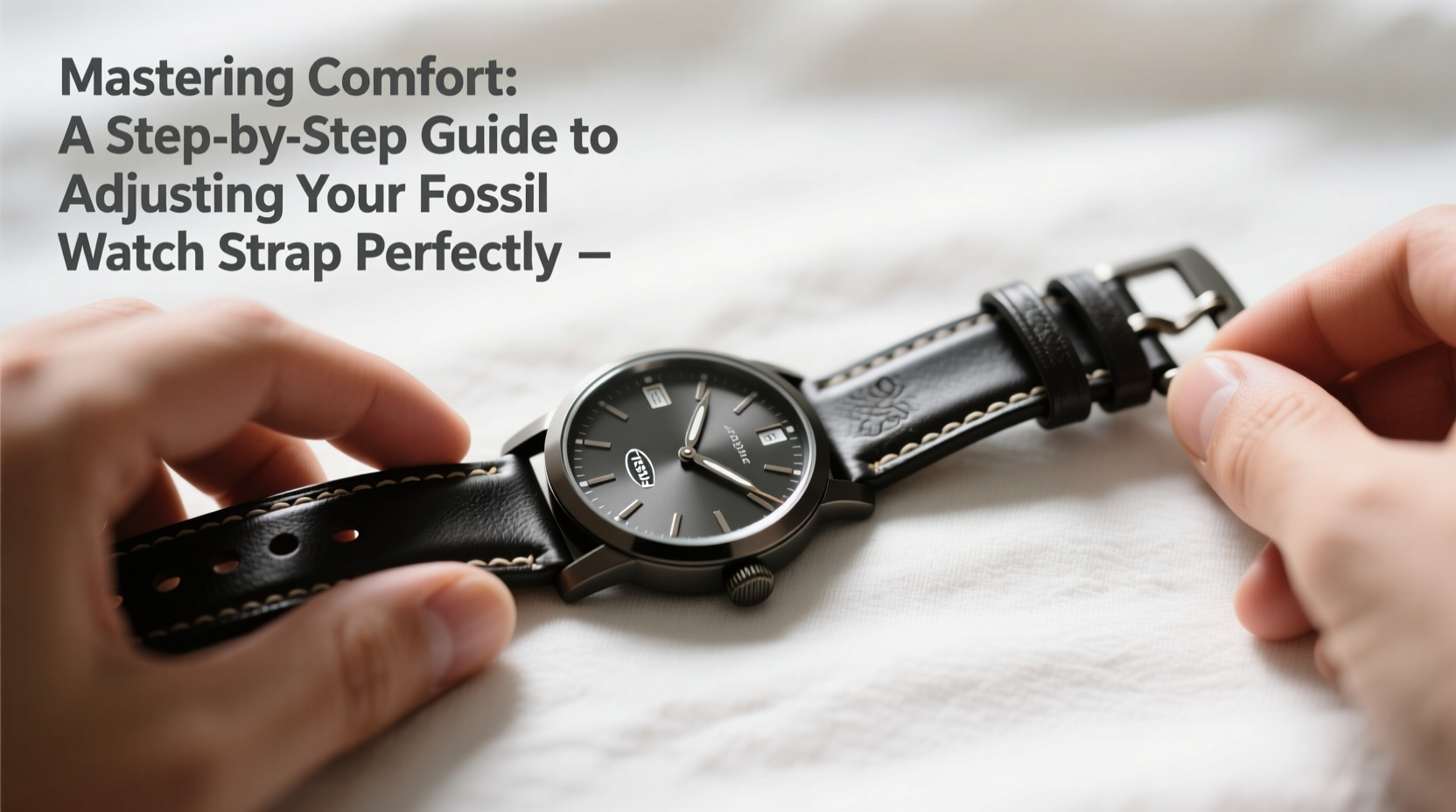
Fossil offers a variety of strap styles, each requiring a different approach to adjustment. Knowing your strap type is the first step toward precision fitting.
| Strap Type | Adjustment Method | Best For | Lifespan Expectancy* |
|---|---|---|---|
| Stainless Steel Bracelet | Link removal/addition using pins or screws | Formal occasions, office wear | 5–10 years |
| Leather Band | Hole repositioning or buckle replacement | Casual or dress settings | 1–3 years (with care) |
| Silicone/Rubber | Trimming excess or using tool-free clasp | Sports, swimming, outdoor use | 2–4 years |
| Mesh Milanese | Sliding clasp or magnetic closure | All-day wear, sensitive wrists | 4–7 years |
*Lifespan varies based on usage and maintenance.
Step-by-Step Guide to Adjusting Your Fossil Watch Strap
Follow this systematic process to achieve a secure, comfortable fit—regardless of material.
- Measure Your Wrist
Use a soft measuring tape around the widest part of your wrist bone. Record the measurement in millimeters. Most Fossil straps come in standard sizes (6.5–8.5 inches), so knowing your exact size prevents over-tightening or slippage. - Determine Desired Fit
Decide how snug the watch should sit. A general rule: you should be able to slide one finger between the strap and your skin. Too tight restricts circulation; too loose causes movement and potential scratches. - Gather Tools
Depending on the strap:- Steel bracelets: Pin removal tool, small hammer, bench block or soft cloth
- Leather/silicone: Hole punch (for leather), sharp scissors (for silicone)
- Miscellaneous: Ruler, tweezers, magnifying glass
- Adjust Metal Bracelets
- Lay the watch on a soft surface to avoid scratches.
- Identify removable links on either side of the clasp.
- Use the pin tool to gently push out the pins. Note: Some models have arrows engraved indicating direction.
- Remove an equal number of links from both sides for symmetry.
- Reconnect remaining links and test fit.
- Modify Leather or Silicone Straps
If the existing holes don’t align:- For leather: Mark new hole position, use a rotary punch or awl to create a clean opening. Seal edges with leather conditioner.
- For silicone: Trim excess length evenly at the end opposite the buckle, ensuring no jagged edges remain.
- Test and Refine
Wear the watch for 10–15 minutes. Check for pinching, sliding, or pressure points. Make micro-adjustments as needed.
Common Mistakes to Avoid
Even experienced users make errors during strap adjustment. Steering clear of these pitfalls preserves both comfort and longevity.
- Removing too many links at once – It’s easier to remove than add back. Work incrementally.
- Using excessive force on pins – Can bend or break internal mechanisms. Apply steady, controlled pressure.
- Ignoring seasonal changes – Skin expands in heat, contracts in cold. You may need looser fits in summer.
- Skipping post-adjustment inspection – Ensure all pins are fully seated and lugs are secure.
“Precision in strap adjustment isn’t just about aesthetics—it affects chronometric performance. A loose watch shifts during motion, potentially interfering with automatic winding.” — Daniel Reyes, Horology Technician & Watch Restoration Specialist
Real-Life Example: Sarah’s Office-to-Gym Transition
Sarah, a marketing executive and fitness enthusiast, wore her Fossil Grant Chronograph daily. While it looked sharp in meetings, the steel bracelet slipped during spin class and dug into her wrist during weight training. After reading about adjustable mesh bands, she swapped to a Fossil Milanese loop strap. Using the sliding mechanism, she customized the fit within seconds—tight enough for workouts, sleek enough for client calls. No tools required. Within weeks, she reported improved comfort and fewer distractions throughout her day.
This shift highlights a key principle: versatility matters. The right strap—and correct adjustment—can adapt to lifestyle demands without sacrificing elegance.
Checklist: Perfect Fit in 7 Steps
- ✅ Measure wrist circumference accurately
- ✅ Identify strap type and adjustment method
- ✅ Prepare appropriate tools
- ✅ Remove links or modify holes gradually
- ✅ Reassemble securely and inspect connections
- ✅ Test fit for 10+ minutes
- ✅ Clean and condition strap after adjustment
Frequently Asked Questions
Can I adjust my Fossil watch strap myself, or should I go to a jeweler?
You can adjust most Fossil straps at home with basic tools, especially leather or tool-free metal bands. However, if you’re uncomfortable working with spring bars or precision pins, visiting a professional avoids damage. Many jewelers offer free adjustments with purchase.
How often should I resize my watch strap?
Only when necessary—typically when switching seasons or experiencing weight fluctuations. Over-adjusting weakens materials, especially leather stitching or metal link joints. Aim to get it right the first time.
My Fossil strap feels loose after a few months. Is that normal?
Slight stretching occurs in leather and rubber straps due to natural wear. Metal bracelets may loosen if pins wear down. Regular inspections help catch issues early. Consider replacing worn components before they fail unexpectedly.
Final Thoughts: Comfort Is a Craft
A perfectly adjusted Fossil watch does more than tell time—it reflects attention to detail, personal care, and intentionality. Taking the time to fine-tune the fit transforms a beautiful accessory into a seamless part of your routine. Whether you're refining a gift, restoring a vintage model, or upgrading your daily driver, the effort pays off in comfort, confidence, and long-term satisfaction.




 浙公网安备
33010002000092号
浙公网安备
33010002000092号 浙B2-20120091-4
Comments
No comments yet. Why don't you start the discussion?