
In a world where every second counts, the ability to read your digital watch quickly and accurately can make a real difference. Whether you're timing a workout, managing a tight schedule, or simply staying punctual, digital watches offer precision and functionality. Yet many people overlook the efficiency of their time-checking habits. With the right techniques, reading a digital display becomes nearly instantaneous—almost subconscious. This guide breaks down practical methods, common pitfalls, and expert-backed strategies to help you master digital watch reading in any situation.
The Importance of Instant Time Awareness
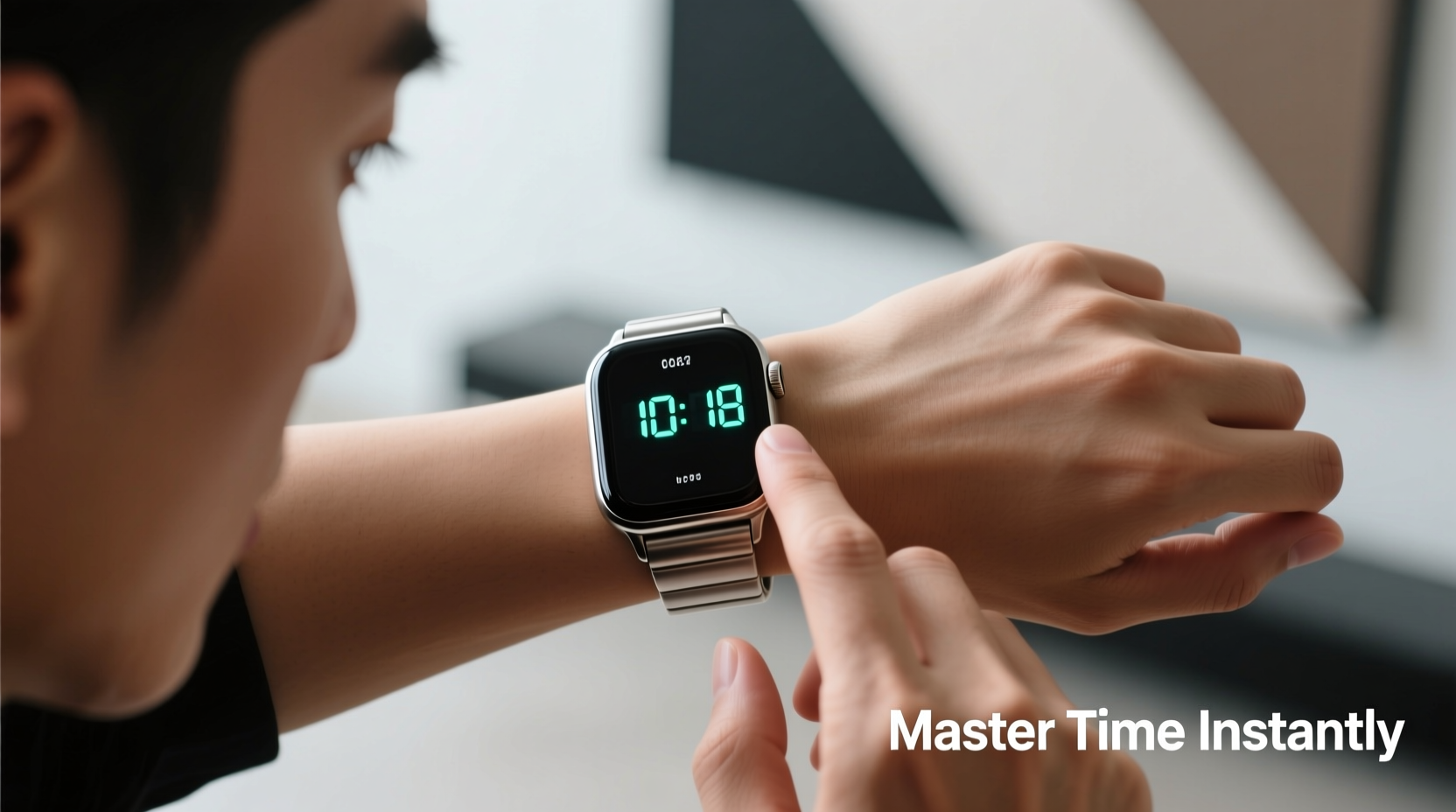
Digital watches are more than just tools—they’re extensions of our daily rhythm. Unlike analog faces that require interpretation of hand positions, digital displays show time numerically, eliminating guesswork. However, even this straightforward format can be misread under pressure or in motion. Athletes checking split times, professionals glancing during meetings, or travelers coordinating across time zones all benefit from rapid, accurate time recognition.
Speed matters. A study by the Human Factors and Ergonomics Society found that reducing visual processing time—even by half a second—can improve decision-making in high-pressure environments. Mastering digital watch reading isn’t about learning to tell time; it’s about minimizing cognitive load so you can act faster and with confidence.
Understanding Digital Watch Layouts
Digital watches vary widely in design, but most follow predictable patterns. Recognizing these layouts helps train your brain to extract time information instantly. Common configurations include:
- HH:MM – Standard 12- or 24-hour format (e.g., 3:45 or 15:45)
- HH:MM:SS – Includes seconds, often used in sports or precise scheduling
- AM/PM indicator – Critical when using 12-hour mode to avoid confusion
- Day and date – Positioned above or below the time, usually in smaller font
- Mode indicators – Alarms, stopwatch, chronograph, or backlight status icons
Familiarity with your specific model’s layout is essential. Spend five minutes studying how numbers, colons, and symbols are arranged. Over time, your eyes will begin to recognize the pattern as a whole rather than parsing each digit individually—a phenomenon known as “chunking” in cognitive psychology.
“Just like reading words instead of letters, experienced users see the time as a single visual unit.” — Dr. Alan Reyes, Cognitive Performance Researcher
Step-by-Step Guide to Faster Digital Time Reading
Improving speed doesn’t require special equipment—just deliberate practice. Follow this six-step process to develop near-instant recognition:
- Choose Your Dominant Viewing Hand: Most people check their non-dominant wrist. If you’re right-handed, your left wrist is likely your go-to. Ensure the watch face is oriented correctly for quick glances.
- Adjust Display Brightness: Use automatic brightness or set it to a level visible in both sunlight and dim light. A poorly lit screen forces slower processing.
- Minimize Clutter: Disable unnecessary notifications or secondary data if they obscure the time. Keep the primary display clean.
- Practice Glance Recognition: Set a timer for 3 seconds. Look at your watch only once during that window and recall the exact time. Repeat 10 times daily.
- Train Peripheral Awareness: Hold your arm steady and focus straight ahead. Try to read the time using only your peripheral vision. This builds situational awareness useful during conversations or activities.
- Use Muscle Memory: Rotate your wrist at the same angle each time. Consistency reduces hesitation and improves accuracy.
Common Mistakes and How to Avoid Them
Even experienced users fall into traps that slow down time reading. Below are frequent errors and their solutions:
| Mistake | Why It Slows You Down | Solution |
|---|---|---|
| Checking upside-down | Forces mental rotation of digits | Wear watch inside-out or adjust orientation setting if available |
| Over-relying on backlight | Delays visibility in bright conditions | Use reflective screens or high-contrast displays |
| Reading seconds first | Distracts from hour/minute priority | Focus on HH:MM block; treat seconds as optional |
| Ignoring AM/PM | Causes scheduling errors | Switch to 24-hour format or consciously verify period |
Real-World Application: A Runner’s Morning Routine
Consider Maria, a competitive runner who uses her digital sports watch to track intervals during training. Before mastering efficient time reading, she’d lose focus mid-stride, fumbling to interpret lap splits. After applying targeted techniques—orienting her watch for upward glance, disabling non-essential widgets, and practicing rapid recognition—her transition from running to reading dropped from 1.2 seconds to under 0.4 seconds.
This improvement had ripple effects: better pacing, reduced mental fatigue, and more consistent performance. Her coach noted that her ability to internalize timing cues translated into sharper race-day decisions. The change wasn’t in the device—it was in how she interacted with it.
Checklist: Optimize Your Digital Watch for Speed
Use this checklist to ensure your watch setup supports instant time checks:
- ✅ Set display to 24-hour format for clarity
- ✅ Adjust contrast and brightness for your environment
- ✅ Position watch securely on wrist for consistent viewing angle
- ✅ Disable distracting animations or pop-ups
- ✅ Practice daily glance drills (10x per day for one week)
- ✅ Clean screen regularly to prevent smudges from obscuring digits
- ✅ Choose a font style with clear number differentiation (e.g., no confusing 1s and 7s)
Frequently Asked Questions
How long does it take to master fast digital watch reading?
With consistent daily practice, most users report noticeable improvement within 3–5 days. Full mastery—where time recognition feels automatic—typically takes 10 to 14 days of active training.
Is 12-hour or 24-hour format better for quick reading?
The 24-hour format reduces ambiguity and is preferred in aviation, medicine, and military fields. For global coordination or shift work, it’s superior. However, if you're accustomed to AM/PM, stick with what feels natural—but always double-check the period indicator.
Can I improve speed without changing my current watch?
Absolutely. Most gains come from technique, not technology. Focus on posture, lighting, and mental conditioning. Upgrading hardware may help, but skill development delivers immediate returns.
Conclusion: Turn Seconds Into Savings
Time isn't just measured in hours and minutes—it's also spent in the small moments we retrieve it. By refining how you read your digital watch, you reclaim fractions of seconds that add up over days, weeks, and years. These micro-efficiencies compound into greater productivity, sharper focus, and improved confidence in time-sensitive situations.
Start today. Adjust your watch, run through the checklist, and commit to one week of deliberate practice. Soon, checking the time won’t be an action—it’ll be an instinct.




 浙公网安备
33010002000092号
浙公网安备
33010002000092号 浙B2-20120091-4
Comments
No comments yet. Why don't you start the discussion?