
FaceTime has become an essential tool for staying connected—whether you're catching up with family, collaborating with colleagues, or hosting virtual events. With tight integration across iPhones, iPads, Macs, and even Apple Watches, Apple’s video calling platform offers a smooth, secure, and high-quality experience. Yet many users only scratch the surface of what it can do. This guide walks you through everything from basic setup to advanced features, ensuring every call is clear, reliable, and professional.
Getting Started: Setting Up FaceTime Correctly
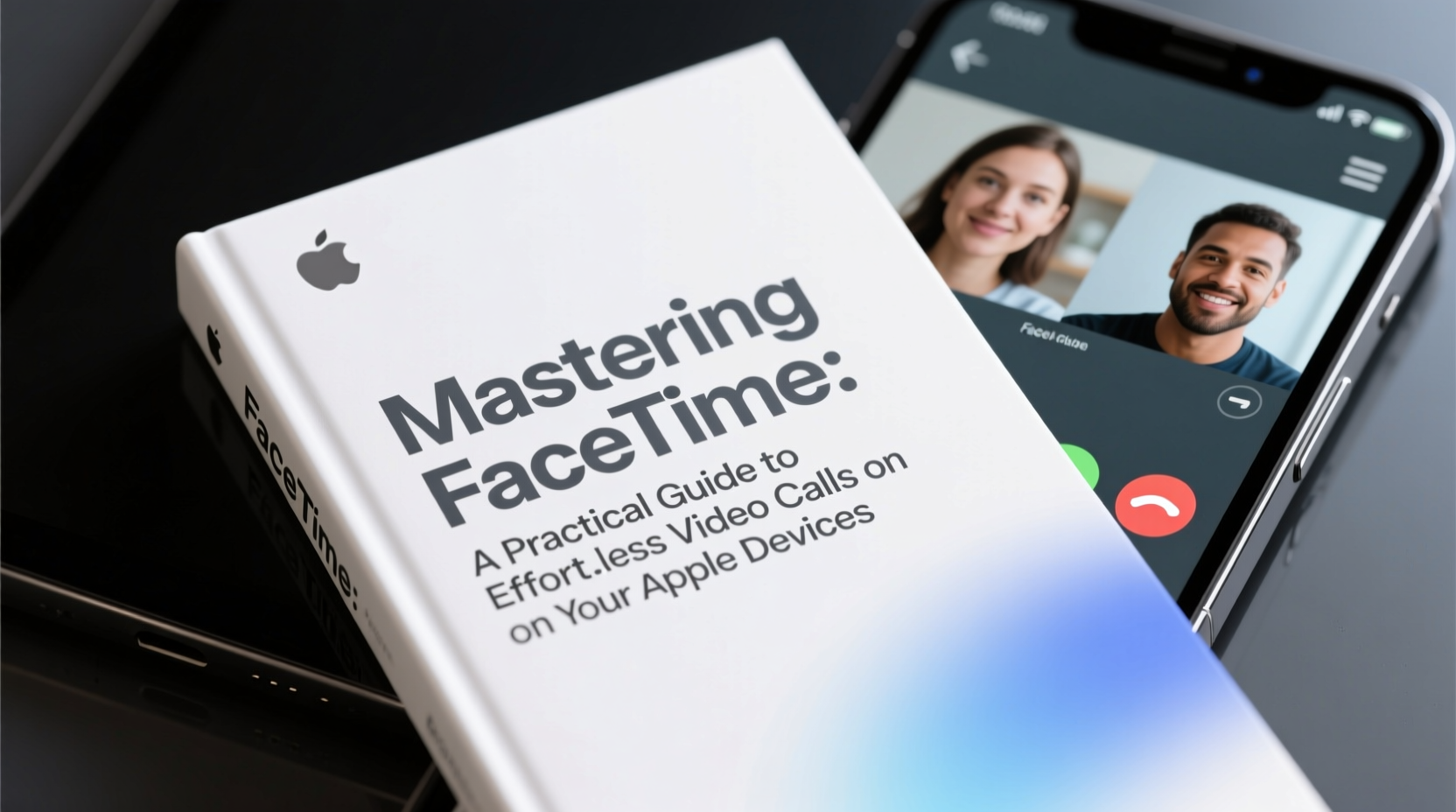
Before making your first call, ensure FaceTime is properly configured. Open the Settings app on your iPhone or iPad, tap FaceTime, and toggle it on. On a Mac, open the FaceTime app and sign in with your Apple ID. The system will automatically sync your phone number and email addresses associated with your account.
To be reachable via FaceTime, make sure your contact information is verified. You can receive calls at multiple identifiers—your phone number, iCloud email, or additional emails linked to your Apple ID. Go to Settings > FaceTime > \"You Can Be Reached By FaceTime At\" to manage which addresses are active.
If FaceTime fails to activate, check your internet connection and ensure your device date and time settings are set to automatic. Carrier support may also affect activation on cellular models, especially when traveling internationally.
How to Make and Receive Calls Across Devices
Initiating a FaceTime call is straightforward. Open the Phone, Messages, or Contacts app, find the person you want to call, and tap the FaceTime icon (a camera inside a speech bubble). You can start audio-only or video calls directly from these apps. On Mac, click the video or audio button in the FaceTime app or within a conversation in Messages.
One of FaceTime’s strengths is handoff capability. Start a call on your iPhone while commuting, then seamlessly transfer it to your iPad when you get home. To switch devices mid-call, use Continuity Camera: swipe up from the bottom of the screen on your iPhone during a call and select your nearby Mac or iPad as the new camera source.
“FaceTime’s ecosystem integration means fewer dropped calls and faster connections than third-party apps, especially in low-bandwidth environments.” — David Lin, Senior UX Analyst at TechFlow Insights
Step-by-Step: Joining a FaceTime Call from a Link
Apple allows users to create shareable FaceTime links—a major advantage for group meetings with non-Apple users. Here's how:
- Open FaceTime on your Mac or iOS device.
- Select “Create Link” (available in the recent calls list).
- Name the link (e.g., “Team Sync – Friday”)
- Copy and share the URL via Messages, email, or calendar invites.
- Participants can join using any modern web browser—even Windows or Android users.
This feature bridges the gap between Apple’s closed ecosystem and cross-platform accessibility, making it ideal for hybrid teams and inclusive social gatherings.
Optimizing Video and Audio Quality
High-definition video and crisp audio define FaceTime’s standard, but performance depends on both hardware and environment. Newer iPhones and iPads support 1080p HD video, while older models cap at 720p. Ensure your Wi-Fi signal is strong; if not, switch to a 5GHz network band for reduced interference.
| Device Type | Max Video Resolution | Audio Features |
|---|---|---|
| iPhone 12 and later | 1080p HD | Spatial Audio, Voice Isolation |
| iPad Pro (M1 and later) | 1080p HD | Center Stage, Wide Spectrum Noise Cancellation |
| MacBook Air M1/M2 | 720p (up to 1080p via external cam) | Studio-quality mics, Dynamic Range Control |
| Older iPhones (pre-11) | 720p HD | Standard noise suppression |
Use Portrait mode during video calls to blur the background and keep focus on you. Enable it by tapping the effects button (star icon) during a call. For better lighting, position yourself facing a window or use soft ambient lights in front—not behind—you.
Advanced Features That Most Users Miss
Beyond simple one-on-one calls, FaceTime includes underused tools that elevate communication:
- SharePlay: Watch videos, listen to music, or share your screen synchronously during a call. Launch Apple TV, Spotify, or Safari, and tap the Share button to invite others into the experience.
- Reactions: Respond with taps, hearts, or fireworks by double-tapping the screen during a video call.
- Grid View: On Mac, switch to tile layout to see everyone equally during group calls—ideal for team standups.
- Focus Mode Integration: Set your status to “Do Not Disturb” or “Work” to prevent incoming personal calls during dedicated hours.
For professionals, scheduling a FaceTime call through Calendar ensures reminders go out automatically. Add a FaceTime link directly to an event, and attendees receive instant access without extra coordination.
Mini Case Study: Remote Team Collaboration
A small design studio in Portland transitioned to remote work in 2023. Initially relying on third-party conferencing tools, they experienced frequent lag and login issues with freelancers using different platforms. After switching to scheduled FaceTime calls with SharePlay enabled, they streamlined feedback sessions. Designers shared mockups live via screen sharing while clients viewed them in real time—even those on Windows laptops joining through the web link. Within two months, meeting efficiency improved by 40%, according to internal productivity tracking.
Troubleshooting Common Issues
Even a robust system like FaceTime encounters hiccups. Below is a checklist to resolve typical problems quickly.
FaceTime Troubleshooting Checklist
- ✅ Confirm FaceTime is enabled in Settings.
- ✅ Check internet connectivity (Wi-Fi or cellular data).
- ✅ Restart the FaceTime app or reboot the device.
- ✅ Ensure the recipient hasn’t blocked you or disabled FaceTime.
- ✅ Update to the latest version of iOS, iPadOS, or macOS.
- ✅ Toggle off and on FaceTime in Settings to refresh the connection.
- ✅ Sign out of your Apple ID and sign back in if activation fails.
If calls drop frequently, disable other bandwidth-heavy apps during the session. Also, verify that Background App Refresh isn’t consuming resources unnecessarily.
Frequently Asked Questions
Can I use FaceTime on non-Apple devices?
Yes, but only as a guest participant. Apple introduced web-based FaceTime in 2021, allowing anyone with a link to join via Chrome or Edge on Windows or Android. However, full features like filters, reactions, or SharePlay are only available on Apple devices.
Why does my FaceTime show “Calling…” but never connect?
This usually indicates a network issue or blocked service. Verify that FaceTime is allowed through your firewall or router settings. Some public networks restrict peer-to-peer services. Try switching to mobile data or a personal hotspot to test.
Is FaceTime really end-to-end encrypted?
Yes. All FaceTime calls—including audio, video, and screen sharing—are end-to-end encrypted. Apple states that no third party, including Apple itself, can access the content of calls. Encryption keys are generated per session and discarded afterward.
Conclusion: Elevate Every Conversation
Mastering FaceTime isn’t about memorizing menus—it’s about leveraging Apple’s ecosystem to communicate clearly, efficiently, and securely. From setting up your account correctly to using SharePlay and web links for broader inclusion, the tools are already on your devices. Whether you’re teaching a grandchild to wave hello from across the country or leading a product review with international colleagues, a well-run FaceTime call builds trust and saves time.




 浙公网安备
33010002000092号
浙公网安备
33010002000092号 浙B2-20120091-4
Comments
No comments yet. Why don't you start the discussion?