
Selecting the right sports shoe isn't just about brand preference or style—it starts with understanding your foot. Ill-fitting footwear is one of the leading causes of blisters, plantar fasciitis, shin splints, and long-term joint stress. Yet, nearly 70% of people wear shoes that don’t match their actual foot dimensions. Whether you're a runner, gym enthusiast, or weekend hiker, accurate foot measurement is essential. This guide walks you through the science and practice of measuring your feet correctly, ensuring every pair of sports shoes you buy fits like it was made for you.
Why Accurate Foot Measurement Matters
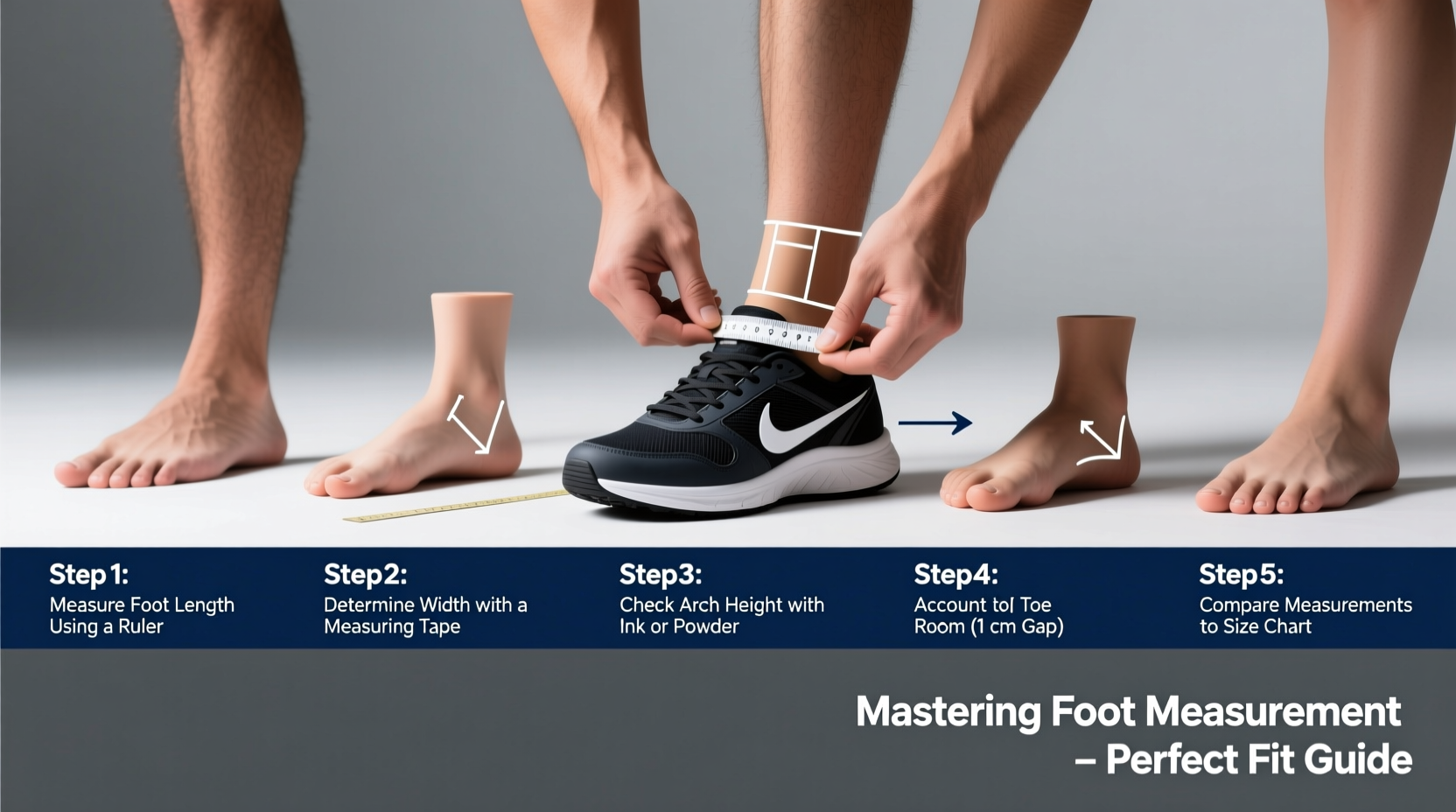
Your feet are dynamic structures that change over time due to age, weight fluctuations, pregnancy, and activity level. Many assume their shoe size from adolescence remains constant, but research shows adult feet can grow up to a full size every decade after 40. In athletic contexts, even a half-size discrepancy can alter gait mechanics, increase impact forces, and compromise stability.
Properly measured feet lead to better-informed shoe choices. A well-fitted sports shoe provides adequate toe room, secure heel lockdown, proper arch alignment, and sufficient width—critical elements in preventing injuries and enhancing performance.
“More than half the running injuries I treat stem from improper footwear fit—not training errors.” — Dr. Lena Torres, Sports Podiatrist, Austin Performance Clinic
A Step-by-Step Guide to Measuring Your Feet at Home
You don’t need specialized tools to measure your feet accurately. With minimal supplies and attention to detail, you can obtain reliable measurements in under 15 minutes.
- Gather Supplies: Ruler or tape measure, blank paper (larger than your foot), pencil, flat floor surface, and socks you typically wear during exercise.
- Time It Right: Measure your feet in the evening. Feet naturally swell throughout the day, so measuring them when they’re largest ensures enough space in your shoes.
- Stand Naturally: Place the paper on a hard floor. Stand on it barefoot (or wearing intended athletic socks) with your full weight distributed evenly. Do not curl or flex your toes.
- Trace Your Foot: Hold the pencil vertically and trace the outline of your foot closely, marking the heel, ball, and longest toe (often the second toe, not the big toe).
- Measure Length: Use the ruler to measure from the back of the heel to the tip of the longest toe. Record this in centimeters and inches.
- Measure Width: At the widest part of the foot (usually just behind the toes), measure across the tracing. Compare both feet—even slight asymmetry is common.
- Repeat for Other Foot: Always measure both feet. Fit shoes to the larger foot.
Understanding Shoe Sizing Systems and Conversions
Shoe sizes vary significantly between regions and brands. A US men’s 10 may equate to a UK 9 or EU 43—but these numbers don’t account for volume, arch height, or forefoot shape. That’s why relying solely on size labels leads to poor fit.
Use your measured foot length and width to cross-reference manufacturer sizing charts. Many premium athletic brands (like Brooks, Asics, and Saucony) provide detailed foot mapping guides online.
| US Size (Men) | EU Size | Foot Length (cm) | Approx. Width (D - Medium) |
|---|---|---|---|
| 8 | 41 | 25.4 cm | 9.8 cm |
| 9 | 42 | 26.0 cm | 10.1 cm |
| 10 | 43 | 26.7 cm | 10.4 cm |
| 11 | 44 | 27.3 cm | 10.7 cm |
Note: Women’s sizing is typically 1.5 to 2 sizes smaller than men’s in the same EU standard. Width designations also differ: B is standard for women, D for men. 2E and wider indicate extra width.
Key Fit Factors Beyond Length and Width
Length and width are foundational, but other structural aspects influence how a shoe performs on your foot:
- Arch Height: Determine if you have low, neutral, or high arches. Wet test your foot: wet the sole and step onto a dark surface. A full imprint suggests flat feet; a thin band indicates high arches. Choose shoes with matching support—motion control for overpronators, cushioned models for supinators.
- Toe Box Volume: Running and hiking shoes should allow a thumb’s width (about 1 cm) between the longest toe and shoe end. Higher-volume feet need deeper toe boxes to prevent blackened toenails.
- Heel Counter Stability: The back of the shoe should grip the heel firmly without slipping. Excessive movement causes blisters and instability.
- Sock Compatibility: Test shoes with the socks you’ll actually wear. Thick trail-running socks require more interior space than lightweight trainers.
Real-World Example: From Pain to Peak Performance
James R., a recreational marathoner from Portland, struggled with persistent knee pain during long runs. He assumed his mid-tier running shoes were sufficient. After visiting a specialty running store, staff measured his feet and discovered his right foot had grown half a size since his last purchase, and he had moderate overpronation. More critically, his shoes were too narrow, compressing his forefoot and altering his stride.
After switching to a properly sized stability shoe with a wide toe box, James eliminated his knee discomfort within three weeks. His run times improved, and he completed his next half-marathon without a single blister. “I spent years blaming my body,” he said. “Turns out, it was just the shoes.”
Essential Foot Measurement Checklist
Before purchasing any sports footwear, complete this checklist to ensure optimal fit:
- ✅ Measure both feet in the evening
- ✅ Use weight-bearing tracings on paper
- ✅ Record length and width in cm and inches
- ✅ Identify dominant foot (fit to the larger one)
- ✅ Determine arch type via wet test or professional scan
- ✅ Consult brand-specific sizing charts
- ✅ Try shoes with sport-specific socks
- ✅ Walk or jog briefly in-store or at home
- ✅ Check for pressure points, heel slippage, or pinching
- ✅ Reassess foot size annually or after major life changes
Frequently Asked Questions
How often should I remeasure my feet?
At minimum, once per year. More frequently if you're pregnant, experiencing weight changes, or logging high mileage in sports activities. Feet can expand permanently due to ligament laxity or prolonged standing.
Can I use my dress shoe size for athletic shoes?
Not reliably. Athletic shoes often require different sizing due to swelling during exertion and varying last shapes. Always measure specifically for performance footwear.
Do all brands run the same?
No. Nike often runs narrow; New Balance offers multiple width options; Altra specializes in zero-drop, wide-toe-box designs. Never assume consistency across brands—even within the same company’s product lines.
Final Thoughts: Invest Time Where It Matters Most
Your feet are the foundation of every movement. Ignoring their true dimensions undermines comfort, performance, and long-term joint health. Taking 15 minutes to measure your feet properly pays dividends in reduced injury risk, enhanced endurance, and everyday confidence in your stride.
Don’t guess your size. Measure, compare, and prioritize function over fashion. Whether you're training for a triathlon or walking daily for wellness, the right fit starts from the ground up.




 浙公网安备
33010002000092号
浙公网安备
33010002000092号 浙B2-20120091-4
Comments
No comments yet. Why don't you start the discussion?