
The set is the heartbeat of a volleyball offense. It bridges defense and attack, turning a pass into a scoring opportunity. A well-executed set can elevate an average hitter into a lethal weapon, while a poor one disrupts rhythm and gifts points to the opposition. Mastering the set isn’t just about hand positioning—it’s about timing, consistency, spatial awareness, and communication. Whether you’re a beginner setter or refining advanced skills, these strategies will help you deliver precise, reliable sets under pressure.
Understanding the Role of the Setter
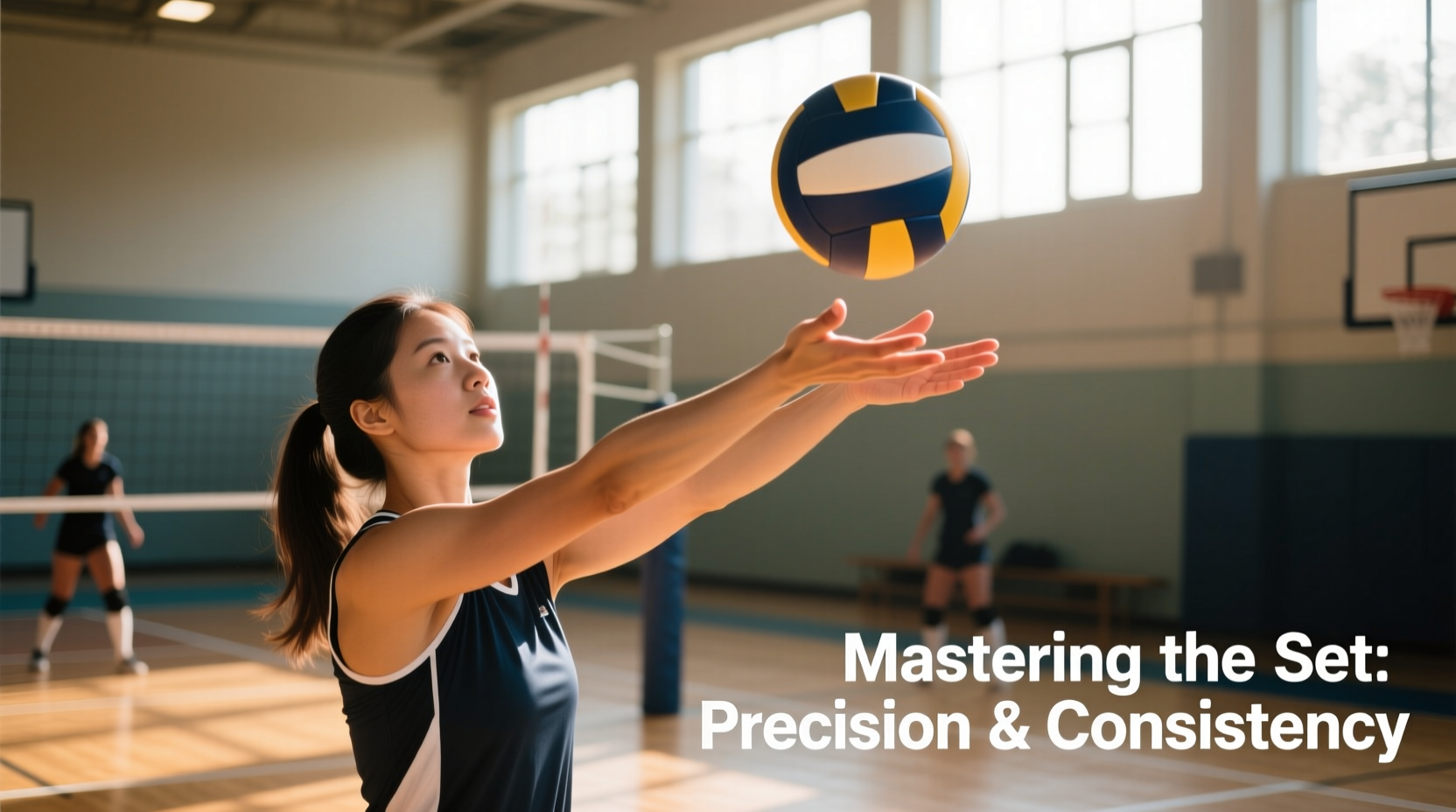
The setter is often called the “floor general” for good reason. You read the play, adjust to imperfect passes, and decide where the ball goes—whether it’s a quick middle attack, a high outside set, or a back-row option. Your decisions shape your team’s offensive success. More than any other position, the setter must remain calm under pressure, anticipate movements, and maintain composure when the first touch is off-target.
Great setters don’t just react—they lead. They communicate constantly with hitters, calling plays, adjusting tempo, and ensuring everyone is on the same page. This leadership begins with mastering the fundamentals of setting mechanics and builds toward advanced decision-making under game conditions.
Perfecting Your Setting Technique
Accuracy starts with proper form. A technically sound set allows for better control, reduced injury risk, and increased consistency. Here’s how to build a solid foundation:
- Hand Position: Form a triangle with your thumbs and index fingers. Your hands should be relaxed but ready, positioned above your forehead with elbows slightly bent.
- Ball Contact: Use your fingertips—not your palms. The ball should contact the pads of your fingers and roll off smoothly as you extend upward.
- Follow-Through: Push through the ball with your legs and core, finishing with arms fully extended toward your target. Avoid flicking your wrists; power comes from leg drive and finger control.
- Body Alignment: Stay balanced and square to your target. Leaning too far forward or backward leads to inconsistent trajectory and misdirection.
Common Errors and How to Fix Them
| Error | Cause | Solution |
|---|---|---|
| Inconsistent release point | Hands not positioned correctly above forehead | Practice mirror drills to ensure consistent hand placement |
| Double contact or lift | Palms touching ball or prolonged contact | Focus on fingertip-only contact and quick release |
| Poor directional accuracy | Body not square to target | Strengthen footwork to align hips and shoulders before setting |
| Weak back sets | Lack of body rotation and leg drive | Use pivot step and push off back foot for power and balance |
Developing Consistency Under Pressure
Game situations rarely offer perfect passes. A key trait of elite setters is their ability to deliver usable sets even when the first touch is low, behind, or off to the side. This requires adaptability and strong footwork.
Setters must train to move quickly to the ball, reposition their body, and still deliver a clean set. One effective drill is the “three-point shuffle,” where a coach tosses balls randomly within reach, forcing the setter to adjust and set accurately from awkward positions.
“Consistency isn’t about perfect conditions—it’s about making the right play no matter where the ball is. The best setters turn chaos into opportunity.” — Coach Rafael Mendez, NCAA Division I Assistant Volleyball Coach
Step-by-Step Guide to Executing Key Set Types
Becoming a versatile setter means mastering multiple set types. Each serves a tactical purpose and demands specific technique.
- High Outside Set (4-set):
- Move toward the left antenna.
- Face the sideline, set at least 1–2 feet off the net.
- Release the ball 2–3 feet above the net height, allowing time for the hitter to approach.
- Quick Middle Set (1-set):
- Deliver immediately after receiving the pass.
- Set short and tight to the net—about 6–12 inches above net height.
- Ensure the ball travels straight up with minimal forward momentum.
- Back Set (B-set):
- Pivot so your back faces the target.
- Use a strong leg push and full arm extension.
- Keep the set high enough for the hitter to time the jump, especially against blocking pressure.
- Shoot Set (Go-Go or Shoot):
- Push the ball laterally and quickly to the outside hitter.
- Minimize arc—almost a hard bump with hands.
- Use sparingly; best when the block is slow or out of position.
Checklist: Pre-Play Routine for Setters
Before every serve, go through this mental and physical checklist to stay sharp:
- ✔️ Know the offensive system for this rotation (e.g., 1-2-3, slide, pipe).
- ✔️ Communicate with your hitters—confirm who’s running what.
- ✔️ Position yourself slightly behind the 10-foot line to allow room for back-row attacks.
- ✔️ Stay on the balls of your feet, ready to move in any direction.
- ✔️ Watch the passer’s platform angle to predict where the ball will go.
- ✔️ Breathe and stay relaxed—tension reduces fine motor control.
Real-World Example: Turning a Bad Pass into a Kill
During a regional championship match, the libero dug a hard-driven spike from the opponent’s right side. The pass was deflected sharply behind the setter, landing near the back boundary line. Most setters would have dumped or reset weakly. Instead, the setter sprinted backward, repositioned her body, and executed a precise back set to the middle hitter, who had faked a front quick and slipped behind the block. The attacker spiked cleanly down the line for a point that shifted momentum.
This moment wasn’t luck—it was the result of hours spent practicing off-target sets and trusting her technique under duress. Her footwork, decision-making, and fingertip control turned a defensive scramble into an offensive highlight.
Frequently Asked Questions
How do I improve my touch and feel for the ball?
Enhance your touch through repetition and tactile drills. Try two-person partner sets using only one hand, blindfolded setting (with a trusted partner), or setting with reduced inflation in the ball. These exercises heighten finger sensitivity and control.
Should I always set the strongest hitter?
Not necessarily. While maximizing offensive efficiency matters, over-relying on one hitter makes your attack predictable. Great setters distribute sets strategically, using misdirection and tempo changes to keep the opposing block guessing. Rotate options based on block alignment and defensive positioning.
What’s the most common mistake new setters make?
Over-handling the ball—either holding it too long or using excessive wrist motion. This leads to illegal contacts and loss of control. Focus on a crisp, clean release using fingertips and leg power, not upper-body manipulation.
Conclusion: Elevate Your Game One Set at a Time
Mastering the set is a journey of precision, discipline, and leadership. It demands technical excellence, mental toughness, and constant adaptation. By refining your hand position, expanding your set repertoire, and training under realistic conditions, you become the engine of your team’s offense.
Start today: dedicate 15 minutes per practice to targeted setting drills, analyze your game footage for consistency, and communicate more with your hitters. Small improvements compound into game-changing results.




 浙公网安备
33010002000092号
浙公网安备
33010002000092号 浙B2-20120091-4
Comments
No comments yet. Why don't you start the discussion?