
Writing dollar amounts may seem straightforward, but the nuances of formatting, style, and context can lead to confusion, misinterpretation, or even financial errors. Whether you're drafting a business proposal, filling out an invoice, writing a check, or publishing financial content online, precision matters. A misplaced comma, incorrect symbol placement, or ambiguous phrasing can undermine credibility or cause costly misunderstandings.
From academic papers to legal contracts, consistency and clarity in monetary notation are non-negotiable. This guide breaks down best practices for writing dollar amounts across different formats and audiences, ensuring your communication is accurate, professional, and universally understood.
Understanding Standard Dollar Notation
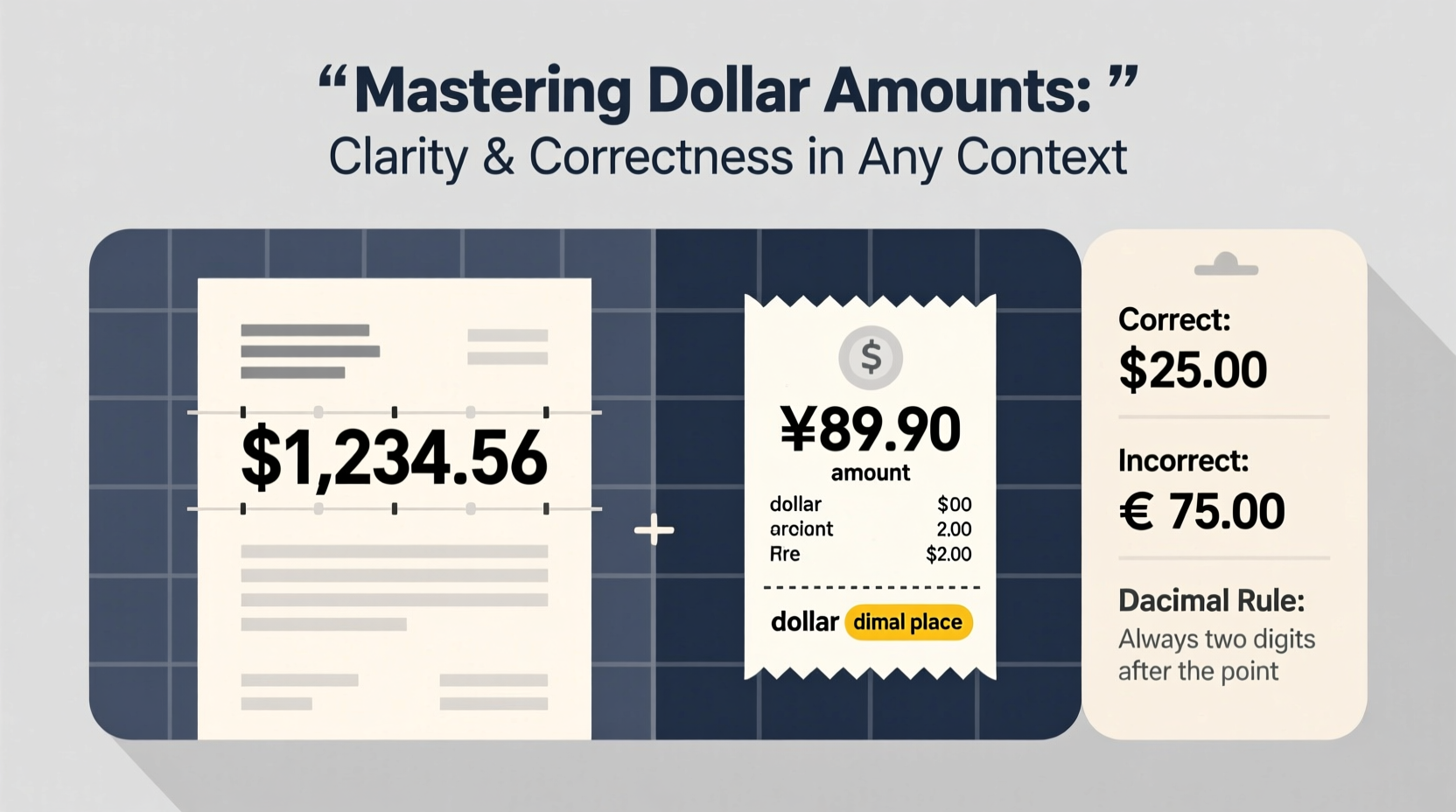
The most common way to express U.S. currency is with the dollar sign ($), followed by the numerical value. However, rules vary depending on whether you’re writing in formal documents, informal messages, or international contexts.
In American English, the dollar sign precedes the amount without a space: $500.75. The number includes commas as thousand separators and a decimal point for cents. This format is standard in accounting, banking, and everyday transactions.
When writing out dollar amounts in words—often required in legal or financial documents such as checks—the amount should be spelled clearly and unambiguously. For example:
- Numerical: $342.50
- Written: Three hundred forty-two dollars and fifty cents
Avoid mixing formats unless necessary. For instance, on a check, both forms are used together: “Pay to the order of John Smith: Three hundred forty-two dollars and fifty cents ($342.50).”
Do’s and Don’ts: Common Formatting Errors
Mistakes in writing dollar amounts often stem from inconsistent formatting or misunderstanding style guidelines. Below is a comparison of correct versus incorrect usage.
| Context | Correct Format | Incorrect Format | Why It Matters |
|---|---|---|---|
| General Writing | $1,250.00 | $1250 | Precise formatting avoids ambiguity; trailing zeros emphasize exactness. |
| Large Sums | $4.3 million | $4,300,000 (without explanation) | Rounded figures improve readability in reports and presentations. |
| Legal Documents | Two thousand five hundred dollars and no/100 | 2500 dollars | Spelling prevents tampering and ensures enforceability. |
| International Communication | USD 750.00 | $750 (ambiguous) | Different countries use $; specifying currency avoids confusion. |
| Headlines or Titles | Project Budget: $2.1M | $2,100,000 allocated | Brevity enhances impact while maintaining clarity. |
Step-by-Step Guide to Writing Dollar Amounts Correctly
Follow this five-step process to ensure accuracy and professionalism every time you write a dollar amount.
- Determine the context. Is it a check, contract, email, report, or advertisement? Each has stylistic expectations.
- Choose between symbols and words. Use \"$\" for brevity in internal documents; spell out amounts in legal or formal settings.
- Apply proper formatting. Use commas for thousands, two decimal places for cents, and avoid spaces between $ and the number.
- Clarify currency if needed. In global communications, use USD, CAD, or AUD instead of just $.
- Verify consistency. If using multiple amounts in one document, maintain the same style throughout.
Expert Insight: Clarity Prevents Costly Errors
“Even small inconsistencies in how dollar amounts are written can lead to disputes, delays, or compliance issues. In finance, precision isn't perfectionism—it's protection.” — Laura Simmons, CPA and Financial Communications Consultant
This insight underscores why attention to detail is essential. Ambiguous entries like “$1,000.,” “one thousand dollars,” or “$1k” might seem minor, but in auditing or contract enforcement, they open doors to interpretation—and risk.
Real-World Example: The Invoice That Caused a Delay
A freelance graphic designer sent an invoice for “$850” to a client. The client processed payment for $85.00, assuming the amount was missing a decimal. Though quickly corrected, the error delayed payment by ten days and strained the working relationship.
Had the invoice read “$850.00” or included a written line (“Eight hundred fifty dollars and 00/100”), the confusion would have been avoided. This case illustrates how adding clarity—even in routine transactions—protects both parties.
Checklist for Error-Free Dollar Amounts
Use this checklist before finalizing any document involving money:
- ✅ Dollar sign placed before the number (e.g., $499.99)
- ✅ Commas used for thousands (e.g., $12,500 not $12500)
- ✅ Two decimal places shown, even if zero (e.g., $75.00)
- ✅ Written form matches numeric value exactly
- ✅ Currency specified when audience may be international
- ✅ No abbreviations like “K” or “M” unless appropriate for context
- ✅ Consistent formatting across all amounts in the document
Frequently Asked Questions
Should I write “dollars” after the $ symbol?
No. The dollar sign ($) already indicates the currency, so writing “$500 dollars” is redundant. Use either “$500” or “five hundred dollars”—not both in the same sentence unless required for legal clarity (as on checks).
Can I use “$1.2K” instead of “$1,200”?
In informal or space-constrained contexts like headlines or dashboards, yes. But in formal writing, contracts, or detailed reports, always use the full number: $1,200. Abbreviations like K (thousand) or M (million) should only be used when your audience expects them.
How do I write zero cents properly?
Always include two decimal places: $299.00. In legal documents, write “and 00/100” after the dollar amount. This prevents someone from altering the amount by adding digits after the decimal.
Conclusion: Precision Builds Trust
Writing dollar amounts correctly isn’t about rigid rules—it’s about clear communication. Every time you format a price, invoice, or financial statement, you’re conveying reliability and professionalism. Small details like consistent decimals, proper symbol placement, and unambiguous wording build trust with clients, colleagues, and readers.
Whether you're managing personal finances, running a business, or drafting official documents, applying these principles consistently will reduce errors, enhance readability, and reflect attention to detail that sets you apart.




 浙公网安备
33010002000092号
浙公网安备
33010002000092号 浙B2-20120091-4
Comments
No comments yet. Why don't you start the discussion?