
Writing a check may seem like a fading practice in the digital age, but it remains a necessary skill for rent payments, tax filings, personal loans, and official transactions. One of the most critical—and often misunderstood—parts of writing a check is correctly expressing the monetary amount in words. A mistake here can invalidate the check, cause processing delays, or even open the door to fraud. This guide walks you through every detail of writing check amounts in words with precision, clarity, and confidence.
Why Writing the Amount in Words Matters
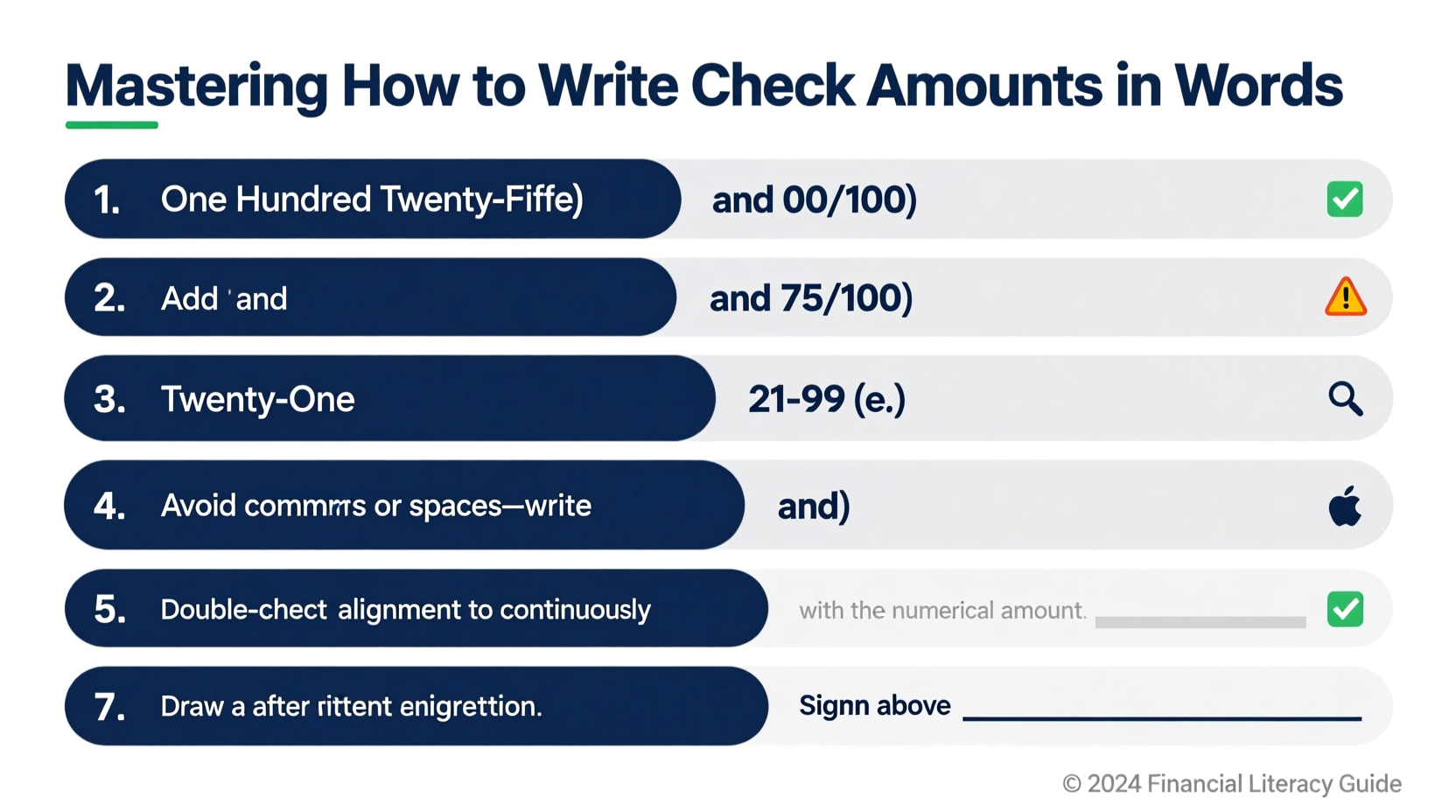
The written amount on a check serves as a legal safeguard. While the numerical field (e.g., $150.75) is easy to alter, the spelled-out version is harder to tamper with and acts as a verification tool for banks. If there’s a discrepancy between the number and the word amount, financial institutions typically honor the written amount. That makes accuracy non-negotiable.
Additionally, many businesses and government agencies still require checks for formal payments. Whether you're paying a contractor, sending a gift, or settling a bill, getting the wording right reflects professionalism and attention to detail.
“Accuracy in check writing isn’t just about correctness—it’s about trust. The written amount confirms intent.” — Linda Reeves, Senior Bank Operations Manager at Metro Financial Services
Step-by-Step Guide to Writing Check Amounts in Words
Follow these steps carefully to ensure your check is processed without issue:
- Start with the dollar amount in whole numbers. For example, if the amount is $234.50, begin by writing “Two hundred thirty-four”.
- Use proper hyphenation for compound numbers. Numbers from 21 to 99 are hyphenated: “twenty-one,” “thirty-five,” “ninety-nine.”
- Add “and” before the cents portion. After the dollar amount, write “and” followed by the cents over 100. For $234.50, this becomes “and 50/100”.
- Write the fraction format for cents. Always express cents as a fraction over 100. So 75 cents is “75/100”, not “seventy-five cents”.
- Capitalize the first letter and draw a line to the end. Begin the amount with a capital letter and fill the rest of the line with a horizontal stroke to prevent tampering.
Common Mistakes and How to Avoid Them
Missteps in writing check amounts are more common than you might think. Here are frequent errors and how to correct them:
| Mistake | Correct Version | Why It Matters |
|---|---|---|
| “One hundred fifty dollars and 35”—missing fraction | One hundred fifty and 35/100 | Without the fraction, the bank may question the exact amount. |
| “Two hundred and fifteen / 100”—incorrect spacing | Two hundred fifteen and 15/100 | Poor formatting can suggest alteration or forgery. |
| “Seventy two” instead of “Seventy-two” | Seventy-two and 00/100 | Missing hyphens create ambiguity and appear unprofessional. |
| Leaving blank space after the amount | Fill space with a line after the fraction | Gaps allow room for someone to add digits and increase the amount. |
Real-Life Example: A Fixable Oversight
Sarah needed to pay her plumber $187.25. On her check, she wrote the numerical amount correctly but in the word line, she put: “One hundred eighty seven and 25”. She forgot the hyphen, the fraction format, and left extra space at the end.
The bank flagged the check due to formatting inconsistencies. The plumber had to return it, causing a delay in payment and an awkward follow-up. When Sarah rewrote the check as “One hundred eighty-seven and 25/100”, with a line drawn to the end, it cleared immediately.
This scenario shows how small oversights can lead to avoidable complications—even when the intent is clear.
Dos and Don’ts of Writing Check Amounts
- Do use standard English grammar and numerals.
- Do include “and” before the cents portion.
- Do write fractions clearly: X/100.
- Do draw a straight line after the amount to prevent additions.
- Don’t use abbreviations like “&” instead of “and”.
- Don’t skip hyphens in compound numbers.
- Don’t write “only” or “dollars only” at the end—this is unnecessary and outdated.
- Don’t leave blank spaces after the amount.
Checklist: Final Review Before Signing
Before you mail or hand over a check, go through this quick verification list:
- ✅ Numerical amount matches the written amount exactly.
- ✅ Whole dollar amount is spelled correctly with proper hyphenation.
- ✅ Cents are written as a fraction over 100 (e.g., 45/100).
- ✅ The word “and” separates dollars and cents.
- ✅ No extra space follows the written amount—filled with a line.
- ✅ First letter is capitalized; handwriting is legible.
- ✅ Date, payee, and signature are all present.
Frequently Asked Questions
What should I do if I make a mistake in the written amount?
If you make an error in the word amount, do not cross it out or attempt to correct it with white-out. Void the check completely by writing “VOID” across the front and start a new one. Altered checks are often rejected for security reasons.
How do I write a check for a whole dollar amount, like $200?
Write “Two hundred and 00/100”. Even though there are no cents, you must still include the fraction to maintain consistency and prevent fraud. Never write “Two hundred dollars only” or leave the cents blank.
Can I use numerals within the word amount?
No. The entire dollar portion must be spelled out in words. For example, “150” should be “One hundred fifty”, not “One hundred 50”. The only numerals allowed are in the fraction for cents (e.g., 75/100).
Conclusion: Confidence in Every Check You Write
Writing check amounts in words is a foundational financial skill that combines accuracy, clarity, and security. Whether you're paying a utility bill, gifting money, or managing business expenses, taking the time to get it right protects you and ensures smooth processing. With the steps and tips outlined here, you’re equipped to write checks confidently and correctly—every single time.




 浙公网安备
33010002000092号
浙公网安备
33010002000092号 浙B2-20120091-4
Comments
No comments yet. Why don't you start the discussion?