
The number 7 is more than a digit—it’s a symbol of luck, spirituality, and precision. From classroom notebooks to financial ledgers, digital interfaces to international signage, how you write the number 7 can affect legibility, professionalism, and even cross-cultural understanding. While it may seem trivial, small variations in stroke, angle, or bar placement can lead to misinterpretation—especially when distinguishing between a 7 and a 1. Mastering the art of writing the number 7 involves balancing clarity, consistency, and context.
Why the Way You Write 7 Matters
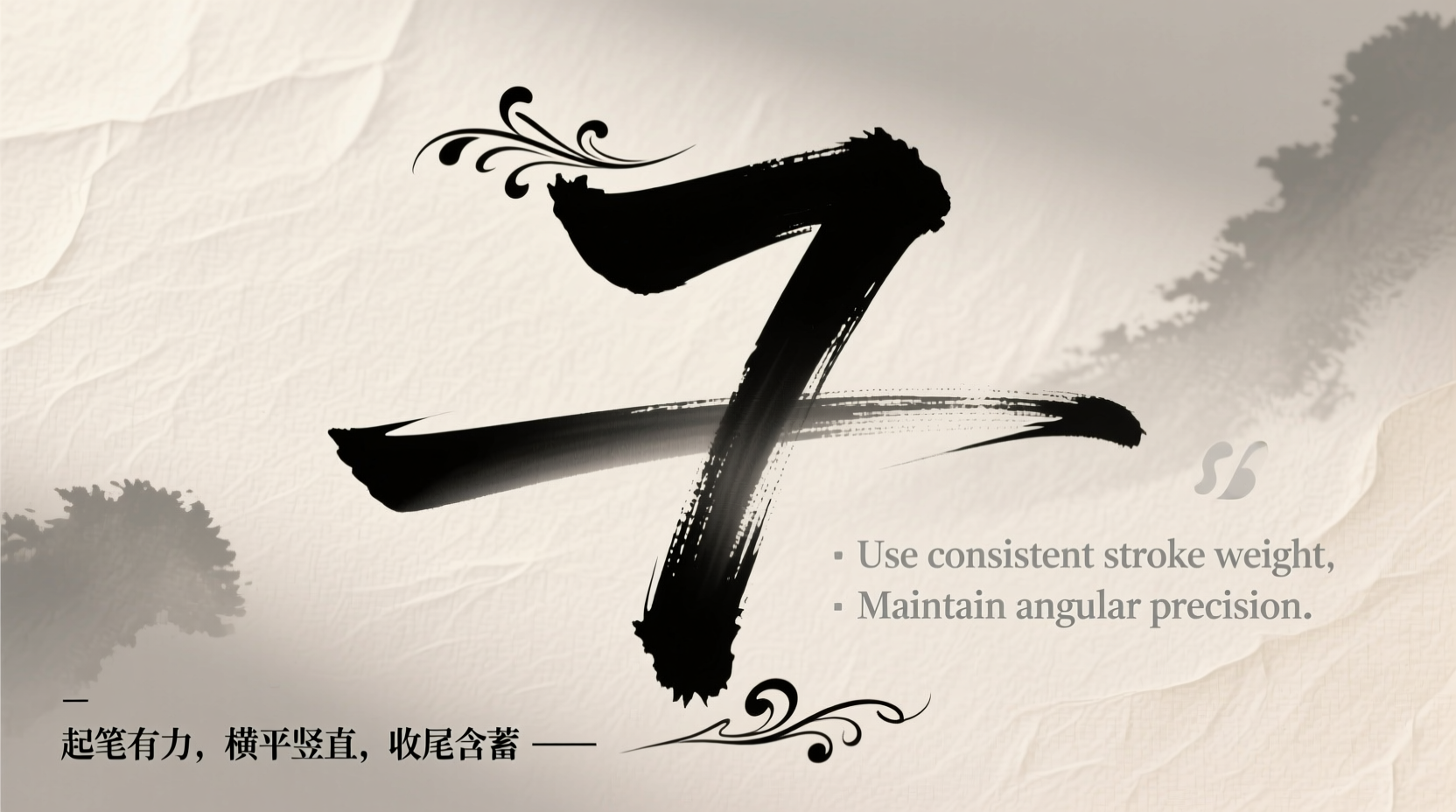
In everyday communication, numbers carry critical information. A poorly written 7 on a medical prescription, invoice, or engineering blueprint could result in errors with serious consequences. In education, children learning numerals benefit from clear models. In global business, regional differences in numeral formation can cause confusion. For example, in many European countries, a horizontal bar is added through the middle of the 7 to differentiate it from the number 1, which often includes a serif at the top. Without that bar, misunderstandings arise.
Typography adds another layer. Digital fonts render 7s in various styles—some with sharp angles, others with soft curves. Handwriting introduces even more variability. Whether you're filling out a form, designing a logo, or teaching math, attention to detail ensures your 7 is both accurate and appropriate for its environment.
Key Variations of the Number 7 Across Contexts
The form of the number 7 changes depending on usage. Recognizing these variations helps maintain clarity and avoid confusion.
Handwriting Styles
In North America and parts of Asia, the number 7 is typically written as a vertical stroke followed by a straight diagonal line from top right to bottom left. It lacks a middle bar. In contrast, much of continental Europe—including Germany, France, and Scandinavia—adds a short horizontal bar across the middle of the 7. This distinction prevents confusion with the number 1, which often features a top serif but no mid-bar.
Digital Typography
Type designers craft 7s with specific aesthetics in mind. Sans-serif fonts like Helvetica often use a clean, angular 7 with a flat top. Others, like Georgia, include a subtle hook or serif at the upper left. Monospaced fonts used in coding (e.g., Courier) keep proportions rigid, while script fonts may stylize the 7 into an almost letter-like shape. The choice of font influences readability—especially at small sizes or on screens.
Technical and Scientific Writing
In technical fields, precision is non-negotiable. Engineers, mathematicians, and scientists are trained to write 7 with a clear crossbar to prevent ambiguity. Standards such as ISO 31-0 recommend this practice in handwritten technical documents. Even in printed materials, the 7 is often designed with a slightly slanted mid-stroke for optical balance.
| Context | Recommended Form | Rationale |
|---|---|---|
| General Handwriting (US/UK) | Diagonal stroke only | Common convention; widely understood |
| European Handwriting | With horizontal bar | Prevents confusion with 1 |
| Scientific Notation | With clear crossbar | Ensures accuracy in data recording |
| Digital UI Design | Clean, sans-serif, high x-height | Optimizes screen legibility |
| Calligraphy/Art | Stylized, decorative | Prioritizes aesthetic over function |
Step-by-Step Guide to Writing a Clear and Stylish 7
Whether you're improving your handwriting or designing a typeface, follow these steps to ensure your 7 is both functional and elegant.
- Start with purpose: Determine the context. Is this for personal notes, professional documents, or public display? Purpose guides form.
- Choose your baseline stroke: Begin at the top line. Draw a straight diagonal line downward to the right, ending near the bottom line.
- Add the horizontal bar (if needed): For clarity in formal or international settings, draw a short horizontal stroke about one-third down from the top of the diagonal.
- Maintain consistent slant: Keep the angle between 45° and 60°. Avoid overly steep or flat diagonals unless stylistically intended.
- Check spacing and size: Ensure the 7 aligns with other numerals in height and proportion. In cursive or connected writing, leave space before and after.
- Review for legibility: Step back or scan your writing. Can the 7 be confused with a 1 or 9? Adjust if necessary.
Expert Insight: What Professionals Recommend
Clarity in numeric writing isn't just a personal preference—it's a standard upheld by experts in education, design, and engineering.
“Teaching students to add a bar to the 7 eliminates over 80% of digit confusion in early arithmetic.” — Dr. Lena Patel, Mathematics Education Specialist
“In UX design, we test numeral legibility at 12px. The 7 must remain distinguishable from the 1, even on low-resolution displays.” — Marcus Tran, Senior UI Designer at Nova Labs
These insights reinforce that small details have outsized impacts. Whether instructing children or designing dashboards, intentional numeral formation supports effective communication.
Mini Case Study: Misread Numbers in Medical Records
In 2021, a hospital in Sweden reported a medication dosage error traced back to a handwritten “7” without a crossbar. The nurse interpreted it as a “1,” resulting in a patient receiving one-tenth of the intended dose. After an internal review, the facility implemented a policy requiring all clinical staff to use a barred 7 in handwritten documentation. Over the next year, numeric-related errors dropped by 64%. This case underscores how a single stroke can influence safety and outcomes in high-stakes environments.
Checklist: Best Practices for Writing the Number 7
- ✅ Use a horizontal bar in formal, technical, or international contexts
- ✅ Maintain consistent stroke direction and angle
- ✅ Match the size and style of the 7 to surrounding numerals
- ✅ Avoid excessive flourishes in functional writing
- ✅ Test legibility at a distance or small scale
- ✅ Adapt style based on audience (e.g., barred 7 for European clients)
- ✅ Practice daily for 5 minutes to build handwriting consistency
Frequently Asked Questions
Should I always write a bar through my 7?
Not necessarily. In casual US or UK handwriting, a bare 7 is standard and understood. However, if you work in science, medicine, finance, or with international audiences, adding a bar significantly reduces ambiguity and is strongly recommended.
Can a stylish 7 still be functional?
Yes, but only if legibility comes first. In logos or artistic projects, you can stylize the 7—but ensure it remains recognizable. Test your design with diverse viewers to confirm it reads as a 7, not a 1 or 9.
How do I teach children to write 7 correctly?
Begin with the diagonal stroke, then introduce the bar as a “seatbelt” for the number. Use dotted tracing worksheets and emphasize consistency. Reinforce why the bar matters: “Without it, someone might think this is a 1!”
Conclusion: Elevate Your Numeric Clarity
Writing the number 7 may seem like a minor skill, but its impact spans education, technology, healthcare, and design. By applying context-aware techniques—adding bars when needed, maintaining clean lines, and respecting typographic standards—you enhance both clarity and professionalism. Whether you're jotting down a phone number or drafting a scientific report, every stroke counts. Mastery lies not in perfection, but in intentionality.




 浙公网安备
33010002000092号
浙公网安备
33010002000092号 浙B2-20120091-4
Comments
No comments yet. Why don't you start the discussion?