
Traveling with a large capacity backpack—typically 50 liters or more—offers unmatched versatility for extended trips, adventure excursions, or minimalist long-term travel. Yet, without proper strategy, that extra space can quickly become a disorganized mess. Overpacking, poor weight distribution, and inefficient access to essentials are common pitfalls. The key to mastering a high-volume backpack lies not in how much you carry, but in how intelligently you pack. With the right techniques, your backpack becomes an extension of your travel rhythm: balanced, accessible, and purposeful.
Understanding Large Capacity Backpacks: Purpose and Potential
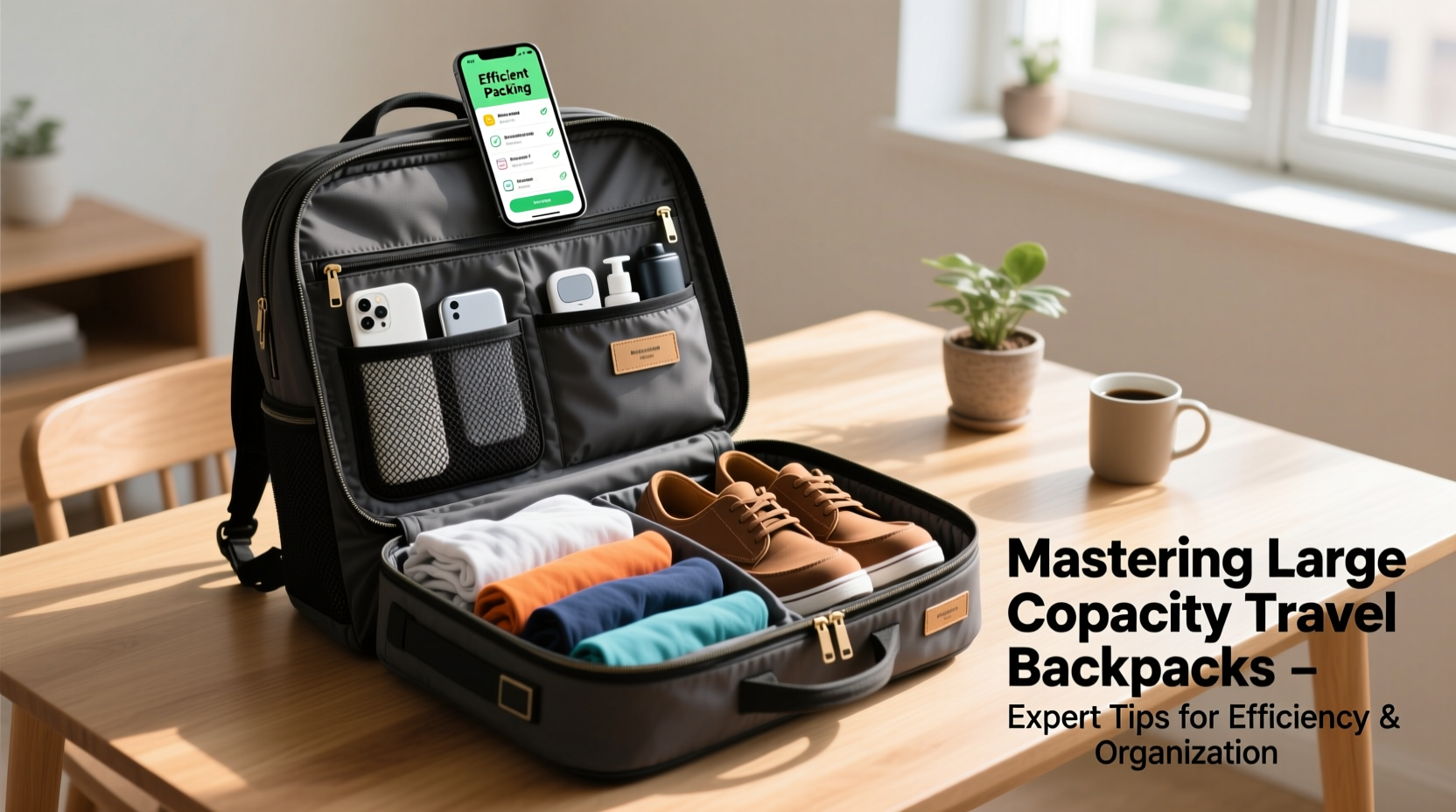
A large-capacity backpack (60L–80L) is designed for multi-week trips, overland journeys, or outdoor expeditions where resupply options are limited. Unlike carry-ons or daypacks, these bags prioritize volume and durability over convenience at airport security. They often feature:
- Adjustable suspension systems for load transfer
- Dedicated compartments for laptops, hydration reservoirs, and sleeping bags
- External attachment points for gear like trekking poles or tents
- Compression straps to stabilize packed volume
The risk? These features can be underutilized—or misused—without a clear packing philosophy. Many travelers treat large backpacks as catch-all containers, stuffing items haphazardly until zippers strain. This leads to back strain, lost items, and constant repacking at hostels or campsites.
“Efficiency isn’t about filling every inch—it’s about designing your pack so everything has a place and purpose.” — Daniel Reyes, Expedition Gear Specialist, Adventure Travel Institute
Step-by-Step Guide to Smart Packing
Packing a large backpack effectively follows a logical sequence based on weight, frequency of access, and protection needs. Follow this timeline to optimize your setup before departure:
- Day 30: Audit Your Needs – List required clothing, electronics, hygiene items, and gear. Eliminate duplicates and assess climate-specific needs.
- Day 25: Test Volume – Lay all selected items on the floor. Use a bedsheet to simulate bundling and estimate total bulk.
- Day 20: Acquire Organizers – Purchase packing cubes, dry bags, and cable organizers based on category groupings.
- Day 7: Do a Dry Pack – Load your empty backpack at home. Walk around the house for 20 minutes to test balance and comfort.
- Day 1: Final Adjustments – Replace any bulky items with multi-use alternatives (e.g., quick-dry towel instead of cotton).
Optimizing Internal Organization
Modern backpacks come with multiple zones, but most users ignore their intended function. Maximize efficiency by assigning zones strategically:
| Backpack Zone | Recommended Contents | Why It Works |
|---|---|---|
| Bottom Compartment | Sleeping bag, off-season clothes, soft bulky items | Heavy items low help maintain center of gravity |
| Main Chamber | Folded clothes in packing cubes, toiletries kit, books | Mid-weight items; easy to reorganize during stops |
| Top Lid | Passport, phone, snacks, headlamp | High-frequency access without unpacking |
| Front Panel/Stretch Pocket | Rain jacket, water bottle, hat | Weather-ready access and ventilation |
| Hip Belt Pockets | Hand sanitizer, lip balm, trail map | Reachable while walking; reduces shoulder fatigue |
Use color-coded packing cubes to separate categories: red for tops, blue for bottoms, green for undergarments. This visual system speeds up outfit changes and minimizes rummaging.
Essential Packing Checklist
Before closing your zipper, verify these critical items are accounted for:
- ✅ Passport, visas, printed itineraries
- ✅ Universal power adapter and backup battery
- ✅ First-aid kit with blister treatment
- ✅ Water purification tablets or filter
- ✅ Lockable cable for securing backpack in transit
- ✅ Reusable shopping bag (doubles as laundry sack)
- ✅ Emergency contact list saved offline
- ✅ Multi-tool (check airline regulations)
Real-World Example: A Trekker’s Transformation
Sarah, a solo traveler hiking the Inca Trail, initially packed her 70L Osprey with enthusiasm—and chaos. Her first day ended early due to lower back pain. She had placed heavy boots and water at the top, throwing off her balance. After consulting a guide, she repacked using the zone method: sleeping bag at the base, clothes in compression cubes mid-pack, and daily essentials in the lid. She added a foam pad between her back and the frame for airflow.
The result? She completed the four-day trek with minimal discomfort. “I didn’t once take my pack off just to find sunscreen,” she said. “Everything was where I expected it.” Her revised system became her standard for Southeast Asia and Patagonia.
Do’s and Don’ts of Backpack Management
| Do | Don't |
|---|---|
| Compress soft items with vacuum-style cubes | Pack liquids in unprotected main compartments |
| Use dry bags for electronics and documents | Over-tighten compression straps on delicate items |
| Balance weight evenly side-to-side | Carry unnecessary duplicates (e.g., three pairs of jeans) |
| Wear heaviest items (jacket, boots) during transit | Ignore hip belt adjustment—your hips should carry 80% of the load |
“The difference between a good backpacker and a struggling one is often five minutes spent adjusting hip and sternum straps properly.” — Lena Torres, Outdoor Instructor, National Park Service
Frequently Asked Questions
How do I prevent my backpack from swaying while walking?
Swaying usually results from improper load distribution or loose straps. Tighten the hip belt first—it should sit on your iliac crest, not your waist. Then adjust the shoulder straps so they hug your torso without digging in. Finally, engage the load lifters (straps from top of shoulder straps to top of pack) to pull weight closer to your back.
Can I use a large backpack as carry-on luggage?
Most airlines allow carry-ons up to 55L, but many 65L+ backpacks exceed linear dimension limits (usually 158 cm). Check specific airline policies. Even if allowed, overhead bins may not accommodate tall backpacks. For air-heavy trips, consider a 45L–50L model designed for cabin use.
What’s the best way to clean a packed backpack?
Spot-clean dirt with a damp cloth and mild soap. Never machine-wash unless specified by the manufacturer. Remove all contents, then rinse the interior with a vinegar-water solution (1:3 ratio) to eliminate odors. Air-dry completely in a shaded, ventilated area—never in direct sunlight, which degrades fabrics.
Final Thoughts: Master Your Pack, Master Your Journey
A large-capacity travel backpack is more than storage—it’s a mobile command center. When packed with intention, it supports endurance, adaptability, and freedom. The habits you build now—zoning, compression, weight management—will serve you whether you're crossing continents or navigating city streets. Efficiency isn’t austerity; it’s clarity. By refining what you carry and how you organize it, you reclaim time, energy, and peace of mind on the road.




 浙公网安备
33010002000092号
浙公网安备
33010002000092号 浙B2-20120091-4
Comments
No comments yet. Why don't you start the discussion?