
Color block jackets have emerged as a signature piece in modern wardrobes—bold, structured, and expressive. But behind every standout design lies a foundation often overlooked: fabric quality. A jacket may boast striking contrasts and impeccable tailoring, yet fail within months if constructed from subpar materials. Mastering material selection is not just about aesthetics; it’s about longevity, comfort, and performance. Understanding what makes a fabric suitable for a multi-panel garment like a color block jacket ensures your investment remains vibrant and wearable season after season.
The Role of Fabric in Color Block Design
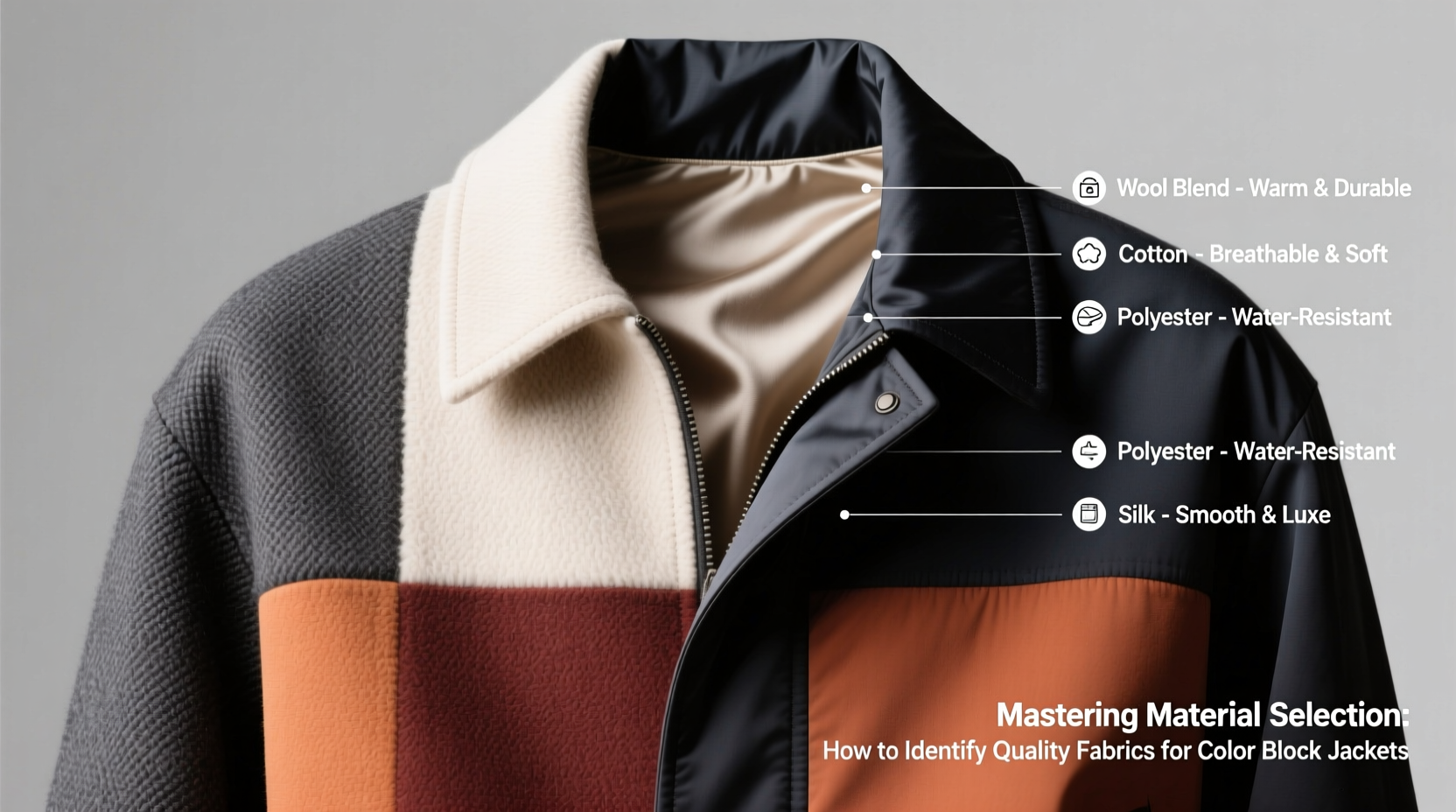
Unlike solid garments, color block jackets demand consistency across multiple fabric swatches. Each panel must match in weight, drape, and behavior under stress. Mismatched textiles can lead to uneven wear, warping at seams, or fading discrepancies that ruin the visual harmony. The ideal fabric maintains structural integrity while supporting bold color transitions without bleeding, shrinking, or pilling.
Fabrics used in color blocking fall into two broad categories: natural fibers (like cotton, wool, and silk) and synthetic blends (such as polyester, nylon, and elastane). Natural fibers offer breathability and a premium hand feel but may require more care. Synthetics provide durability and shape retention but can trap heat. Blends aim to balance both worlds, though their performance depends heavily on composition ratios.
Key Indicators of High-Quality Fabric
Identifying superior fabric begins with close inspection. Professionals evaluate several core attributes: fiber content, thread count, weave density, hand feel, and finish. These factors collectively determine how well a fabric will perform in a complex garment like a color block jacket.
- Fiber Purity: Check the label for exact fiber percentages. Pure merino wool or long-staple cotton generally outperforms blended versions in softness and resilience.
- Thread Count (TPI): Measured in threads per inch, higher counts typically indicate tighter weaves and better durability. For outerwear, aim for at least 80 TPI.
- Weave Type: Twill and satin weaves are denser than plain weaves, offering improved abrasion resistance—critical for high-friction areas like elbows and shoulders.
- Hand Feel: Run your fingers over the surface. It should feel smooth, even, and free of snags or thin spots. A rough or inconsistent texture suggests poor manufacturing control.
- Dye Penetration: Quality-dyed fabrics absorb color uniformly through the fiber, not just on the surface. Rub a damp white cloth lightly; no color transfer means good dye fixation.
“Consistency in fabric behavior across color panels is non-negotiable. One weak link compromises the entire structure.” — Lena Torres, Senior Textile Developer at Atelier Noir
Material Comparison for Performance and Aesthetics
Choosing the right base material involves trade-offs between form and function. Below is a comparison of commonly used fabrics in color block jackets, evaluated for key performance metrics.
| Fabric Type | Durability | Color Retention | Comfort | Best Use Case |
|---|---|---|---|---|
| Cotton Twill | High | Moderate | High (breathable) | Casual urban jackets |
| Wool Gabardine | Very High | High | Moderate (warm) | Tailored or winter styles |
| Polyester-Cotton Blend | High | High | Moderate (less breathable) | Active or transitional wear |
| Nylon Ripstop | Exceptional | Moderate | Low (stiff) | Outdoor or utility designs |
| Linen-Cotton Mix | Low-Moderate | Low | High (cool) | Summer fashion statements |
Note that while synthetics score well in durability and color fastness, they may lack the organic elegance desired in luxury pieces. Conversely, natural fibers deliver sophistication but require careful maintenance to prevent shrinkage or fading.
Step-by-Step Guide to Evaluating Fabric Quality
Follow this five-step process when selecting or inspecting fabrics for a color block jacket, whether you're a designer, buyer, or informed consumer.
- Inspect Fiber Composition: Review the fabric label. Prioritize materials with at least 70% natural fiber or high-performance synthetics like recycled polyester with UV stabilizers.
- Conduct a Pull Test: Gently stretch a small area. High-quality fabric should return to shape without deformation. Excessive sagging indicates low elasticity recovery.
- Assess Seam Strength: Look at seam allowances. They should be clean, double-stitched, and reinforced at stress points. Weak stitching undermines even the best fabric.
- Evaluate Color Fastness: Expose a sample to sunlight for 48 hours. Minimal fading confirms good UV resistance. Also check for crocking (color rub-off) using a damp cloth.
- Test Drape and Weight: Hold the fabric vertically. It should hang smoothly without buckling. Panels across the jacket must have identical drape characteristics to maintain alignment.
Real-World Example: A Designer’s Material Mistake
In 2022, a rising streetwear brand launched a limited-run color block bomber featuring contrasting panels of cotton canvas and lightweight polyester mesh. Initial response was strong—until customers began reporting delamination at the seams after only three washes. Investigation revealed that the two fabrics had vastly different moisture absorption rates. The cotton expanded during laundering, while the polyester remained stable, creating tension that broke stitches.
The brand responded by reformulating the design with a unified 65/35 cotton-polyester blend across all panels. Though slightly less visually dynamic, the revised version performed flawlessly in wear tests and boosted customer retention by 40%. This case underscores a vital rule: technical compatibility matters as much as visual contrast.
Essential Checklist for Buyers and Designers
Use this checklist to ensure fabric quality meets professional standards before approving a color block jacket for production or purchase:
- ✅ All color panels use the same base fabric type and weight
- ✅ Thread count is consistent across sections (±5% tolerance)
- ✅ Seams are double-stitched with bar-tacking at joints
- ✅ Fabric has passed Martindale abrasion test (minimum 20,000 cycles)
- ✅ Dyeing method is solution-dyed or reactive-dyed for maximum fade resistance
- ✅ Care instructions are clearly labeled and realistic for daily use
- ✅ Sample undergoes 5 wash/dry cycles without distortion or color bleed
Frequently Asked Questions
Can I mix different fabric types in a color block jacket?
Technically yes, but it's strongly discouraged unless both materials have identical stretch, shrinkage, and care profiles. Even slight differences can cause seam failure or warping over time. For lasting quality, uniformity is key.
How do I prevent color bleeding between panels?
Ensure all fabrics undergo proper dye fixation and rinsing during manufacturing. As a consumer, wash new jackets inside out in cold water the first few times. Avoid soaking and never dry clean unless specified.
Are sustainable fabrics suitable for color blocking?
Absolutely. Organic cotton, TENCEL™, and recycled polyester perform exceptionally well when engineered for durability. Many eco-conscious mills now offer color-fast, high-tenacity options specifically for segmented designs.
Final Thoughts: Invest in Integrity, Not Just Imagery
A color block jacket is more than a fashion statement—it’s a testament to craftsmanship and material intelligence. The boldest design fails if its components aren’t built to endure. By mastering fabric selection, you protect not only the appearance but the functionality and lifespan of the garment. Whether you're curating a personal wardrobe or developing a collection, prioritize consistency, test rigorously, and never compromise on structural harmony.




 浙公网安备
33010002000092号
浙公网安备
33010002000092号 浙B2-20120091-4
Comments
No comments yet. Why don't you start the discussion?