
In Bloodborne, survival isn’t just about dodging—it’s about taking control of the fight. Parrying is one of the most rewarding mechanics in the game, allowing players to turn aggression into opportunity. A well-timed parry deflects an enemy attack and leaves them staggered, open for a visceral attack that deals massive damage. But mastering this technique demands precision, patience, and deep understanding of timing, spacing, and enemy behavior. This guide breaks down every element of parry execution so you can dominate encounters with confidence.
The Mechanics of Parrying: How It Works
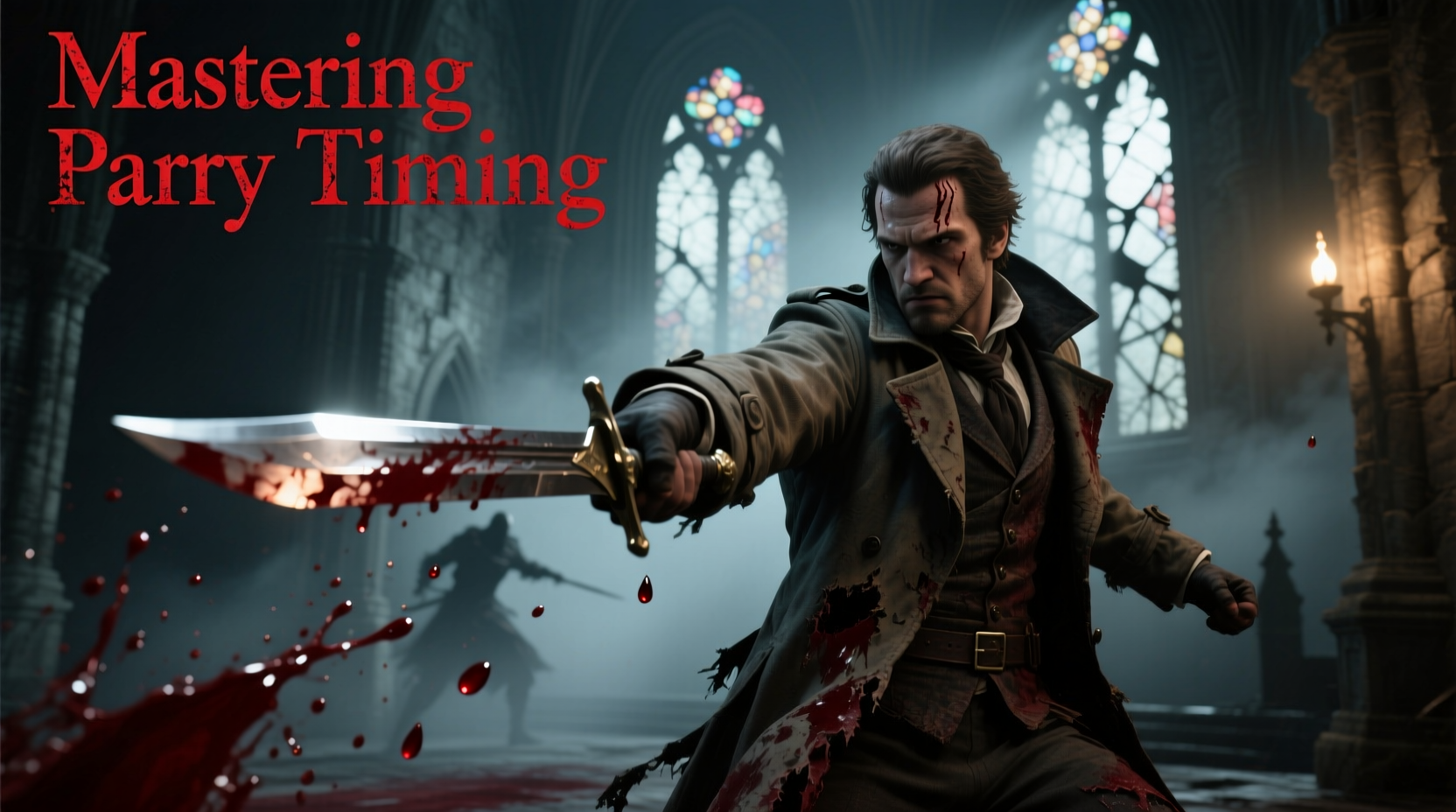
Unlike blocking in other Soulsborne titles, Bloodborne does not feature shields. Instead, the left trigger (L2 on PlayStation) activates your firearm—initially used to stagger enemies—but also enables parrying. When an enemy attack connects while you’re aiming your gun, a successful parry occurs if timed correctly. The result? The attacker flinches, their posture collapses, and you gain a window to perform a devastating visceral attack.
Parrying is not passive defense; it's active aggression. It rewards anticipation over reaction. Because the parry window is narrow—typically lasting only a few frames—you must learn enemy attack patterns and commit to the timing rather than waiting to see what happens.
“Parrying transforms you from prey to predator. In Bloodborne, hesitation is death—but so is recklessness.” — FromSoftware Dev Interview, 2015
Step-by-Step Guide to Perfect Parry Timing
Executing a consistent parry requires more than button mashing. Follow this sequence to build muscle memory and sharpen your reflexes:
- Enter Gun Mode: Hold L2 to aim your firearm. Do this before the enemy begins their attack animation.
- Observe Attack Cues: Learn visual and audio tells—wind-up motions, glowing limbs, or sound effects—that signal an incoming strike.
- Time the Parry: Press R2 (right trigger) *just* as the attack makes contact with your character. Too early results in a whiff; too late means taking damage.
- Confirm Success: If done correctly, you’ll hear a sharp metallic “clang” and see the enemy stumble forward.
- Execute Visceral: Immediately press R1 twice after a successful parry to unleash a visceral attack.
Enemy-Specific Parry Windows and Patterns
Not all attacks are created equal. Some moves have longer wind-ups and generous parry windows, while others are lightning-fast and punishing. Understanding these differences is critical.
| Enemy | Attack Type | Parry Difficulty | Key Timing Cue |
|---|---|---|---|
| Plains Watcher | Horizontal scythe swing | Easy | Arm raises fully before swinging |
| Cleric Beast | Overhead slam | Moderate | Both hands lift above head |
| Shadow of Yharnam | Dash stab | Hard | Faint shimmer before lunge |
| Vicar Amelia | Charged overhead axe | Moderate | Pause at peak of jump |
| Micolash, Host of the Nightmare | Teleport slash | Very Hard | Appearance flicker before strike |
Use this table as a reference when preparing for boss fights. Slower attacks often allow for reactive parries, but fast or teleport-based strikes require predictive timing. Train yourself to recognize each cue through repetition, not memorization alone.
Common Mistakes and How to Avoid Them
Even experienced hunters falter due to subtle errors. Here are frequent pitfalls and how to correct them:
- Parrying too early: Anticipation is key, but over-anticipation leads to missed parries. Wait until the hitbox is about to land.
- Releasing L2 between attempts: Letting go of the firearm mode breaks readiness. Keep L2 held unless repositioning.
- Forgetting posture recovery: After a parry, some large enemies take longer to stagger. Don’t rush the visceral—wait for full collapse.
- Trying to parry unblockable attacks: Red-infused attacks cannot be parried. Recognize them by their crimson glow and dodge instead.
- Overcommitting to viscerals: If multiple enemies are present, a visceral may leave you vulnerable. Assess the situation before attacking.
Checklist: Are You Ready to Master Parrying?
Before entering high-stakes battles, ensure you’ve developed the fundamentals:
- Can you consistently parry slow swings from basic enemies?
- Do you recognize the difference between parry-able and red unblockable attacks?
- Have you practiced maintaining L2 tension without breaking stance?
- Can you execute a visceral attack within half a second of a successful parry?
- Are you able to chain multiple parries in succession during aggressive phases?
- Have you tested your timing against different weapon types (slashes, thrusts, overheads)?
If any of these give you trouble, return to less dangerous areas like Central Yharnam or the Cathedral Ward to refine your skills under low pressure.
Real Example: Defeating Vicar Amelia Through Precision Parrying
Vicar Amelia is notorious for her relentless pace and mix of fast slashes and heavy jumps. Many players resort to kiting, but skilled hunters can dismantle her using parries.
A player once struggled with her third-phase dash combo, repeatedly getting hit despite dodging. After switching tactics, they began holding L2 during her downtime. By watching for the moment she launched into her airborne overhead slam, they committed to a parry just before impact. The first success led to a visceral, cutting her health significantly. Repeating this pattern—parry, visceral, retreat, repeat—allowed them to defeat her in under four minutes without healing.
This approach didn’t rely on evasion; it relied on controlled aggression. Once the rhythm was internalized, the fight shifted from chaotic to choreographed.
Frequently Asked Questions
Can all attacks be parried?
No. Attacks with red flash effects (unblockable) cannot be parried and must be dodged. These include certain charged attacks, grabs, and environmental AoEs. Always watch for color cues.
What happens if I parry but don’t perform a visceral?
You lose the offensive advantage. The enemy will recover quickly, and you’ll waste the opening. After a parry, press R1 twice immediately to capitalize.
Does weapon choice affect parry timing?
No. Parry timing depends solely on enemy animation and your input frame. However, faster weapons let you land more hits during the visceral window, increasing burst damage.
Conclusion: Turn Defense Into Offense
Mastering parry timing in Bloodborne isn’t just a skill—it’s a mindset. It teaches you to face danger head-on, to read motion, and to act with certainty. Each clang of a perfect parry is a declaration: you are no longer fleeing the nightmare. You are shaping it.
The path is difficult. You will fail. But with deliberate practice, pattern recognition, and fearless commitment, you’ll transform your playstyle. Enemies that once terrified you will become sources of health, momentum, and triumph.




 浙公网安备
33010002000092号
浙公网安备
33010002000092号 浙B2-20120091-4
Comments
No comments yet. Why don't you start the discussion?