
In a world defined by unpredictability—economic shifts, global events, personal loss, or sudden change—peace is not the absence of chaos but the ability to remain centered within it. True mastery of peace doesn’t come from controlling every outcome, but from cultivating an inner stability that persists regardless of external circumstances. This article explores actionable, evidence-backed strategies to help you navigate life’s uncertainties with greater clarity, emotional resilience, and sustained calm.
The Illusion of Control and the Power of Acceptance
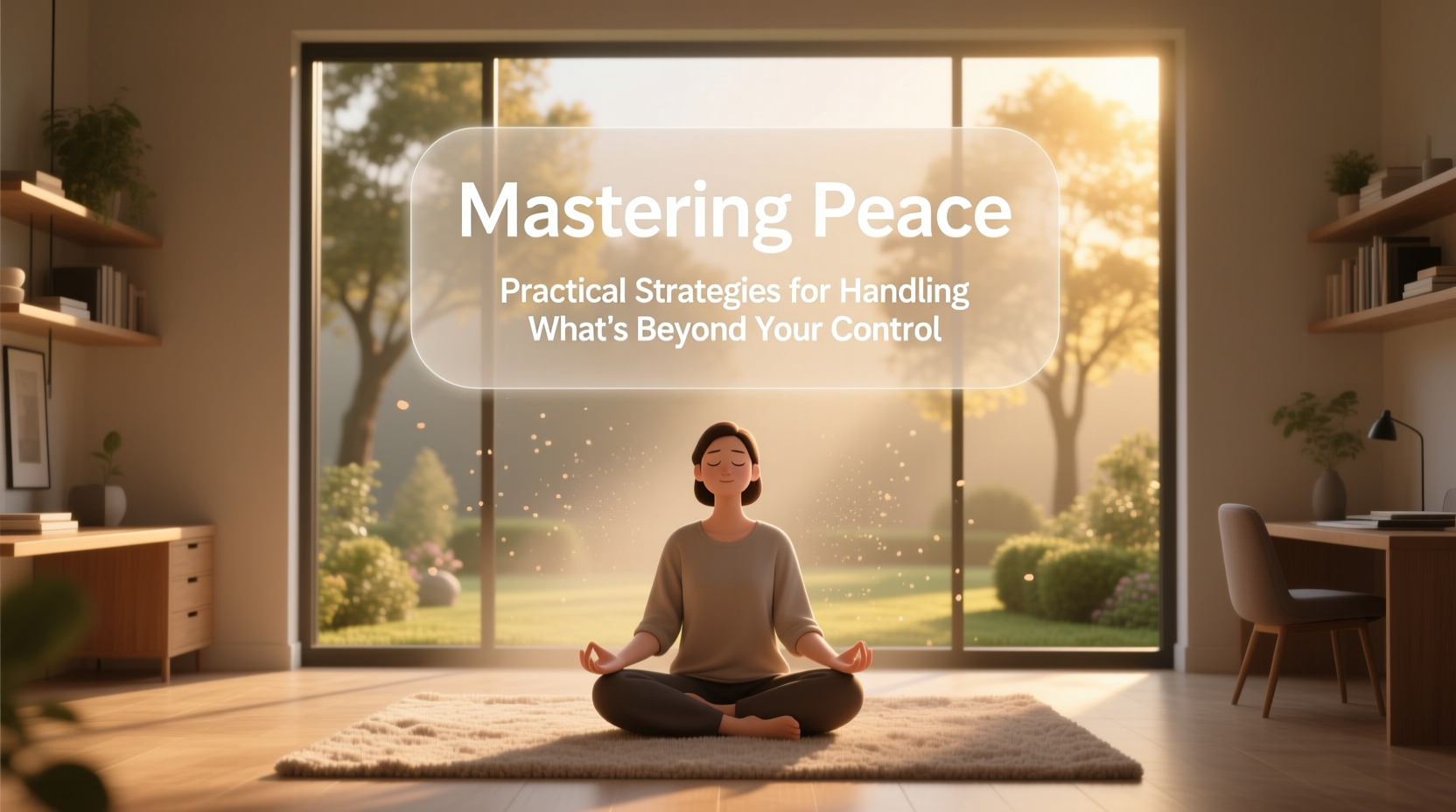
Most stress arises not from what happens, but from our resistance to what has already happened. We expend immense energy trying to force outcomes, rewrite past decisions, or predict futures we cannot see. The Stoic philosopher Epictetus observed: “We are disturbed not by things, but by the views we take of them.” Recognizing the boundary between what you can influence and what you must accept is the first step toward lasting peace.
Consider this distinction:
| Within Your Control | Outside Your Control |
|---|---|
| Your values and principles | Other people’s opinions |
| Your effort and attitude | Market fluctuations |
| Your response to adversity | Natural disasters |
| Your daily habits | Global political events |
| Your attention and focus | Accidents or illnesses |
When you redirect energy from futile attempts at control to conscious acceptance, you reclaim mental bandwidth and emotional freedom. Acceptance is not resignation—it’s clarity. It allows you to stop fighting reality and start responding effectively.
Practical Tools for Emotional Regulation
Peace isn’t passive. It requires active engagement with your internal state. Emotional regulation—the ability to manage and respond to emotions skillfully—is foundational to navigating uncertainty without being consumed by it.
Step-by-Step Guide: The 5-Minute Reset
- Pause: Stop moving. Place both feet flat on the floor, hands relaxed.
- Breathe: Inhale slowly through the nose for four counts, hold for two, exhale through the mouth for six.
- Name the emotion: Say silently: “This is anxiety,” or “This is frustration.” Labeling reduces its intensity.
- Ground yourself: Identify five things you see, four you can touch, three you hear, two you smell, one you taste.
- Reframe: Ask: “What’s one thing I *can* do right now, however small?”
This sequence leverages neuroscience: controlled breathing activates the parasympathetic nervous system, while sensory grounding interrupts rumination. Reframing shifts the brain from threat mode to problem-solving mode.
“Emotional regulation isn't about suppressing feelings—it's about creating space between stimulus and response where choice becomes possible.” — Dr. Elena Torres, Clinical Psychologist
Building Resilience Through Daily Practice
Peace under pressure is like muscle memory: it strengthens with consistent training. You don’t develop composure during crisis; you cultivate it in calm moments so it’s available when needed.
Checklist: Daily Practices for Inner Stability
- Meditate for 10 minutes (focus on breath or body scan)
- Journal three things you’re grateful for
- Limits news consumption to 20 minutes per day
- Practice one act of kindness or compassion
- Reflect on one situation where you accepted what you couldn’t change
- Move your body intentionally (walk, stretch, yoga)
These habits aren’t indulgences—they’re preventive maintenance for mental health. A 2022 study published in the Journal of Positive Psychology found participants who practiced gratitude journaling for eight weeks reported 32% lower stress levels and improved emotional regulation during unexpected setbacks.
Real-Life Application: A Mini Case Study
Sarah, a project manager at a tech startup, faced sudden layoffs across her department. Though her position was secure, she felt constant dread, slept poorly, and fixated on worst-case scenarios. She began applying the strategies above:
- Each morning, she spent 10 minutes journaling what she could control (her work quality, communication) versus what she couldn’t (company decisions).
- She set a hard stop on checking work emails after 7 PM.
- During anxious moments, she used the 5-minute reset technique.
- She started volunteering at a community garden on weekends, restoring a sense of purpose beyond her job.
Within six weeks, Sarah reported better sleep, reduced rumination, and increased focus. “I still don’t know what’s next,” she said, “but I know I can handle it. That confidence changed everything.”
Shifting Identity: From Reactor to Observer
One of the most transformative shifts in mastering peace is changing your relationship with thoughts. Instead of believing every anxious prediction (“What if I lose my job?”), you learn to observe them as passing mental events—like clouds drifting across the sky.
Mindfulness teaches this observational stance. Research from Harvard Medical School shows regular mindfulness practice reduces activity in the amygdala (the brain’s fear center) and strengthens the prefrontal cortex (responsible for rational decision-making).
To develop this skill:
- Set a timer for five minutes.
- Sit quietly and focus on your breath.
- When a thought arises—especially a worrisome one—note it gently: “Thinking about finances,” or “Worrying about health.”
- Return to the breath without judgment.
Over time, you stop identifying with every passing concern. You become less reactive because you recognize: You are not your thoughts. You are the awareness behind them.
Frequently Asked Questions
Isn’t accepting things beyond my control the same as giving up?
No. Acceptance is not passivity—it’s accurate perception. You accept the weather to decide whether to carry an umbrella. Similarly, accepting a difficult truth frees you to act wisely within it, rather than waste energy denying reality.
How do I stay peaceful when someone else’s actions hurt me?
You honor your pain while choosing your response. You cannot control others’ behavior, but you can control your boundaries, self-care, and whether you engage or disengage. Peace includes protecting your energy without harboring resentment.
What if I try these strategies and still feel overwhelmed?
That’s normal. These tools build over time. Start small—one breathing exercise, one moment of acceptance per day. Progress isn’t linear. If chronic anxiety persists, consider speaking with a licensed therapist. Seeking help is a sign of strength, not failure.
Conclusion: Peace Is a Practice, Not a Destination
Mastering peace doesn’t mean never feeling fear, anger, or sorrow. It means developing the capacity to hold those emotions without being ruled by them. It means responding instead of reacting. It means living with open eyes in an unpredictable world—and choosing calm anyway.
The strategies outlined here—acceptance, emotional regulation, daily resilience practices, mindful observation—are not quick fixes. They are lifelong disciplines. But each small act of presence, each moment you choose peace over panic, rewires your mind and deepens your inner freedom.




 浙公网安备
33010002000092号
浙公网安备
33010002000092号 浙B2-20120091-4
Comments
No comments yet. Why don't you start the discussion?