
In an age where smartphones store personal data, financial accounts, and private communications, physical security is just as critical as digital protection. While most users focus on passwords and encryption, one of the simplest yet overlooked aspects of phone safety is preventing loss or theft through proper handling. A wrist lanyard may seem like a minor accessory, but when used correctly, it becomes a powerful tool in your security arsenal—preventing accidental drops, discouraging snatch-and-grab thefts, and maintaining constant control over your device.
Yet simply attaching a lanyard isn’t enough. To truly master phone security, you need to understand how to choose, wear, and rely on a wrist lanyard without compromising comfort or convenience. This guide delivers actionable strategies to integrate lanyard use into your daily routine while enhancing both physical and digital safety.
Why Wrist Lanyards Matter for Phone Security
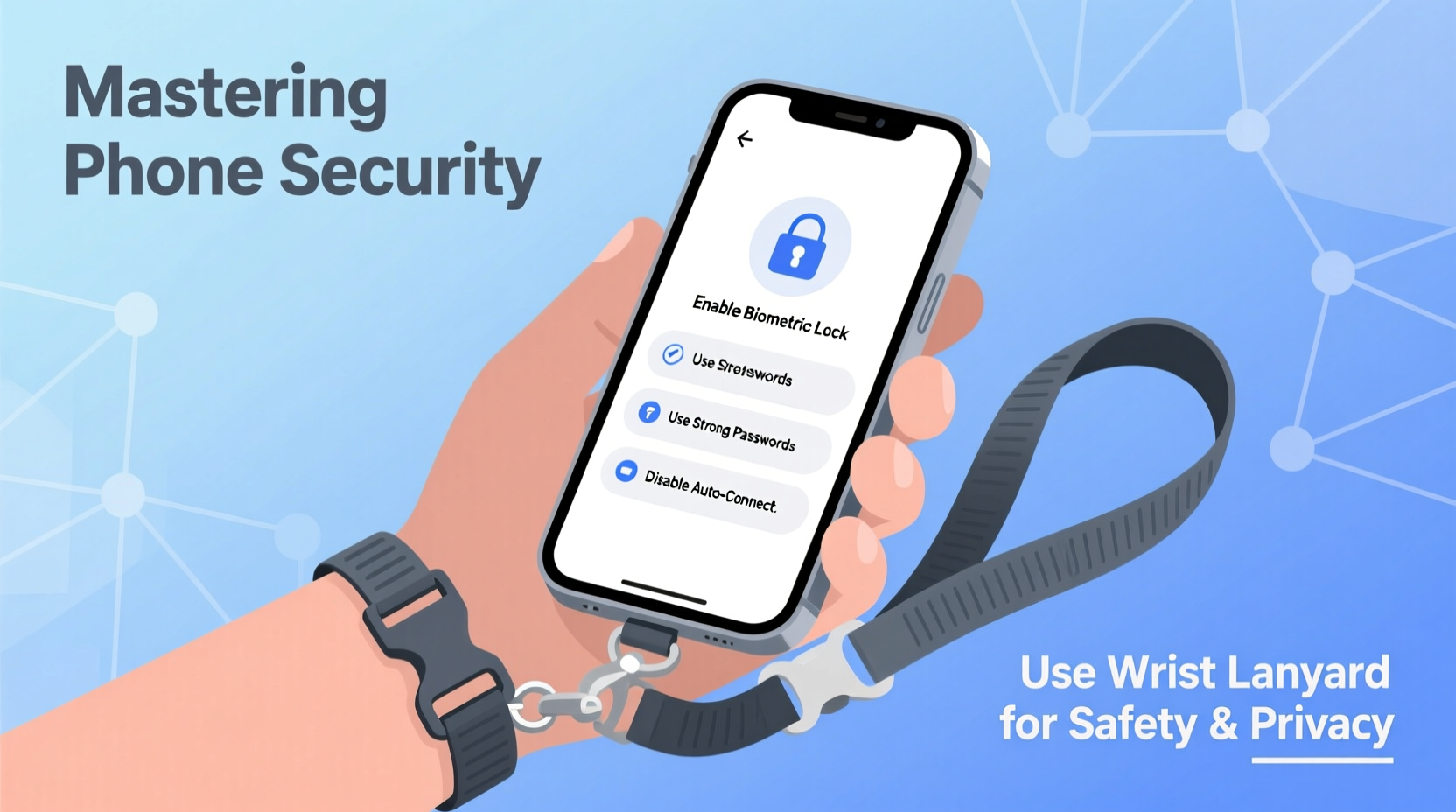
Smartphones are inherently vulnerable due to their portability. Whether you're commuting, traveling, or navigating a crowded event, the risk of dropping your phone or having it stolen increases significantly. According to the National Insurance Crime Bureau, over 2 million smartphones are reported stolen annually in the U.S. alone—many in public spaces where distraction is common.
A wrist lanyard acts as a physical tether between you and your device. It prevents slips from your hand during transit, reduces fumbling when accessing your phone, and makes it far more difficult for thieves to make a quick grab. Beyond theft prevention, lanyards also protect against costly damage from falls—especially important given that screen repairs can exceed $300 depending on the model.
“Physical control is the first line of defense. If your phone never leaves your hand, attackers have fewer opportunities to exploit.” — David Lin, Cybersecurity Analyst at Urban Threat Labs
Choosing the Right Lanyard for Maximum Security
Not all lanyards offer equal protection. Many decorative or fashion-focused models prioritize style over strength, using thin cords or unreliable clasps that break under tension. For real security, consider these features:
- Tensile strength: Look for paracord or reinforced nylon capable of withstanding at least 250 pounds of force.
- Locking clasp: Use a secure carabiner or magnetic snap that won’t accidentally detach.
- Adjustability: A lanyard should fit snugly around your wrist without slipping off, but not restrict circulation.
- Compatibility: Ensure it works with your phone case’s lanyard hole or built-in loop (common in rugged cases).
Step-by-Step Guide to Using a Wrist Lanyard Safely
Using a lanyard effectively requires more than just attachment. Follow this sequence to ensure consistent security:
- Select a durable lanyard with a locking mechanism and high-tensile material.
- Attach securely to your phone case’s designated loop or use a protective adapter ring if needed.
- Fasten around your wrist with the clasp closed and tested for resistance.
- Keep slack minimal—allow just enough length to operate your phone comfortably without dangling.
- Disengage only in safe environments, such as your home or private office.
- Inspect regularly for fraying, weakened stitching, or clasp fatigue.
This process ensures your phone remains physically secured without creating new risks, such as entanglement or snag hazards.
Do’s and Don’ts of Lanyard Use
| Do’s | Don’ts |
|---|---|
| Use a lanyard with a locking clasp | Use cheap, non-locking keyring-style attachments |
| Check lanyard integrity weekly | Ignore signs of wear like fraying or loose knots |
| Keep the cord short enough to prevent snatching | Let excess length dangle where it can be grabbed |
| Remove lanyard when charging near water or bed | Sleep with the lanyard attached (risk of strangulation) |
| Pair with a rugged case for full protection | Rely solely on the lanyard without other safeguards |
Real-World Scenario: Preventing Theft in Transit
Consider Maria, a frequent commuter in a major city. She uses her phone daily on the subway to check schedules, messages, and news. One evening, during rush hour, she felt a tug on her phone as someone tried to snatch it from her hand. Because she was using a reinforced paracord lanyard clipped securely to her wrist, the thief failed to pull the device free and quickly retreated into the crowd.
Maria didn’t even realize an attempted theft had occurred until she noticed the sudden jerk. Her lanyard had done its job silently and effectively. Without it, she would have lost not only a $1,000 device but also access to her banking apps, photos, and contacts—potentially leading to identity theft.
This example underscores how a simple tool, when used consistently, can thwart opportunistic crime.
Integrating Lanyard Use with Digital Security
A lanyard enhances physical control, but true phone security combines hardware and software defenses. When your phone stays in your possession thanks to a lanyard, it reduces exposure to tampering and unauthorized access. However, always pair this with strong digital practices:
- Enable biometric locks (fingerprint or facial recognition).
- Set auto-lock to engage within 30 seconds of inactivity.
- Install a trusted tracking app (e.g., Find My iPhone or Google's Find My Device).
- Disable lock-screen notifications that reveal sensitive information.
Frequently Asked Questions
Can a wrist lanyard really stop phone theft?
Yes, especially in crowded places where \"snatch-and-run\" thefts are common. A securely fastened lanyard makes it extremely difficult for a thief to escape with your phone. While not foolproof, it significantly raises the effort required, deterring most opportunists.
Is it safe to wear a lanyard all day?
For most people, yes—but with caveats. Avoid wearing it during sleep or activities involving machinery, where entanglement could pose a hazard. Also, ensure the fit allows blood circulation and remove it periodically to inspect skin condition.
What if my phone doesn’t have a lanyard hole?
You can use a lanyard-compatible phone case with a built-in loop or attachment point. Alternatively, some users install a small metal ring adapter that fits around the charging port or SIM tray, though these should be tested for durability before relying on them.
Final Checklist for Secure Lanyard Use
- ✅ Choose a high-strength lanyard
- Opt for paracord or military-grade nylon with a tensile rating above 200 lbs.
- ✅ Use a locking clasp
- Ensure the clip cannot open accidentally under stress.
- ✅ Attach properly
- Connect directly to a reinforced loop on a protective case.
- ✅ Wear it correctly
- Secure around the wrist with minimal slack; avoid dangling.
- ✅ Combine with digital locks
- Never assume physical security replaces the need for PINs or biometrics.
- ✅ Inspect regularly
- Look for frays, weak points, or clasp failure weekly.
Stay in Control—Start Today
Your smartphone is one of your most valuable personal assets. Protecting it shouldn’t depend on luck or reflexes. By adopting a wrist lanyard as part of your everyday carry, you gain a reliable, low-cost layer of defense against loss, damage, and theft. The key is consistency: treat your lanyard not as an accessory, but as essential equipment—like a seatbelt for your phone.




 浙公网安备
33010002000092号
浙公网安备
33010002000092号 浙B2-20120091-4
Comments
No comments yet. Why don't you start the discussion?