
In today’s evolving work environments—where hybrid schedules, remote meetings, and flexible dress codes are the norm—the line between formal and casual has blurred. Yet one expectation remains unchanged: you still need to project competence, clarity, and professionalism. Enter the casual two-piece set: a versatile wardrobe staple that blends comfort with structure. When styled intentionally, it can serve as a powerful tool for making a strong impression without sacrificing ease. The key lies not in the garment itself, but in how you wear it.
A well-chosen two-piece set—whether in linen, cotton-blend, or tailored knit—offers symmetry, balance, and instant coordination. But without thoughtful details, even the most elegant set can slip into “loungewear” territory. Mastering this look means understanding fit, fabric, accessories, and context. It’s about curating an image of someone who respects their role, their time, and their audience—without appearing overdone.
The Foundation: Choosing the Right Set
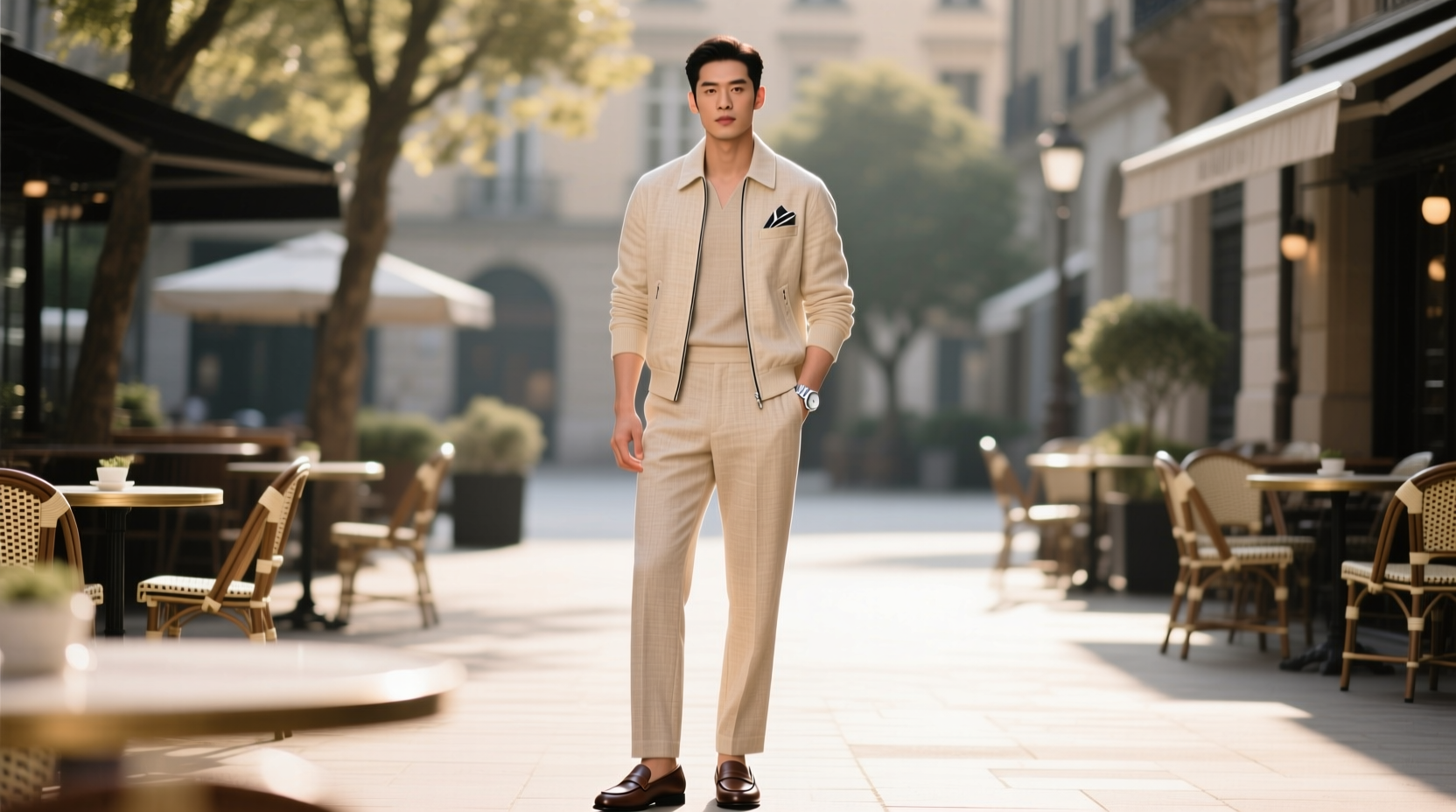
Not all two-piece sets are created equal. To maintain a professional edge, prioritize structure and fabric quality. Look for pieces with clean lines, minimal embellishments, and subtle tailoring—such as slight waist definition, notch lapels on blazers, or tapered pant legs. Avoid overly slouchy silhouettes or materials that wrinkle easily unless they’re part of a deliberate, elevated aesthetic.
Natural fibers like cotton, wool blends, and linen offer breathability and drape well, lending sophistication even in relaxed cuts. Darker neutrals—navy, charcoal, olive, or deep taupe—are inherently more formal and easier to accessorize. Lighter tones like beige or pastel can work in creative industries, provided the fit is sharp and the styling intentional.
Fit Is Non-Negotiable
No amount of accessorizing can compensate for poor fit. A too-loose set reads as sloppy; too-tight looks constricting. The jacket should sit cleanly on the shoulders, allow arm movement without pulling, and close comfortably at the front. Sleeves should end at the wrist bone, revealing just a sliver of shirt cuff if worn underneath.
Pants should skim the body without clinging, ending at or just above the shoe to avoid pooling. If needed, invest in alterations. A $20 adjustment can elevate a $100 set into something that looks custom-made.
“Fit transforms clothing from ‘something you put on’ to ‘something that speaks for you.’ In professional settings, precision in silhouette communicates attention to detail.” — Lena Torres, Image Consultant & Corporate Stylist
Styling Strategies for a Polished Finish
The difference between “casual” and “underdressed” often comes down to layering and finishing touches. Even in a two-piece, small additions create polish.
Layer Thoughtfully
- Underneath: A crisp button-down, silk camisole, or fine-gauge turtleneck adds formality. Stick to solid colors or subtle patterns that don’t compete with the set.
- Over the top: In cooler offices, a structured coat or minimalist trench in a complementary color maintains continuity.
- Belt it: Adding a slim leather belt in a matching or contrasting tone defines the waist and introduces intentionality.
Footwear Matters
Shoes anchor the outfit. Loafers, pointed-toe flats, ankle boots, or low block heels keep the look professional. Avoid sneakers unless they’re minimalist white leather styles in a tech or creative environment. Open-toed sandals should be sleek—not beachy—with neutral finishes.
Accessorize with Purpose
Jewelry should enhance, not dominate. A single statement earring, delicate pendant, or classic watch suffices. Carry a structured tote or satchel rather than a canvas bag or backpack. These choices subtly reinforce authority and preparedness.
| Element | Professional Choice | Casual Trap to Avoid |
|---|---|---|
| Top Layer | Silk shell or tailored blouse | Gym hoodie or graphic tee |
| Footwear | Leather loafers or pumps | Rubber-soled slides or flip-flops |
| Bag | Structured tote or briefcase | Frayed canvas tote or gym duffel |
| Jewelry | Minimal gold hoops or watch | Oversized costume pieces |
Real-World Application: A Day in the Life
Consider Maya, a marketing strategist at a mid-sized firm. Her week includes client calls, team brainstorming sessions, and occasional office days. On Tuesdays, she opts for a navy cotton-blend two-piece—a cropped blazer and straight-leg pant. She layers a cream silk camisole underneath, adds a thin cognac belt, and wears almond-toe block heels. Her hair is neatly pulled back, her makeup light but defined.
During a video pitch, clients comment on her “put-together presence.” Later, when she steps into the office, colleagues remark that she “looks ready for anything.” What they don’t see: the same set was steamed the night before, her shoes were wiped down, and her bag was emptied and reorganized to avoid clutter when opened in meetings. These behind-the-scenes habits amplify the professional effect.
Maya’s approach exemplifies how intentionality elevates simplicity. She isn’t overdressed, nor underprepared—she’s aligned with her role and environment.
Your Professional Style Checklist
To ensure your two-piece set delivers maximum impact, follow this pre-wear checklist:
- ✔️ Inspect for wrinkles or stains—steam or press if needed.
- ✔️ Confirm both pieces are clean and odor-free (fabric refresh sprays help between washes).
- ✔️ Check fit: move your arms, sit down, walk across the room.
- ✔️ Choose a coordinating top that adds polish, not contrast.
- ✔️ Select closed or semi-closed footwear with a clean sole.
- ✔️ Add one refined accessory (watch, earrings, or scarf).
- ✔️ Pack a compact mirror, lint roller, and travel-size deodorant for touch-ups.
Navigating Different Work Environments
Professionalism isn’t one-size-fits-all. Adapt your two-piece set to your industry and company culture:
- Corporate/Finance: Stick to darker hues, full coverage tops, and closed-toe shoes. Opt for subtle textures like herringbone or fine twill.
- Creative/Tech: Embrace lighter fabrics, soft tailoring, and muted prints. A monochrome set in oatmeal or slate blue reads modern and confident.
- Hybrid Roles: Keep a blazer in your bag. Wear the pants with a sweater at home, then add the jacket for in-person meetings.
The goal is consistency in self-presentation. Whether on camera or in person, your appearance should say, “I’m here, I’m capable, and I respect this space.”
FAQ
Can I wear a two-piece set to a job interview?
Absolutely—if chosen wisely. A tailored neutral set with a collared shirt or shell projects confidence and cohesion. Avoid overly trendy cuts or loud colors. Ensure everything is pristine and fits perfectly.
How do I keep my set looking fresh throughout the day?
Choose wrinkle-resistant fabrics, carry a mini steamer or wrinkle-release spray, and avoid sitting for long periods in direct sunlight. Store the set on a padded hanger when not in use.
Is it unprofessional to repeat outfits?
Not at all. In fact, repeating well-curated pieces signals personal branding. Just vary the layers, shoes, or accessories slightly to avoid monotony.
Final Thoughts: Style as a Professional Asset
Dressing well isn’t about vanity—it’s about communication. A polished two-piece set tells others you’ve taken the time to prepare, that you understand context, and that you value the interaction. In a world where first impressions are often made through a screen, these visual cues carry weight.
Start by auditing your current wardrobe. Identify one two-piece set that meets the criteria of fit, fabric, and formality. Style it using the principles above. Wear it with confidence. Then build from there.




 浙公网安备
33010002000092号
浙公网安备
33010002000092号 浙B2-20120091-4
Comments
No comments yet. Why don't you start the discussion?