
Saying \"YouTube\" may seem simple, but many people—especially non-native English speakers or those speaking quickly—mispronounce it without realizing. Whether you're recording videos, presenting in meetings, or just want to speak more clearly, mastering the correct pronunciation of \"YouTube\" is a small but impactful step toward confident communication. The way you pronounce common brand names reflects your overall clarity and professionalism. This guide breaks down the exact sounds, syllables, and rhythm needed to say \"YouTube\" correctly, while also offering broader insights into improving spoken English.
The Correct Pronunciation: Breaking It Down
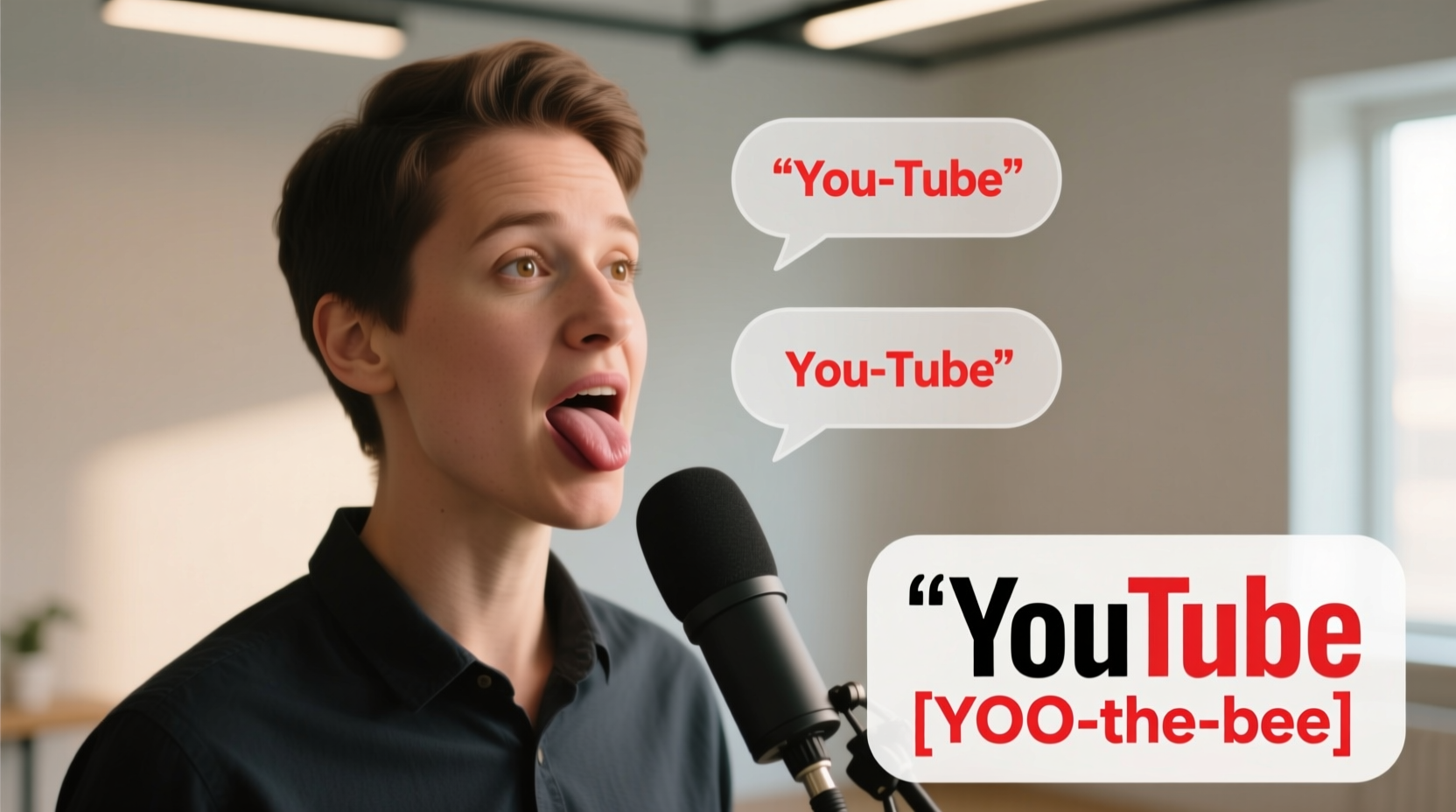
\"YouTube\" consists of two syllables: You and Tube. Despite its simplicity, mispronunciations often occur due to regional accents, fast speech, or confusion with similar-sounding words.
The standard American English pronunciation is: /juːˈtuːb/.
- You – pronounced like “yoo” (/juː/), rhyming with “boo” or “zoo.”
- Tube – pronounced “toob” (/tuːb/), not “tub” (which rhymes with “rub”). The vowel sound is long, as in “food” or “moon.”
Stress falls on the second syllable: yoo-TOOB. This means “tube” should be slightly louder, longer, and higher in pitch than “you.”
Common Mispronunciations and Why They Happen
Even experienced speakers sometimes slip into incorrect versions. Here are the most frequent errors:
- \"Yootub\" – Dropping the “e” sound at the end makes it sound rushed and informal. While common in casual speech, it lacks precision.
- \"Yutub\" – Using a short “u” sound (like “cup”) instead of the long “oo” distorts the word significantly.
- \"Yew-tube\" – Over-enunciating the “ew” can make it sound unnatural or overly formal.
- Equal stress on both syllables – Saying “YOO-tube” with equal emphasis loses the natural rhythm of the word.
These errors often stem from unfamiliarity with English vowel length distinctions or influence from native language phonetics. For example, languages like Spanish or Arabic don’t distinguish between long /uː/ and short /ʊ/ sounds as clearly as English does, making “tube” hard to articulate correctly.
Do’s and Don’ts of Pronouncing \"YouTube\"
| Do | Don’t |
|---|---|
| Pronounce both syllables fully: “yoo-toob” | Say “yutub” (rhyming with “nut”) or “yootub” (missing the long vowel) |
| Place stress on the second syllable: yoo-TOOB | Put equal stress on both parts (“YOO-tube”) |
| Use the long “oo” sound in “tube,” like in “school” | Use the short “u” sound, as in “tub” or “rub” |
| Pause slightly between “you” and “tube” for clarity | Run the syllables together too quickly |
Step-by-Step Guide to Mastering the Pronunciation
Improving pronunciation isn't about memorizing—it's about training your mouth and ears. Follow this sequence to internalize the correct way to say \"YouTube\":
- Listen First: Find clear audio examples of native speakers saying “YouTube.” Watch official YouTube channel intros or listen to news anchors mentioning the platform. Focus on how they shape each syllable.
- Isolate the Sounds: Say “you” slowly: /juː/. Then say “tube”: /tuːb/. Repeat each five times, exaggerating the long “oo” sound.
- Link Them Together: Now combine them: “yoo-toob.” Start slowly, then gradually increase speed while maintaining clarity.
- Practice with Stress: Clap or tap when you say the stressed syllable: “yoo” (tap lightly) — “TOOB” (clap firmly). This physical feedback helps lock in rhythm.
- Record Yourself: Use your phone to record your voice saying “YouTube” in sentences like: “I uploaded my video to YouTube.” Compare it to a native speaker’s version.
- Repeat Daily: Spend 2–3 minutes each day practicing. Consistency beats long, infrequent sessions.
Real Example: Maria’s Progress
Maria, a university lecturer from Colombia, noticed students occasionally misunderstood her when she said “Check the tutorial on Yutub.” She realized her pronunciation was influenced by Spanish phonetics, where “u” is always short. After recording a lecture, she heard herself and decided to improve.
She started by listening to TED Talks that mentioned YouTube, repeating phrases daily. She practiced in front of a mirror, watching her lip shape for the “oo” sound—rounding them slightly, unlike the flat position for short vowels. Within three weeks, her students commented on her clearer delivery. More importantly, Maria felt more confident during presentations.
Her breakthrough came when she taught her class: “Today’s assignment is on yoo-TOOB.” The deliberate stress and full vowel made all the difference.
Expert Insight: What Linguists Say
Pronunciation accuracy affects credibility and comprehension. Experts emphasize that even small improvements yield significant results.
“Clear pronunciation isn’t about eliminating an accent—it’s about being understood. Words like ‘YouTube’ are high-frequency terms in digital communication. Getting them right builds trust and clarity.” — Dr. Laura Bennett, Phonetics Researcher at University of Edinburgh
Dr. Bennett notes that mispronouncing familiar brand names can unintentionally signal hesitation or lack of familiarity, especially in professional or educational settings. Correcting such details enhances perceived fluency—even if you have a non-native accent.
Broader Tips for Confident Speech
Mastering “YouTube” is just one piece of effective verbal communication. Apply these principles to other words and contexts:
- Slow down: Rushing causes slurring. Speak at a pace that allows clear articulation.
- Open your mouth more: Many non-native speakers under-articulate. Slightly exaggerated movements improve clarity.
- Train your ear: Use apps like YouGlish or Forvo to hear real-world usage of words in context.
- Shadow native speakers: Play a short audio clip and repeat immediately after, matching tone, rhythm, and stress.
Pronunciation Practice Checklist
- Listen to a native speaker saying “YouTube”
- Repeat the word 10 times with correct stress
- Use it in a full sentence: “I found the answer on YouTube.”
- Record and compare your pronunciation
- Note progress weekly in a journal
Frequently Asked Questions
Is it okay to say “Yootub” in casual conversation?
In informal settings, “Yootub” is widely understood and commonly used. However, in professional, academic, or public speaking contexts, using the full, precise pronunciation—“yoo-TOOB”—demonstrates attention to detail and clarity.
Why do some people say “Tube” like “Tub”?
This error comes from confusing the long /uː/ sound (as in “food”) with the short /ʌ/ sound (as in “cut” or “tub”). In American English, “tube” has always used the long vowel. The confusion may arise because spelling doesn’t always match pronunciation in English.
Can I still have an accent and pronounce it correctly?
Absolutely. Having an accent is natural and not a barrier to clear communication. The goal is intelligibility, not sounding “native.” As long as you produce the correct vowel length and stress pattern, your pronunciation will be accurate and respected.
Final Thoughts: Speak with Confidence
Pronouncing “YouTube” correctly might seem minor, but it reflects a larger commitment to clear, confident communication. Every word you master strengthens your ability to express ideas effectively. Whether you’re teaching, presenting, or chatting online, precise pronunciation removes ambiguity and builds authority.
Start today: say it slowly, say it correctly, and say it with confidence. Your voice matters—make every word count.




 浙公网安备
33010002000092号
浙公网安备
33010002000092号 浙B2-20120091-4
Comments
No comments yet. Why don't you start the discussion?