
Puff pastry is one of the most versatile ingredients in the kitchen—light, flaky, buttery, and capable of transforming simple ingredients into elegant dishes. Whether you're preparing a savory tart for brunch or an indulgent dessert after dinner, mastering puff pastry opens up a world of culinary possibilities. While traditionally made by hand through a labor-intensive process of folding and chilling dough, modern bakers can achieve excellent results using store-bought sheets—provided they understand how to handle them properly.
The secret to perfect puff pastry lies not just in the recipe but in technique: temperature control, precision in preparation, and timing are critical. With a few key insights and some creativity, puff pastry becomes more than a shortcut—it becomes a foundation for daily inspiration across all meals.
The Science Behind the Flakiness
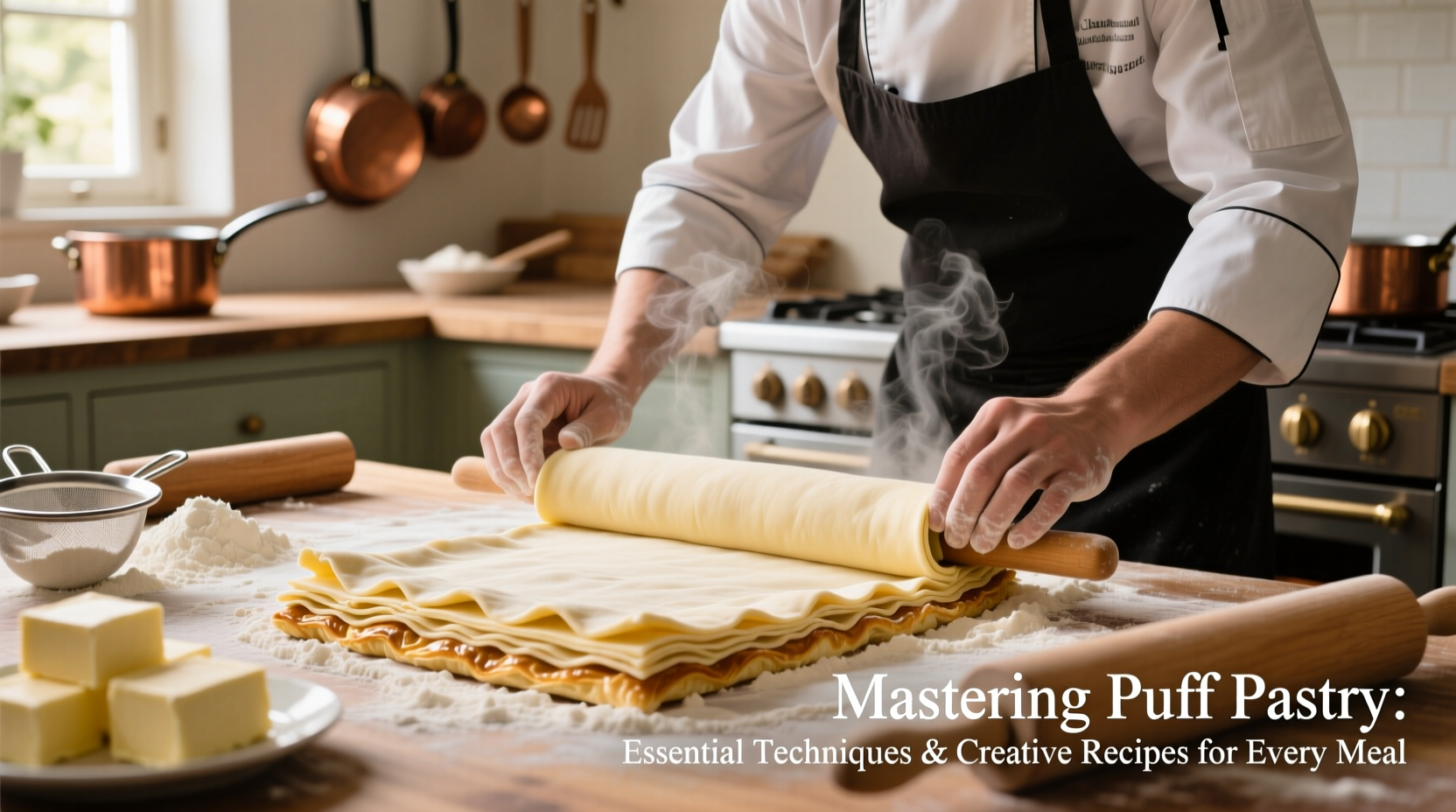
Puff pastry rises due to hundreds of thin layers of dough separated by butter. When heated in the oven, the water in the butter turns to steam, lifting each layer apart and creating that signature airy, crisp texture. This process requires careful attention to temperature. If the butter melts before the structure sets, the layers collapse. Conversely, if the dough is too cold, it won’t expand evenly.
Homemade puff pastry involves rolling and folding the dough multiple times (typically six \"turns\"), which creates around 729 layers. However, commercial frozen puff pastry—when chosen wisely—can deliver comparable results without weeks of practice. Look for brands that list butter as the primary fat rather than hydrogenated oils.
“Great puff pastry isn’t about perfection in folds—it’s about consistency in chilling and confidence in execution.” — Chef Lila Moreau, Pastry Instructor at Le Cordon Bleu Paris
Essential Techniques for Success
Even the best puff pastry will fail if handled incorrectly. Follow these foundational steps to ensure consistent results every time:
- Thaw frozen pastry properly: Always thaw puff pastry in the refrigerator for 4–6 hours or overnight. Never microwave it or leave it on the counter too long, as uneven melting compromises layer separation.
- Work quickly on a cool surface: Use a marble or stainless steel countertop if possible. Warm surfaces soften the butter prematurely.
- Minimize handling: Overworking the dough warms it and compresses the layers. Roll gently and only as much as needed.
- Prevent sogginess with sealing: For filled pastries like turnovers, brush edges with egg wash and crimp well. Prick exposed bottom layers (like tart shells) with a fork before blind baking to reduce puffing.
- Bake at high heat: Start at 400°F (200°C) or higher. The rapid rise of steam is crucial for lift.
Creative Recipes for Every Meal
Puff pastry shines beyond croissants and danishes. Its neutral flavor and structural integrity make it ideal for both sweet and savory applications throughout the day.
Breakfast: Spinach & Feta Cheese Straws
Roll out a sheet of puff pastry and cut into ½-inch strips. Twist each strip, place on a lined baking sheet, and brush with egg wash. Sprinkle with crumbled feta, chopped spinach (blanched and dried), and a pinch of nutmeg. Bake at 400°F for 15 minutes until golden. Serve warm with yogurt dip.
Lunch: Roasted Tomato & Goat Cheese Tart
Cut a sheet to fit a rectangular tart pan. Dock the base with a fork, then chill for 10 minutes. Line with parchment and fill with pie weights or dried beans. Blind bake at 375°F for 12 minutes. Remove weights and continue baking 5–7 minutes until dry. Top with roasted cherry tomatoes, herbed goat cheese, and fresh thyme. Return to oven for 8 minutes.
Dinner: Beef Wellington Bites
For a simplified version, sear small beef tenderloin medallions, cool slightly, then wrap individually in duxelles (finely chopped mushrooms sautéed with shallots and herbs), followed by a slice of prosciutto and a small oval of puff pastry. Brush with egg wash and bake at 400°F for 20–25 minutes for medium-rare. Rest 5 minutes before serving.
Dessert: Apple Rose Pastries
Thinly slice apples and steam briefly to soften. Lay them end-to-end over a strip of puff pastry spread with apricot jam and ground cinnamon. Fold one long edge over the apples, then roll tightly. Slice into 1-inch rounds, place cut-side down on a tray, and bake at 375°F for 25 minutes. Dust with powdered sugar when cool.
Do’s and Don’ts of Puff Pastry Handling
| Do’s | Don’ts |
|---|---|
| Always chill tools and work surface in warm environments | Don’t skip the resting step after shaping |
| Use egg wash (1 egg + 1 tbsp water) for shine and adhesion | Don’t stretch the dough when placing in pans—this causes shrinkage |
| Score tops lightly with a knife for controlled expansion | Don’t open the oven during the first 15 minutes of baking |
| Store unused pastry immediately back in the fridge | Don’t refreeze thawed pastry |
Step-by-Step Guide: Perfect Freezer-Friendly Mini Quiches
Make-ahead mini quiches are ideal for busy mornings. Here’s how to create them efficiently:
- Thaw two sheets of puff pastry in the fridge overnight.
- Preheat oven to 375°F (190°C).
- Roll each sheet slightly to smooth seams, then cut into 3-inch squares.
- Press squares into a greased muffin tin, pushing gently up the sides.
- Blind bake for 8 minutes with pie weights. Remove weights and bake 3 more minutes.
- Whisk together 3 eggs, ½ cup cream, salt, pepper, and grated Gruyère.
- Pour filling into shells, adding diced ham or sautéed leeks if desired.
- Bake 18–20 minutes until set and golden.
- Cool completely, then freeze on a tray before transferring to a sealed container.
- To reheat: Bake frozen quiches at 350°F for 12–15 minutes.
Frequently Asked Questions
Can I make puff pastry ahead of time?
Yes—but only up to 24 hours in advance. Assembled unbaked items (like turnovers or tarts) can be refrigerated on a tray, covered with plastic. For longer storage, freeze them raw and bake straight from frozen, adding 5–10 minutes to the cook time.
Why did my puff pastry turn out soggy?
Sogginess usually comes from moisture seeping into the base before baking. Prevent this by pre-baking (\"blind baking\") the shell when adding wet fillings. Also, ensure your filling isn't overly liquid; reduce sauces or drain ingredients like tomatoes thoroughly.
Is there a gluten-free alternative that works well?
Some specialty brands offer gluten-free puff pastry with decent rise and texture, though results vary. Look for ones containing xanthan gum and real butter. Test in small batches before serving to guests.
Real-Life Example: From Weeknight Stress to Sunday Brunch Star
Sophie, a working mother in Portland, used to dread weekend cooking. After discovering puff pastry-based recipes, she began assembling savory tarts on Friday nights while prepping dinner. She’d blind bake the crust, refrigerate it, then add warm roasted vegetables and cheese the next morning. Her family now looks forward to “Tart Sundays,” and Sophie feels proud presenting something visually impressive with minimal effort. “It feels fancy,” she says, “but really, it’s just smart planning and good pastry.”
Conclusion: Turn Simplicity Into Elegance
Mastering puff pastry isn’t about replicating Michelin-star kitchens—it’s about understanding its behavior and using that knowledge creatively. With proper technique, even beginners can produce restaurant-quality dishes for any occasion. From quick weeknight appetizers to show-stopping desserts, puff pastry adapts beautifully to your needs.




 浙公网安备
33010002000092号
浙公网安备
33010002000092号 浙B2-20120091-4
Comments
No comments yet. Why don't you start the discussion?