
In a world saturated with distractions, instant gratification, and constant demands on attention, self control has become one of the most valuable yet underdeveloped skills. Whether it’s resisting the urge to check your phone during work, sticking to a fitness routine, or managing emotional reactions under pressure, self control determines not just short-term choices but long-term outcomes. Research consistently shows that individuals with higher levels of self discipline achieve greater academic success, financial stability, and overall life satisfaction. The good news? Self control isn’t a fixed trait—it’s a muscle that can be trained and strengthened.
The Science Behind Willpower and Focus
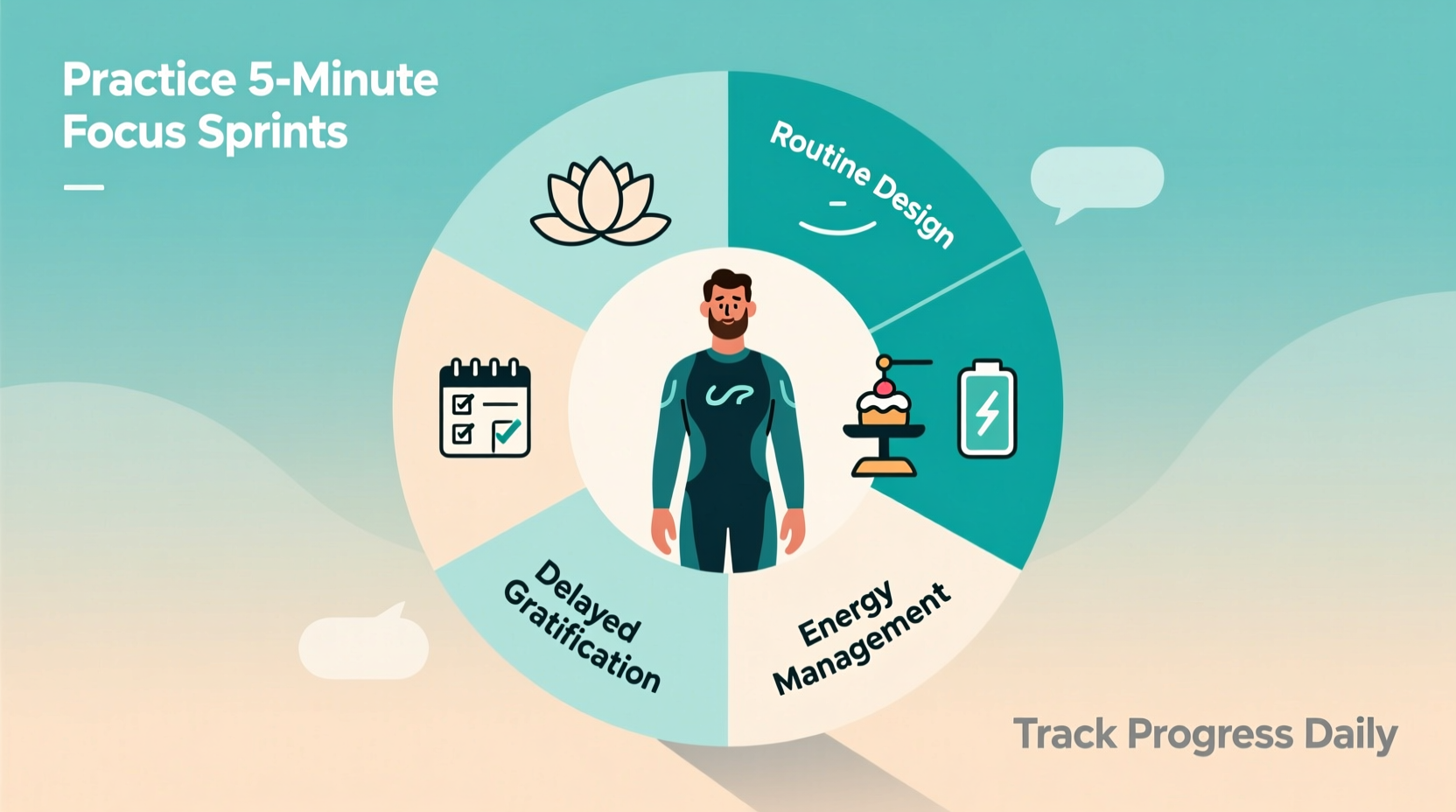
Willpower operates like a limited resource throughout the day. Psychologist Roy F. Baumeister’s pioneering research on ego depletion suggests that each act of self control draws from a finite mental reservoir. When this reserve is depleted—through decision fatigue, stress, or prolonged focus—impulse control weakens. However, more recent studies indicate that mindset plays a crucial role: people who believe willpower is unlimited tend to sustain effort longer, suggesting that motivation and belief systems shape our capacity for discipline.
Neurologically, self control is governed by the prefrontal cortex—the brain region responsible for executive function, planning, and inhibition. This area competes with older, instinctive parts of the brain that seek immediate rewards. Strengthening neural pathways through consistent practice allows the prefrontal cortex to dominate impulses over time.
“Self-control is the cornerstone of success in almost every domain of life—from health and wealth to relationships and career.” — Dr. Kelly McGonigal, Stanford psychologist and author of *The Willpower Instinct*
Practical Strategies to Build Lasting Willpower
Building self control doesn’t require heroic acts of restraint. Instead, sustainable change comes from small, repeatable habits that gradually rewire behavior patterns. Below are evidence-based methods to cultivate enduring willpower.
1. Start Small with Micro-Habits
Attempting major lifestyle changes all at once often leads to burnout. Instead, adopt micro-habits—tiny actions that require minimal effort but reinforce discipline. For example, if you want to improve focus, start by committing to five minutes of distraction-free work daily. Once that becomes automatic, gradually increase the duration.
2. Design Your Environment for Success
Your surroundings exert a powerful influence on behavior. If your goal is to eat healthier, keep junk food out of the house. To reduce screen time, charge your phone outside the bedroom. By removing temptation, you reduce the need to rely on willpower alone.
- Place distracting apps in folders or delete them temporarily
- Use website blockers during focused work sessions
- Arrange your workspace to minimize clutter and interruptions
3. Implement Implementation Intentions
An implementation intention is a specific plan that links a situational cue with a desired response. Rather than saying “I’ll try to avoid snacking,” say “If I feel hungry after dinner, then I will drink a glass of water first.” This technique, backed by decades of behavioral research, increases follow-through by automating decisions before they arise.
A Step-by-Step Guide to Daily Willpower Training
Consistency beats intensity when building self control. Follow this seven-day cycle to integrate discipline into your routine:
- Day 1–2: Awareness Audit – Track your impulses for two days. Note when you feel tempted (e.g., social media, unhealthy snacks) and what triggers them.
- Day 3: Choose One Target Behavior – Pick one habit to modify (e.g., checking email only twice a day).
- Day 4: Create an Implementation Plan – Define the trigger and response (e.g., “When I sit down at my desk, I will write my top three priorities first.”).
- Day 5–6: Practice with Accountability – Share your goal with someone or use a habit-tracking app to log progress.
- Day 7: Reflect and Adjust – Review what worked and refine your approach for the next week.
Repeat this cycle weekly, gradually layering new behaviors as old ones solidify.
Common Pitfalls and How to Avoid Them
Even with the best intentions, many people sabotage their progress unknowingly. Recognizing these traps early can prevent discouragement.
| Pitfall | Why It Undermines Willpower | Solution |
|---|---|---|
| All-or-nothing thinking | One slip-up leads to complete abandonment of the goal | Practice self-compassion; treat setbacks as data, not failure |
| Over-reliance on motivation | Motivation fluctuates; discipline must persist regardless | Focus on systems, not feelings |
| Poor sleep or nutrition | Depletes cognitive resources needed for self-regulation | Prioritize 7–8 hours of sleep and balanced meals |
| Multitasking | Fragmented attention weakens focus and increases errors | Work in single-task blocks using timeboxing |
Real Example: From Distraction to Deep Work
James, a freelance writer, struggled with constant interruptions from notifications and social media. He found himself working late despite long hours because he couldn’t maintain focus. After reading about willpower depletion, he decided to test environmental design. He turned off non-essential notifications, used a browser extension to block social sites during work hours, and began each morning by writing his top three goals. Within two weeks, he reduced his workday by two hours while increasing output. The key wasn’t sheer willpower—it was reducing the number of decisions he had to make throughout the day.
Checklist: Building Sustainable Self Control
Use this checklist daily to reinforce disciplined behavior:
- ✅ Define your top priority for the day each morning
- ✅ Remove at least one source of distraction from your environment
- ✅ Practice a 5-minute mindfulness exercise to reset focus
- ✅ Log one instance where you exercised self control
- ✅ Reflect on your energy levels and adjust tasks accordingly
- ✅ Get 7+ hours of quality sleep
Frequently Asked Questions
Is willpower finite, or can it be renewed throughout the day?
While early research suggested willpower is a limited resource that depletes with use, newer findings show that beliefs matter. People who view willpower as renewable tend to persist longer. Additionally, rest, glucose intake, and brief breaks can restore cognitive stamina. Strategic recovery—like walking or deep breathing—is essential for sustained performance.
How long does it take to build real self control?
There’s no universal timeline, but studies suggest that simple habits can become automatic in 18 to 254 days, with an average of about 66 days. Consistency matters more than speed. Focus on showing up daily, even with small efforts, rather than aiming for perfection.
Can meditation really improve focus and self discipline?
Yes. Mindfulness meditation strengthens the prefrontal cortex and improves attention regulation. Just 10 minutes a day can enhance awareness of impulses, allowing you to pause before reacting. Over time, this creates space between stimulus and response—the foundation of self control.
Cultivating Focus in a Distracted World
Focus is not merely the absence of distraction; it’s the presence of intentional direction. In knowledge work, deep focus—uninterrupted concentration on cognitively demanding tasks—is increasingly rare and highly valuable. Cal Newport, author of *Deep Work*, argues that the ability to focus without distraction is becoming a superpower in the modern economy.
To cultivate deep focus:
- Block time on your calendar for high-concentration tasks
- Use the Pomodoro Technique: 25 minutes of work, 5-minute break
- Signal to others when you’re in focus mode (e.g., headphones, status indicator)
- Review your attention at the end of the day—where did it go?
Conclusion: Take Action Today
Mastering self control isn’t about perfection—it’s about progress. Every time you choose long-term gain over short-term pleasure, you strengthen the neural circuits of discipline. The strategies outlined here—environment design, micro-habits, implementation intentions, and mindful reflection—are not quick fixes but lifelong tools. Begin with one small change. Track it. Refine it. Stack it. Over time, these choices compound into extraordinary results.




 浙公网安备
33010002000092号
浙公网安备
33010002000092号 浙B2-20120091-4
Comments
No comments yet. Why don't you start the discussion?