
Navigating a site plan can feel like deciphering a foreign language—filled with symbols, dimensions, and technical jargon. Yet, for architects, builders, developers, and even property owners, understanding site plans is essential. These documents serve as the blueprint for land development, guiding everything from foundation placement to drainage systems. Whether you're planning a home addition, reviewing a municipal proposal, or starting a new build, mastering site plans empowers you to make informed decisions. This guide breaks down the anatomy of a site plan, walks through its critical components, and provides practical steps to read and apply them effectively.
What Is a Site Plan and Why It Matters
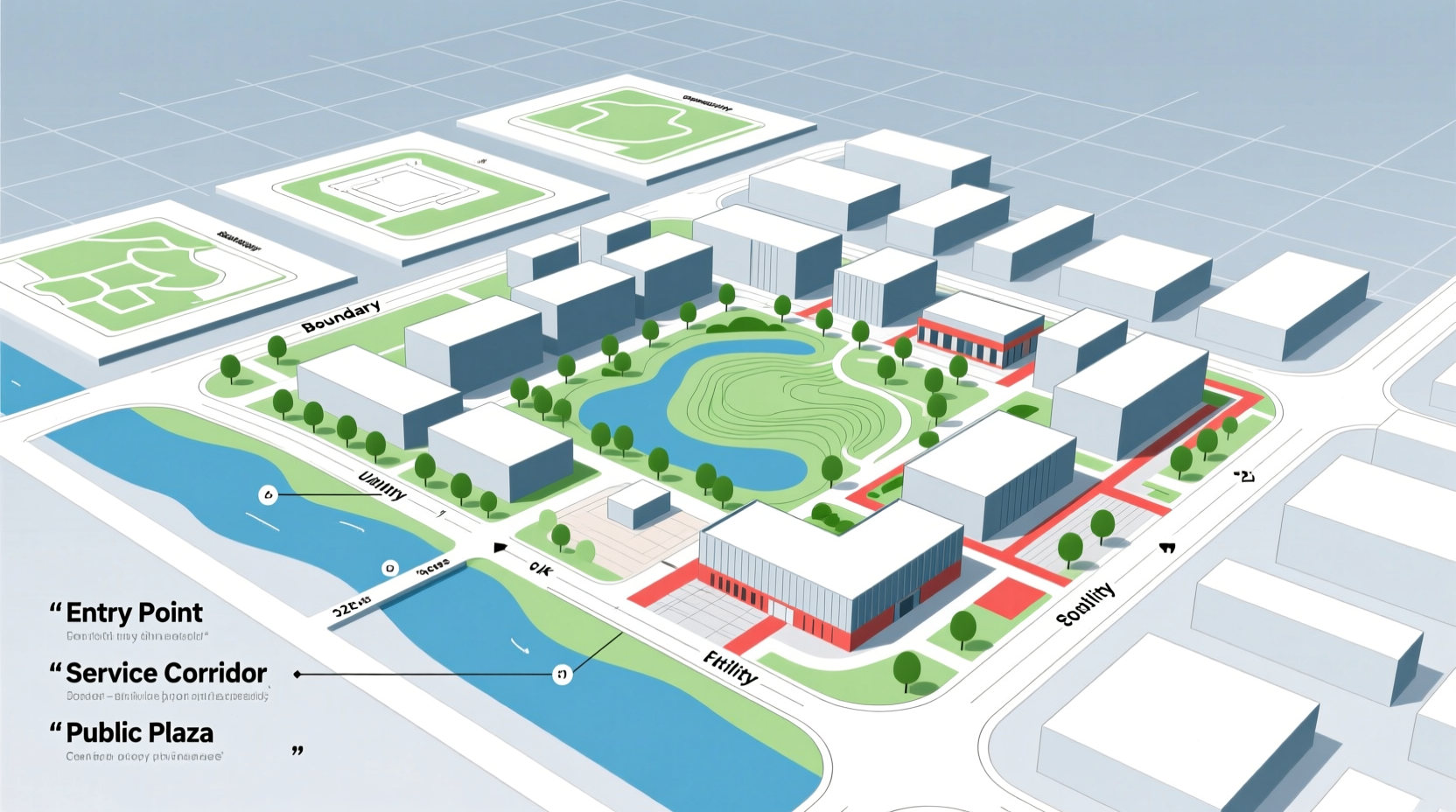
A site plan is a detailed, scaled drawing that illustrates how a piece of land will be developed. Unlike floor plans, which focus on interior room layouts, site plans show the entire property—including buildings, driveways, landscaping, utilities, setbacks, and topography. They are typically required by local zoning boards before any construction begins and must adhere to municipal codes and regulations.
Site plans ensure that proposed developments meet safety standards, respect property lines, accommodate stormwater runoff, and integrate with existing infrastructure. For homeowners, they help visualize how a project fits within their yard. For contractors, they provide precise instructions for excavation, grading, and utility connections.
“An accurate site plan doesn’t just satisfy legal requirements—it prevents costly mistakes during construction.” — Daniel Reyes, Licensed Land Surveyor, California
Key Elements Found in Every Site Plan
To understand a site plan, you must first recognize its core components. While designs vary based on region and project scope, most include the following:
- Property boundaries: Clearly marked lines indicating the legal limits of the parcel.
- Building footprint: The outline of all structures, showing size, shape, and location relative to the lot.
- Setbacks: Distances between buildings and property lines (front, rear, side).
- Driveways and walkways: Access routes for vehicles and pedestrians.
- Utility locations: Water, sewer, gas, electrical, and communication lines.
- Topography and grading: Contour lines showing elevation changes and proposed slope adjustments.
- Landscaping features: Trees, lawns, irrigation systems, and retaining walls.
- North arrow and scale: Orientation reference and measurement guide (e.g., 1 inch = 20 feet).
- Stormwater management: Drainage paths, swales, catch basins, or retention ponds.
Step-by-Step Guide to Reading a Site Plan
Interpreting a site plan doesn't require an architecture degree—but it does require attention to detail. Follow this sequence to extract maximum value from any layout:
- Check the title block. Located in the bottom right corner, it includes the project name, address, scale, date, and designer information. Confirm it matches your project.
- Identify the north arrow. This tells you which way the site faces. Orientation affects sunlight exposure, wind patterns, and privacy.
- Review property lines and dimensions. Use the scale to measure distances. Look for discrepancies with your deed or survey.
- Locate existing and proposed structures. Existing buildings are usually dashed; proposed ones are solid. Note height, footprint, and placement.
- Analyze setbacks. Compare required setbacks (from zoning rules) with actual distances. Non-compliance can delay permits.
- Trace access points. Driveways, gates, and sidewalks should connect safely to public roads without violating easements.
- Study utility lines. Identify where water, sewer, and power enter the site. Are there conflicts with excavation zones?
- Evaluate drainage and grading. Contours should slope away from buildings. Look for arrows indicating water flow direction.
- Scan for notes and legends. Symbols mean different things across firms—always consult the legend key.
- Cross-reference with other drawings. Match the site plan with floor plans, elevations, and engineering schematics.
Common Pitfalls and How to Avoid Them
Misreading a site plan can lead to expensive errors—such as building too close to a boundary or blocking utility access. Below is a comparison of frequent oversights and best practices to counter them.
| Common Mistake | Why It’s Problematic | How to Prevent It |
|---|---|---|
| Ignoring scale accuracy | Leads to incorrect estimations of space or clearance | Always use a scale ruler when measuring distances on paper or PDFs |
| Overlooking easements | May result in illegal obstruction of utility or access rights | Verify easement locations with your surveyor or title report |
| Misinterpreting contour intervals | Causes poor drainage or structural instability | Confirm interval values (e.g., 1-foot vs. 5-foot contours) and calculate slopes |
| Assuming all trees can remain | Protected species or root zones may restrict digging | Consult arborist reports and local preservation laws |
Real-World Example: A Residential Renovation Challenge
In suburban Denver, a homeowner wanted to add a two-story extension to their backyard. The initial site plan showed ample space, but upon closer inspection, the architect noticed a 5-foot-wide utility easement running along the rear property line—marked only by a thin dashed line and a small note. Building on this area would have violated city code and forced demolition later. By catching this early, the team redesigned the addition to fit within the buildable area, avoiding fines and delays. This case underscores the importance of meticulous review, especially in older neighborhoods where easements may not be obvious.
Essential Checklist Before Approving a Site Plan
Before signing off on any site plan, run through this verification checklist to ensure completeness and compliance:
- ✅ All property boundaries match the legal survey
- ✅ Setbacks comply with local zoning requirements
- ✅ Building footprint aligns with architectural drawings
- ✅ Driveway width and turning radius meet municipal standards
- ✅ Stormwater drains away from foundations and neighboring properties
- ✅ Utility connections are clearly labeled and accessible
- ✅ North arrow and scale are present and correct
- ✅ Easements and rights-of-way are clearly indicated
- ✅ Landscape preservation zones (if any) are respected
- ✅ The plan has been stamped by a licensed professional (surveyor, engineer, or architect)
Frequently Asked Questions
Can I create my own site plan?
While simple sketches can help visualize ideas, official site plans for permitting must be prepared or reviewed by a licensed professional—typically a land surveyor, civil engineer, or architect. DIY versions often miss regulatory details and won’t be accepted by authorities.
How detailed should a site plan be?
It depends on the project. A basic residential addition may need only structure outlines and setbacks. Larger developments require detailed grading, utility routing, erosion controls, and landscape plans. Always check with your local planning department for minimum requirements.
What’s the difference between a site plan and a plot plan?
The terms are often used interchangeably, but technically, a plot plan is simpler and usually shows only structures and setbacks. A site plan includes additional elements like utilities, topography, and landscaping—making it more comprehensive.
Take Control of Your Development Project
Understanding site plans transforms you from a passive observer into an active participant in your construction or renovation project. You’ll spot issues early, communicate more effectively with professionals, and protect your investment from avoidable setbacks. No longer will cryptic lines and numbers confuse you—instead, you’ll see opportunity, precision, and possibility laid out in black and white.




 浙公网安备
33010002000092号
浙公网安备
33010002000092号 浙B2-20120091-4
Comments
No comments yet. Why don't you start the discussion?