
A sports watch is only as effective as its fit. No matter how advanced the GPS, heart rate monitor, or battery life, a poorly adjusted strap can compromise data accuracy, cause discomfort, or even lead to injury during prolonged use. Whether you're logging miles on a trail run, swimming laps in open water, or lifting weights in the gym, the way your watch sits on your wrist plays a crucial role in both performance tracking and physical comfort. Mastering the art of strap adjustment isn’t just about tightening or loosening—it’s about understanding materials, anatomy, motion dynamics, and personal preference.
Why Proper Strap Fit Matters Beyond Comfort
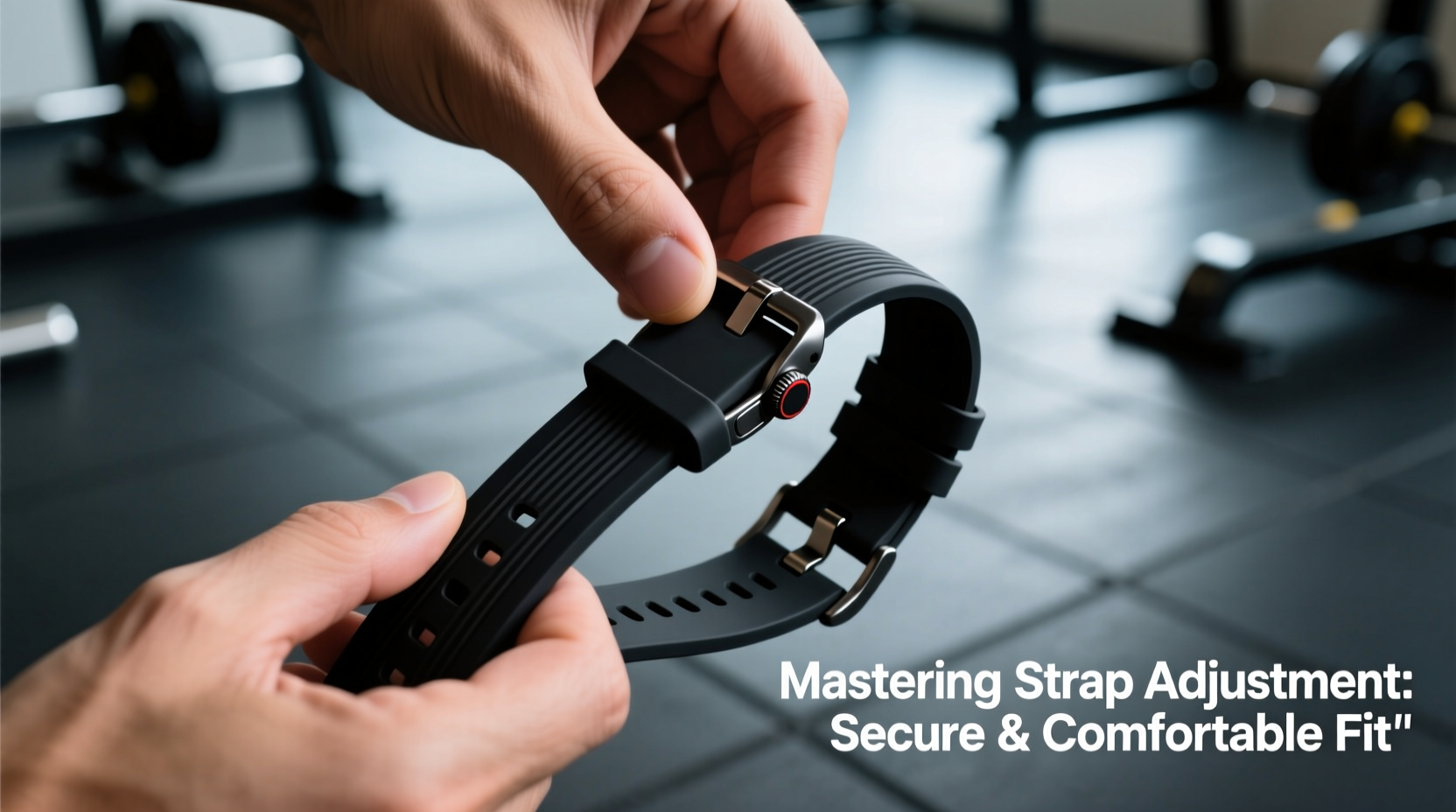
An ill-fitting sports watch does more than irritate your skin. It affects sensor accuracy, especially optical heart rate monitors that rely on consistent skin contact. A loose watch bounces with movement, creating gaps that disrupt readings. Conversely, a strap too tight can restrict blood flow, skewing heart rate data and causing numbness or tingling.
During high-motion activities like running or HIIT, a loose band increases the risk of micro-abrasions or \"watch rash\" from constant friction. In aquatic environments, improper tension can allow water ingress or reduce buoyancy control. The ideal fit balances security with breathability—snug enough to stay in place, but loose enough to allow natural circulation and minimal skin stress.
“Even a 2mm shift in strap tension can alter heart rate variability readings by up to 15% during intense intervals.” — Dr. Lena Torres, Biomechanics Researcher at SportsTech Labs
Understanding Strap Materials and Their Behavior
Different strap materials react uniquely to sweat, temperature, and movement. Recognizing these traits helps you adjust proactively rather than reactively.
| Material | Stretch Tendency | Sweat Reaction | Best Adjustment Approach |
|---|---|---|---|
| Silicone Rubber | Low stretch, expands when warm | Retains moisture, may loosen over time | Tighten slightly pre-workout; recheck after warming up |
| Nylon (e.g., NATO, Velcro) | Moderate stretch when wet | Absorbs sweat, swells slightly | Leave one extra hole slack for post-sweat expansion |
| Fluoroelastomer (Premium Bands) | Negligible stretch | Resistant to moisture | Set once; rarely needs mid-session tweaks |
| Stainless Steel Mesh | No stretch, metal fatigue over time | Conducts heat, prone to pinching when over-tightened | Adjust for seasonal wrist swelling |
| Fabric Weave (Breathable Bands) | High initial stretch, settles in | Vents well, shrinks slightly when dry | Re-adjust after first 3–5 uses |
Step-by-Step Guide to Perfect Strap Adjustment
Follow this five-step process to achieve optimal fit before every workout:
- Measure Your Wrist Girth: Use a soft tape measure around the ulna bump (wrist bone). Note the size. Most straps have 3–5 adjustment holes; knowing your baseline helps track changes due to hydration or temperature.
- Select the Right Hole: Start with the middle hole. If you’re between sizes, choose tighter for running, looser for swimming. Silicone bands often require one hole tighter than fabric ones.
- Check the Two-Finger Rule: Slide two fingers under the band at the back of your wrist. You should feel snug contact without compression. If three fingers fit easily, it’s too loose. If one finger causes pressure, it’s too tight.
- Test for Movement: Shake your arm gently. The watch should not rotate more than 15 degrees or slide up/down more than 1 cm. For swim watches, simulate strokes by moving your hand rapidly through air.
- Reassess Mid-Workout: After 20 minutes of activity, check fit again. Sweat and muscle engorgement can change tension significantly, especially in hot climates.
Real-World Scenario: Marathon Training Adjustments
Consider Sarah, a half-marathon trainee using a GPS sports watch with a silicone strap. During long runs, she noticed inconsistent heart rate spikes and a red mark on her inner wrist. Initially, she assumed sensor error. Upon review, she realized she was fastening the strap tightly before runs to prevent slippage. As her body warmed and her wrist expanded from increased blood flow, the band constricted. By mile 8, the pressure altered capillary response, confusing the optical sensor.
She adjusted her routine: fastening the band one hole looser than usual and repositioning the watch 1 cm higher on her wrist—above the main tendon ridge. She also switched to a perforated fluoroelastomer band for better airflow. These changes eliminated skin irritation and stabilized her heart rate data across sessions.
Common Adjustment Mistakes and How to Avoid Them
- Over-tightening for “security”: This is the most frequent error. A tight strap doesn’t improve stability—it increases chafing and distorts biometrics.
- Ignoring seasonal changes: Cold weather reduces wrist size; heat and humidity increase swelling. Re-evaluate fit monthly during seasonal shifts.
- Using worn-out pins or clasps: Metal spring bars degrade. Inspect them quarterly. A loose clasp can cause sudden strap failure mid-run.
- One-size-fits-all thinking: Your ideal fit for cycling may differ from swimming. Adapt accordingly.
Expert Checklist: Achieve Optimal Fit in 5 Minutes
Use this checklist before every key workout or race:
- ✅ Measure wrist circumference (note any swelling from prior exercise)
- ✅ Choose appropriate strap type for activity (e.g., quick-dry for swimming)
- ✅ Fasten in the middle hole initially
- ✅ Apply the two-finger test behind the wrist
- ✅ Perform dynamic movement test (shake, twist, simulate motion)
- ✅ Confirm sensor visibility (watch face should not tilt excessively)
- ✅ Set a 20-minute reminder to recheck fit during extended sessions
Frequently Asked Questions
How tight should my sports watch be during a run?
The band should be snug enough to prevent sliding or rotation but allow two fingers to fit comfortably underneath. You should not feel pressure or see indentations on your skin after removal.
Can a loose watch affect GPS accuracy?
Not directly—but excessive movement can interfere with motion-based algorithms that correct GPS drift. More critically, a loose fit impacts heart rate and cadence tracking, which are used to refine location estimates in some models.
Why does my watch leave a red mark after workouts?
This is typically caused by over-tightening, lack of breathability, or allergic reaction to degraded silicone. Try loosening the band, switching to a hypoallergenic material, or cleaning the strap weekly with mild soap and water.
Final Thoughts: Precision Starts at the Wrist
Your sports watch is a tool of measurement, motivation, and insight. But no algorithm can compensate for poor ergonomics. Taking just a few minutes to master strap adjustment transforms your device from a passive tracker into a responsive, reliable partner. Comfort isn’t optional—it’s foundational to consistency, accuracy, and long-term wearability. Whether you're chasing a personal best or building sustainable fitness habits, the right fit makes all the difference.




 浙公网安备
33010002000092号
浙公网安备
33010002000092号 浙B2-20120091-4
Comments
No comments yet. Why don't you start the discussion?