
A well-chosen watch does more than tell time—it speaks volumes about personal taste, attention to detail, and sartorial awareness. Unlike fleeting fashion trends, a quality timepiece is a constant companion that can elevate even the simplest ensemble. Yet, many overlook the subtle art of pairing watches with clothing, treating them as afterthoughts rather than integral elements of an outfit. The truth is, mastering this balance transforms your presence from casually dressed to intentionally styled.
The right watch enhances your look without drawing undue attention; it complements the fabric, color, occasion, and even the season. Whether you're wearing a crisp white shirt to a board meeting or rolling up your sleeves at a weekend brunch, your wristwatch should feel like a natural extension of your attire—not a mismatched accessory bolted on at the last minute.
Understand Your Watch’s Personality
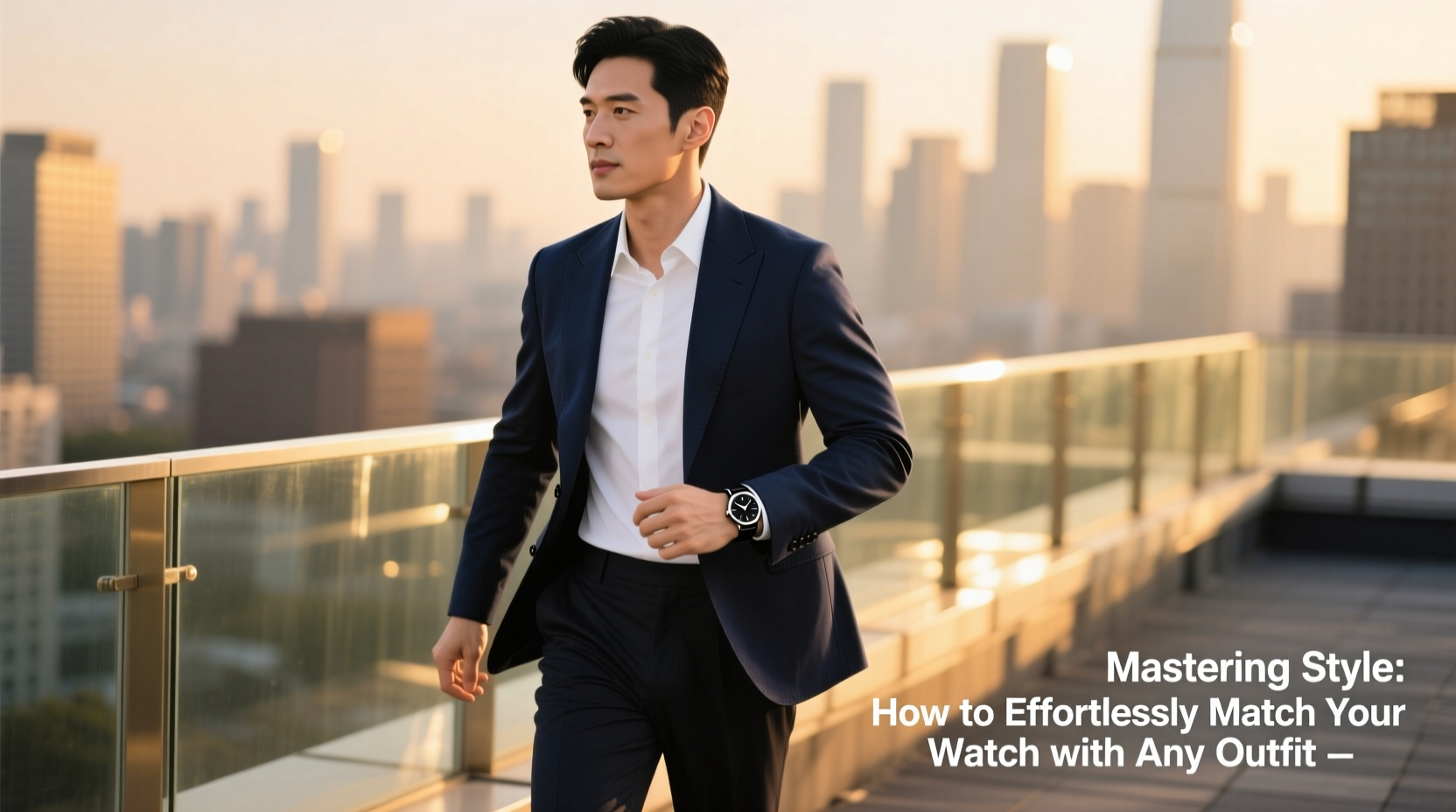
Every watch carries its own aesthetic language shaped by design, material, size, and function. Recognizing this “personality” is the first step in successful coordination. A chunky dive watch exudes ruggedness and adventure, while a slim dress watch whispers refinement and formality. Ignoring these cues leads to visual dissonance—like wearing sneakers with a tuxedo.
Consider three core categories:
- Dress watches: Thin cases, minimalist dials (often white or black), leather straps. Ideal for formal or business settings.
- Sport watches: Larger cases, durable materials (stainless steel, titanium), water resistance. Built for action but adaptable to casual wear.
- Field/Casual watches: Mid-sized, legible dials, canvas or nylon straps. Versatile for everyday use across smart-casual environments.
Match Metals to Outfit Accents
One of the most effective yet underused techniques is coordinating your watch’s metal tone with other metallic elements in your outfit—such as belt buckles, cufflinks, eyeglass frames, or shoe hardware. This creates visual harmony and signals intentionality.
| Metal Tone | Best Paired With | Avoid Pairing With |
|---|---|---|
| Stainless Steel | Silver jewelry, gray suits, denim, monochrome outfits | Gold-toned belts or shoes unless deliberately contrasting |
| Yellow Gold | Warm tones (beige, camel, burgundy), wool fabrics, evening wear | Cool grays or icy blues unless balanced with warm layers |
| Rose Gold | Pink shirts, navy blazers, soft earth tones | Bright reds or neon accents which clash subtly |
| Titanium/Black Coated | Dark jeans, tactical wear, modern minimalist looks | Traditional formalwear like wingtips and pinstripes |
“Consistency in metal finishes isn’t about rigidity—it’s about creating a coherent narrative across your silhouette.” — Daniel Reeves, Menswear Stylist & Editor, *The Gentry Review*
Strap Selection: The Silent Style Influencer
The strap is often the deciding factor between a watch that blends seamlessly and one that disrupts. It’s not just about comfort—it’s about context.
Leather straps, especially in black or dark brown, project maturity and polish. They pair naturally with tailored clothing and footwear made from similar leathers. A chocolate-brown leather watch strap, for instance, harmonizes beautifully with cordovan shoes and a tweed jacket.
On the other hand, NATO or rubber straps introduce a relaxed, utilitarian energy. These work best with untucked shirts, chinos, or athleisure-inspired combinations. A blue NATO strap on a field watch adds a pop of color against khaki pants and a navy sweater—functional, fresh, and effortlessly put-together.
Real Example: The Office-to-Dinner Transition
James wears a white dress shirt, charcoal suit, and black oxfords to work. On his wrist: a slim silver dress watch on a black alligator-embossed strap—professional, understated, elegant. After hours, he removes his tie, unbuttons the top button, rolls up his sleeves, and heads to a rooftop bar. He swaps the formal strap for a brushed steel bracelet during lunch break, instantly softening the look while maintaining sophistication. No change of clothes needed—the watch adaptation did the heavy lifting.
Occasion-Based Coordination Framework
Style evolves with setting. Applying a structured approach ensures your watch never feels out of place.
- Formal Events: Choose a thin case (under 9mm), minimal dial, and leather strap. White, black, or midnight blue dials are safest. Avoid chronographs or oversized crowns.
- Business Casual: Medium case size (38–40mm), metal bracelet or textured leather. Silver or rose gold works well with blazers and open-collar shirts.
- Casual Weekend: Embrace color and texture. A vintage-inspired diver on a tropic rubber strap with selvedge denim and a crewneck tee radiates quiet confidence.
- Outdoor Activities: Prioritize durability. A GPS-enabled sports watch in titanium or fiber-reinforced polymer makes sense here—even if it’s less “stylish,” functionality reigns supreme.
Checklist: Watch-Outfit Harmony in 5 Steps
- ✅ Assess the event’s dress code before selecting your watch.
- ✅ Match metal tones between your watch, belt buckle, and accessories.
- ✅ Ensure case size fits your wrist and doesn’t overwhelm your sleeve length.
- ✅ Align strap material with the formality level of your outfit.
- ✅ Step back and evaluate: does the watch enhance the whole look, or distract from it?
Common Pitfalls and How to Avoid Them
Even seasoned dressers stumble when it comes to watches. Here are recurring missteps:
- Over-sizing: Large watches may look impressive in photos, but they can dominate small wrists and snag shirt cuffs. Stick to proportions—your watch face shouldn’t extend beyond your wrist bone.
- Mixing too many metals: Wearing a gold watch with silver rings and a platinum wedding band creates visual noise. Limit dominant metal tones to one or two max.
- Ignoring seasonal shifts: Heavy metal bracelets feel cumbersome in summer humidity. Lighter materials breathe better and reflect seasonal moods.
“The most stylish men don’t wear the biggest watch—they wear the one that belongs.” — Luca Moretti, Horology Curator, Geneva Time Museum
FAQ
Can I wear a sporty watch with a suit?
Yes—but selectively. A sleek integrated-bracelet sports watch (like an Audemars Piguet Royal Oak or Patek Philippe Nautilus) pairs excellently with modern, unstructured suits. Avoid bulky divers or digital-faced models with traditional tailoring.
Should my watch match my shoes or belt exactly?
Not necessarily. Matching brown tones closely helps, but perfect color replication isn’t required. Focus instead on tonal family—warm browns with warm browns, cool blacks with cool grays. Texture variation (polished vs. matte) adds depth.
Is it okay to wear multiple watches at once?
Rarely. Stacking watches reads as cluttered unless done with extreme precision (e.g., a dress watch beneath a transparent-cased technical piece). One well-chosen timepiece almost always makes a stronger statement.
Final Thoughts: Wear Confidence, Not Just Time
Matching your watch to your outfit isn’t about rigid rules—it’s about cultivating awareness. Each choice, from case thickness to clasp finish, contributes to a larger impression of self-possession and care. The goal isn’t perfection, but coherence: a sense that every element belongs exactly where it is.
Start small. Experiment with strap swaps. Notice how different metals interact with your wardrobe. Pay attention to what others wear—and why it works. Over time, pairing becomes instinctive, effortless, and deeply personal.




 浙公网安备
33010002000092号
浙公网安备
33010002000092号 浙B2-20120091-4
Comments
No comments yet. Why don't you start the discussion?