
In a world increasingly shaped by digital interactions and fleeting exchanges, the ability to form deep, authentic connections has become both rare and invaluable. Genuine connection isn’t about charm or persuasion—it’s rooted in the sincere desire to understand and appreciate others. When we learn how to truly like people—not for what they can do for us, but for who they are—we open the door to richer relationships, greater emotional fulfillment, and a more compassionate life.
Liking others doesn’t mean agreeing with everyone or ignoring differences. It means cultivating empathy, practicing active listening, and approaching people with curiosity rather than judgment. These skills aren’t innate; they’re developed through intention and practice. The rewards, however, extend far beyond personal satisfaction—they influence our careers, friendships, families, and communities.
The Foundation of Liking Others: Shifting Your Mindset
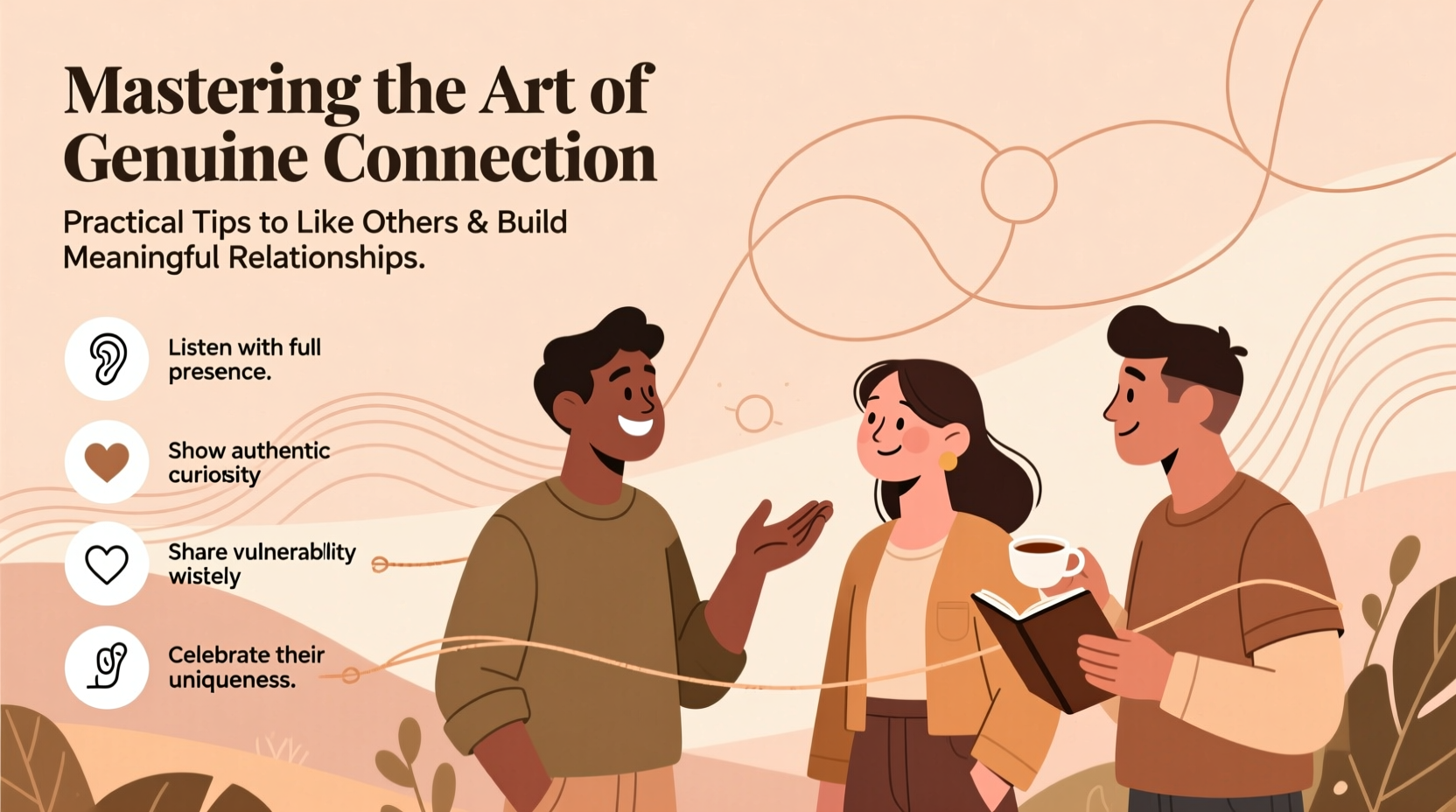
To genuinely like someone, you must first shift from a self-focused to an other-focused mindset. Most social discomfort arises not from the other person, but from internal concerns—what they think of us, whether we sound smart, if we’re being liked in return. This inward focus blocks authentic engagement.
Instead, adopt the assumption that every person has something valuable to teach you. Whether it’s a new perspective, a hidden strength, or simply the experience of being human differently, this mindset opens space for appreciation. Psychologist Carl Rogers, a pioneer in humanistic psychology, emphasized “unconditional positive regard”—an attitude of acceptance and respect toward others regardless of their actions or beliefs.
“People tend to forget that listening is more important than talking. When you show interest in others, they feel valued—and that’s where real liking begins.” — Dr. Sarah Lin, Social Psychologist
This doesn’t require forced enthusiasm. It means suspending judgment long enough to see the person behind the words. Ask yourself: What might this person be carrying beneath the surface? What experiences have shaped their views?
Practical Habits That Foster Real Connection
Genuine connection grows through consistent, small behaviors. These habits may seem simple, but their cumulative effect is profound.
1. Practice Deep Listening
Most people listen only to respond, not to understand. True listening means giving full attention—putting away distractions, maintaining soft eye contact, and resisting the urge to interrupt. Reflect back what you hear: “It sounds like you’ve been feeling overwhelmed since the project started.” This validates the speaker and shows you’re engaged.
2. Focus on Shared Humanity, Not Just Common Interests
While shared hobbies help spark conversations, deeper bonds form over shared emotions—struggles, hopes, fears. Instead of just discussing favorite movies, try asking, “What’s something that really moved you recently?” This invites vulnerability and builds trust.
3. Express Appreciation Without Agenda
Tell someone you admire their patience during a meeting. Compliment a friend’s thoughtful text. Do it without expecting anything in return. Sincere appreciation strengthens your own capacity to like others and makes them feel seen.
4. Be Present, Not Perfect
You don’t need to be witty, insightful, or impressive. You need to be there. Presence—showing up mentally and emotionally—is often more comforting than any clever remark.
Do’s and Don’ts of Building Authentic Relationships
| Do’s | Don’ts |
|---|---|
| Ask open-ended questions (“How did that experience shape you?”) | Avoid personal topics entirely out of fear |
| Share small vulnerabilities to build reciprocity | Dominate the conversation with your own stories |
| Follow up on previous conversations (“How did your presentation go?”) | Forget details the person shared earlier |
| Show curiosity about their background and values | Make assumptions based on appearance or role |
| Respect boundaries and give space when needed | Push for intimacy before trust is established |
A Real-Life Example: From Awkward to Connected
James, a software engineer, always struggled at team events. He’d stand near the snack table, nodding along while others laughed, feeling like an outsider. After reading about empathetic communication, he decided to change his approach—not to become the life of the party, but to connect with one person at a time.
At the next gathering, instead of scanning the room for someone “important,” he approached Maya, a quiet designer he rarely spoke to. He asked, “What part of your job brings you the most joy?” She lit up, speaking passionately about creating intuitive user experiences. James listened, asked follow-up questions, and shared how her work made his coding more meaningful.
That brief exchange didn’t turn them into best friends overnight. But over the next few weeks, they began greeting each other warmly, collaborating more smoothly, and eventually grabbing coffee monthly. James realized he didn’t need to perform—he just needed to care.
Step-by-Step Guide to Cultivating Likability and Connection
Building the habit of liking others follows a clear progression. Use this timeline to develop your relational intelligence over 30 days:
- Days 1–5: Observe Without Judgment – In conversations, notice your internal reactions. When you feel indifferent or critical, pause and ask: “What might this person be dealing with?”
- Days 6–10: Ask One Meaningful Question Daily – Replace small talk with a question like, “What’s been on your mind lately?” or “What are you proud of this week?”
- Days 11–15: Practice Reflective Listening – In at least two conversations, summarize what the person said before responding. “So what I’m hearing is…”
- Days 16–20: Initiate a Follow-Up – Reach out to someone you haven’t spoken to in a while. Reference something specific they once mentioned. “You said your daughter was starting soccer—how’s she enjoying it?”
- Days 21–30: Share a Small Vulnerability – Reveal something personal but appropriate: “I actually get nervous before team meetings too.” This encourages mutual openness.
Frequently Asked Questions
What if I don’t naturally like someone?
Not everyone will resonate with you—and that’s okay. The goal isn’t to force affection, but to approach others with basic respect and openness. Sometimes, simply acknowledging their humanity (“This must be hard for you”) creates space for connection, even without deep rapport.
Can these techniques work in professional settings?
Absolutely. In fact, they’re essential. Leaders who practice genuine connection inspire loyalty and collaboration. A manager who remembers an employee’s child’s name or asks about their weekend isn’t being unprofessional—they’re building psychological safety, which drives performance.
Is it possible to like too many people or be too open?
Balancing warmth with boundaries is crucial. Liking others doesn’t mean sacrificing your energy or saying yes to everything. You can appreciate someone deeply while limiting time spent with them. Authenticity includes honoring your own needs.
Conclusion: The Ripple Effect of Genuine Connection
Learning how to like others isn’t about becoming someone you’re not. It’s about uncovering the natural compassion and curiosity already within you. Each time you choose to listen fully, ask a thoughtful question, or acknowledge someone’s worth, you contribute to a culture of belonging.
These connections don’t just improve your life—they uplift others. A single moment of genuine attention can shift someone’s entire day, even their trajectory. And as these moments multiply, they form the foundation of meaningful relationships that endure.




 浙公网安备
33010002000092号
浙公网安备
33010002000092号 浙B2-20120091-4
Comments
No comments yet. Why don't you start the discussion?