
The woven bucket bag has emerged as a favorite among fashion-conscious individuals who value both style and practicality. Lightweight, breathable, and effortlessly chic, these bags are ideal for casual outings, farmers’ markets, or weekend getaways. However, their compact size often presents a challenge: how to fit all your daily essentials without compromising organization or aesthetics. The key lies not in buying more space—but in mastering the intelligent use of what you already have.
With thoughtful planning and strategic packing techniques, even the smallest woven bucket bag can carry everything you need. This guide dives into proven methods for maximizing capacity, maintaining structure, and ensuring quick access—all while preserving the bag’s natural form and beauty.
Understanding Your Bag’s Capacity and Structure
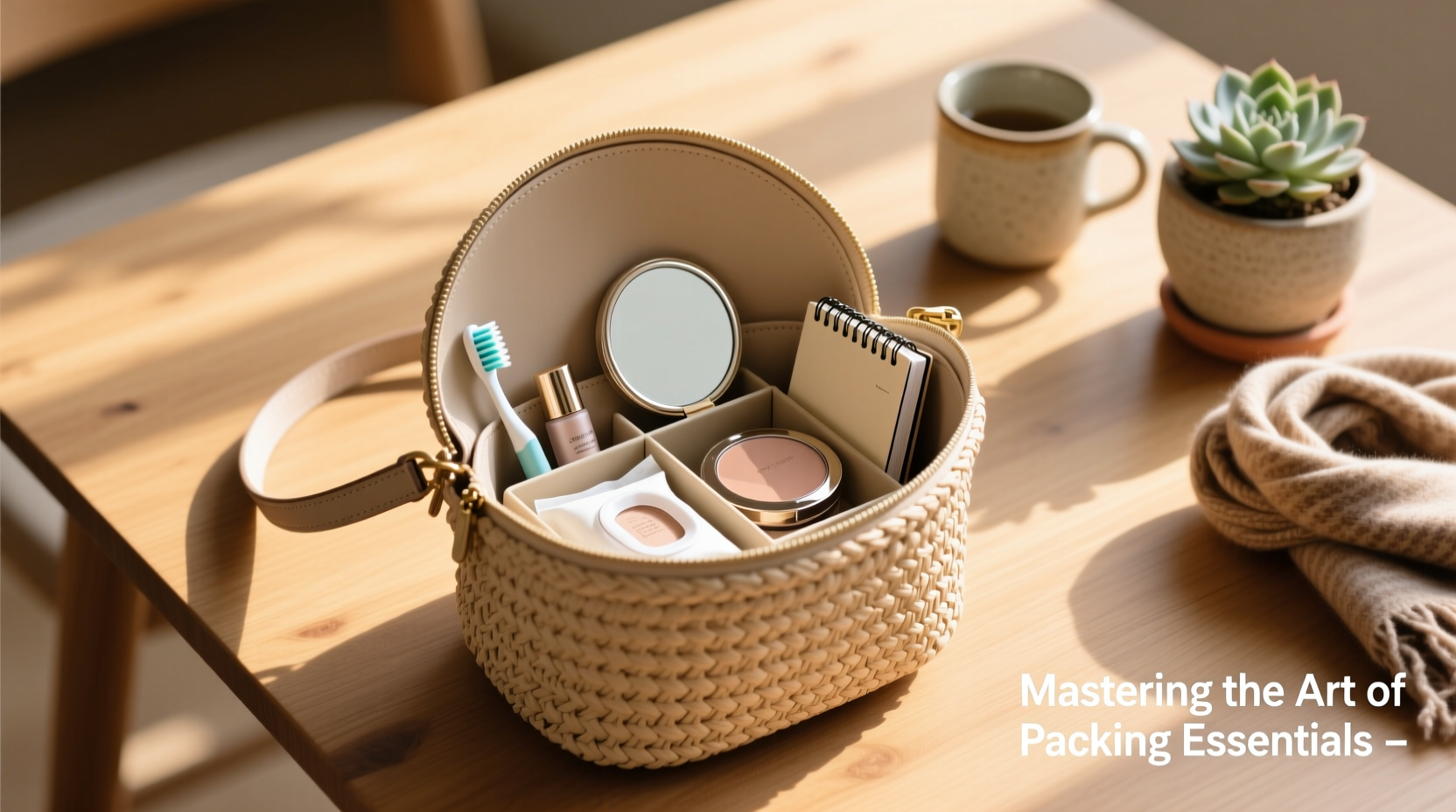
Woven bucket bags are typically made from natural fibers like raffia, seagrass, jute, or cotton. These materials offer durability and breathability but lack the rigid structure of leather or synthetic handbags. As a result, overstuffing can distort the shape, weaken stitching, and make retrieval difficult.
Before packing, assess your bag’s dimensions and internal layout. Most woven buckets feature a single open compartment, sometimes with a drawstring or snap closure. Few include interior pockets, which means external organization becomes essential. Recognizing these limitations allows you to work within them rather than against them.
“Efficient packing starts with understanding your container. A woven bag isn’t just a fashion piece—it’s a functional tool that rewards smart habits.” — Lena Patel, Sustainable Lifestyle Consultant
Essential Space-Saving Strategies
Packing efficiently in a small space requires discipline and creativity. Below are five foundational principles to help you maximize every inch:
- Layer by Function: Group items by purpose—personal care, tech, documents—and pack them in sequence. Heavier items should rest at the bottom; lighter ones on top.
- Use Mini Organizers: Small fabric pouches or foldable silicone cases keep makeup, chargers, or snacks contained and prevent clutter.
- Roll, Don’t Fold: Rolling soft items like scarves or thin sweaters saves space and reduces creasing.
- Downsize Your Essentials: Replace full-size products with travel-sized versions (e.g., mini hand sanitizer, lipstick instead of bulky lip gloss tubes).
- Leverage External Attachments: Clip lightweight items like keys or sunglasses cases to the exterior using decorative carabiners or tassels.
Smart Packing Checklist
Follow this concise checklist each time you prepare your woven bucket bag. It ensures you don’t forget critical items while avoiding unnecessary bulk:
- Phone + portable charger (slim model)
- Wallet (compact bifold or cardholder)
- Keys (attached to a small key leash)
- Hand sanitizer (travel size, leak-proof)
- Lip balm or lipstick
- Folded tissue or mini handkerchief
- Sunglasses (in a soft case)
- Notepad and pen (credit-card sized)
- Reusable shopping bag (compressed)
- Medication (if needed, in a labeled pill case)
Optimizing Layout: A Step-by-Step Guide
To achieve a balanced, accessible load, follow this step-by-step process every time you pack:
- Empty and Wipe Down: Start with a clean slate. Remove all contents and gently wipe the interior with a dry microfiber cloth to remove dust.
- Place Heavy Items First: Position your phone, wallet, and any other dense objects at the base, centered toward the middle to avoid tilting.
- Add Soft Layers: Roll a lightweight scarf or sweater and place it vertically along one side to act as a buffer and fill voids.
- Insert Pouches Strategically: Slide a small zip pouch containing cosmetics or cables into the opposite side, ensuring it doesn’t shift during movement.
- Top Off with Frequent-Use Items: Place sunglasses, tissues, or a mask on top for easy access.
- Secure the Closure: Tighten the drawstring or fasten the snap, making sure the bag retains its intended silhouette.
Do’s and Don’ts: What to Pack and What to Skip
| Do’s | Don’ts |
|---|---|
| Carry a foldable tote for extra purchases | Overload with heavy books or water bottles |
| Use slim cardholders instead of bulky wallets | Store wet items directly in the weave |
| Attach keys externally with a secure clip | Carry sharp objects that could snag fibers |
| Pack only what you’ll use that day | Leave loose change rolling at the bottom |
| Line the bag with a removable fabric insert | Store in humid or damp environments |
A Real-Life Example: Packing for a Day Out
Consider Sarah, a freelance designer visiting a local market. Her woven bucket bag is her go-to accessory, but she needs to carry her tablet, sketchbook, snacks, and personal items. Instead of abandoning style for function, she applies smart packing:
- She uses a slim neoprene sleeve for her tablet, placing it flat at the bottom.
- Her sketchbook, slightly smaller than the bag, sits directly on top.
- A roll-up pencil case fits snugly alongside.
- Snacks go into a sealed silicone pouch to prevent crumbs.
- Personal items are stored in a zippered clutch that slides in last.
Despite carrying multiple items, her bag remains structured and easy to open. When she stops for coffee, she quickly retrieves her wallet without disturbing the rest. By prioritizing vertical layering and containment, Sarah maintains both functionality and elegance.
FAQ: Common Questions About Woven Bag Packing
Can I carry a water bottle in my woven bucket bag?
Only if it’s small (under 500ml) and placed in a protective sleeve. Larger bottles add excessive weight and moisture risk. Better to carry it by hand or use a collapsible silicone bottle that flattens when empty.
How do I prevent my bag from getting misshapen?
Always avoid overstuffing. When not in use, store the bag with a soft stuffing like tissue paper or a small cloth pouch to help retain its round profile. Never hang it by the straps for long periods, as this can stretch the weave.
What’s the best way to clean a woven bucket bag?
Spot clean with a dry or slightly damp cloth. For stains, use a soft brush and a mix of mild soap and water, applied sparingly. Never submerge the bag. Allow it to air dry naturally, away from direct sunlight or heat sources.
Final Thoughts: Elegance Meets Efficiency
The appeal of the woven bucket bag lies in its simplicity—a return to artisanal craftsmanship and mindful consumption. But simplicity doesn’t mean sacrifice. With deliberate choices and intelligent organization, you can carry everything you need while honoring the bag’s design integrity.
Mastering the art of packing isn’t about fitting more in; it’s about bringing only what matters and arranging it with intention. Whether you’re heading to brunch, running errands, or exploring a new city, your woven bag can be both beautiful and brilliantly functional.




 浙公网安备
33010002000092号
浙公网安备
33010002000092号 浙B2-20120091-4
Comments
No comments yet. Why don't you start the discussion?