
A chronograph isn't just a stylish addition to a quartz watch—it's a precision tool built for measuring elapsed time with accuracy and ease. While many wearers admire the intricate subdials and pushers, few fully understand how to use them effectively. Whether you're timing a sprint, monitoring a cooking session, or simply exploring your watch’s capabilities, mastering the chronograph function enhances both utility and appreciation. This guide breaks down everything from basic operation to advanced techniques, ensuring you get the most out of your timepiece.
Understanding the Chronograph: More Than Just a Stopwatch
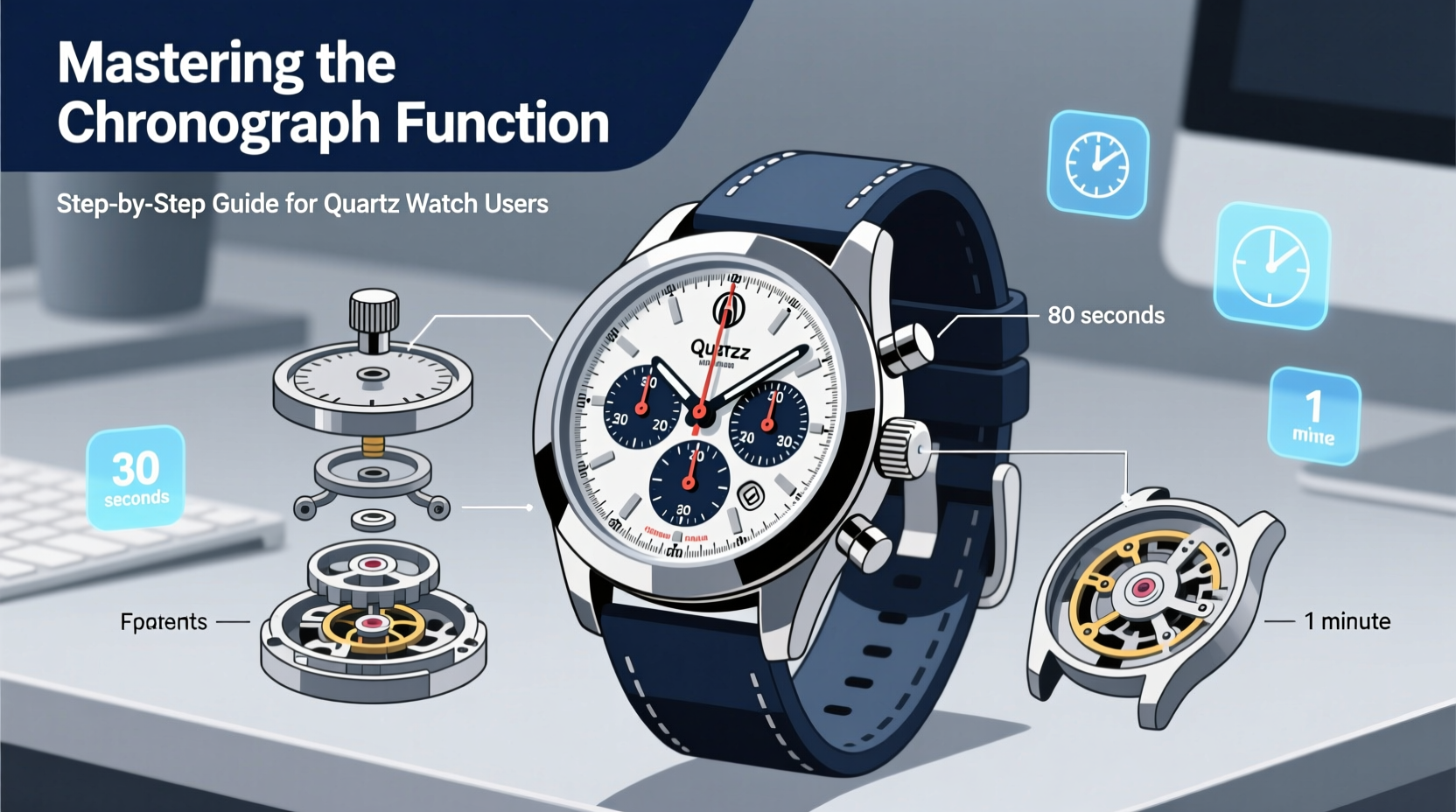
The term “chronograph” comes from the Greek words *chronos* (time) and *graph* (writer), originally referring to devices that recorded time events. In modern watches, it functions as a stopwatch integrated into the main time display. Unlike mechanical chronographs, quartz versions rely on a battery-powered movement, offering greater accuracy and lower maintenance—though they still require proper handling to remain reliable.
Most quartz chronographs feature three key pushers and subdials:
- Top pusher: Starts and stops the chronograph timer.
- Bottom pusher: Resets the timer to zero.
- Subdials: Typically track seconds, minutes, and sometimes hours of elapsed time.
The central chronograph hand (usually red or contrasting in color) moves only when activated, allowing the main timekeeping to continue uninterrupted.
Step-by-Step Guide to Using Your Chronograph
Using a chronograph correctly ensures accurate measurements and prolongs the life of your watch. Follow this sequence for optimal performance:
- Ensure the chronograph is reset. Before starting, confirm all subdials read zero. If not, press the bottom pusher to reset.
- Press the top pusher to start. The central chronograph hand will begin moving, tracking elapsed seconds.
- Monitor elapsed time. Use the subdials to read minutes (and hours, if applicable) once the hand completes full revolutions.
- Press the top pusher again to stop. The hand freezes, showing the exact duration measured.
- Press the bottom pusher to reset. All hands return to zero, ready for the next use.
This process works seamlessly for activities lasting up to 12 hours on most models. Exceeding maximum durations may cause misalignment, so consult your manual for limits.
Common Mistakes and How to Avoid Them
Even experienced users can misuse a chronograph, leading to inaccurate readings or unnecessary strain on components. Below are frequent errors and their solutions:
| Mistake | Consequence | Solution |
|---|---|---|
| Resetting while the chronograph is running | Potential gear damage or misalignment | Always stop first, then reset |
| Leaving the chronograph running for days | Battery drain and motor stress | Use only when actively timing |
| Ignoring water resistance during outdoor use | Moisture ingress under pressure | Verify WR rating; avoid pressing buttons underwater |
| Forcing pushers if they feel stiff | Internal seal or mechanism damage | Have the watch serviced professionally |
Mini Case Study: Timing a 5K Run
Mark, an amateur runner, used his quartz chronograph to measure his weekly 5K times. Initially, he pressed the reset button while the timer was still running, causing the minute hand to jump erratically. After reading the manual, he corrected his technique: start → stop → reset. Within weeks, he logged consistent splits and noticed improved battery life. His watch remained accurate for over two years without servicing—a testament to proper usage.
Expert Insight: Precision Through Simplicity
“Quartz chronographs are among the most reliable tools for everyday timing. Their digital logic and stepper motors deliver millisecond accuracy—but only if respected. A simple pause before resetting preserves longevity.” — Daniel Reeves, Watch Engineer & Horology Consultant
Advanced Tips for Optimal Performance
Once comfortable with basics, consider these advanced practices to elevate your experience:
- Calibrate periodically. Even quartz movements can drift slightly. Compare your chronograph against a smartphone timer monthly.
- Use split timing (if available). Some models allow lap-time recording without stopping the main timer. Press the top pusher briefly to mark a split, then continue timing.
- Avoid extreme temperatures. Cold slows battery output; heat accelerates degradation. Both affect timing consistency.
- Service every 3–5 years. Clean seals, replace batteries, and inspect pusher mechanisms to prevent sluggish response.
Chronograph Care Checklist
Follow this checklist monthly to keep your chronograph functioning flawlessly:
- ✅ Test start, stop, and reset functions
- ✅ Verify all subdials return to zero precisely
- ✅ Check for smooth pusher action (no sticking)
- ✅ Inspect case and crown for cracks or looseness
- ✅ Wipe case and crystal with a microfiber cloth
- ✅ Confirm battery level (if your model displays it)
- ✅ Store in a dry place away from magnets
Frequently Asked Questions
Can I use my chronograph underwater?
Only if your watch has sufficient water resistance (typically 100m/10ATM or higher) and explicitly states that pushers are safe to operate underwater. Most manufacturers advise against pressing any buttons while submerged, even on dive-rated watches, to prevent water intrusion under pressure.
Why does my chronograph hand wobble slightly when running?
A minor wobble is normal due to the stepping motion of the quartz motor, which advances the hand in small increments (usually 1/5th or 1/10th of a second). Significant wobbling or stuttering may indicate low battery or mechanical obstruction and should be inspected.
How long does the battery last when using the chronograph frequently?
Regular chronograph use increases power consumption. While a standard quartz watch battery lasts 2–3 years, heavy stopwatch usage can reduce this to 12–18 months. Watches with chronograph indicators or backlit displays consume even more energy.
Conclusion: Take Control of Your Time
Mastering the chronograph function transforms your quartz watch from a passive timekeeper into an active instrument of precision. By understanding its mechanics, avoiding common pitfalls, and maintaining it with care, you ensure reliability for years to come. Whether you're timing workouts, work intervals, or personal projects, the chronograph offers a blend of utility and craftsmanship worth appreciating. Now that you know how to use it properly, challenge yourself to integrate it into daily routines—not just as a feature, but as a habit of mindful time management.




 浙公网安备
33010002000092号
浙公网安备
33010002000092号 浙B2-20120091-4
Comments
No comments yet. Why don't you start the discussion?