
Walking your dog should be a peaceful experience—a chance to bond, exercise, and enjoy the outdoors. But if your dog pulls, lunges, or reacts unpredictably on walks, it can quickly become stressful. The Gentle Leader head collar is one of the most effective tools for regaining control and transforming chaotic outings into calm, enjoyable strolls. Unlike traditional collars or harnesses that rely on resistance, the Gentle Leader works with your dog’s natural instincts to guide their movement gently and humanely.
When used correctly, the Gentle Leader redirects your dog’s head toward you at the first sign of pulling, making it nearly impossible for them to drag you down the sidewalk. It doesn’t cause pain—it simply uses leverage and redirection. However, many owners struggle because they skip foundational steps or apply the tool incorrectly. This guide breaks down exactly how to introduce, fit, and use the Gentle Leader for lasting results.
Understanding How the Gentle Leader Works
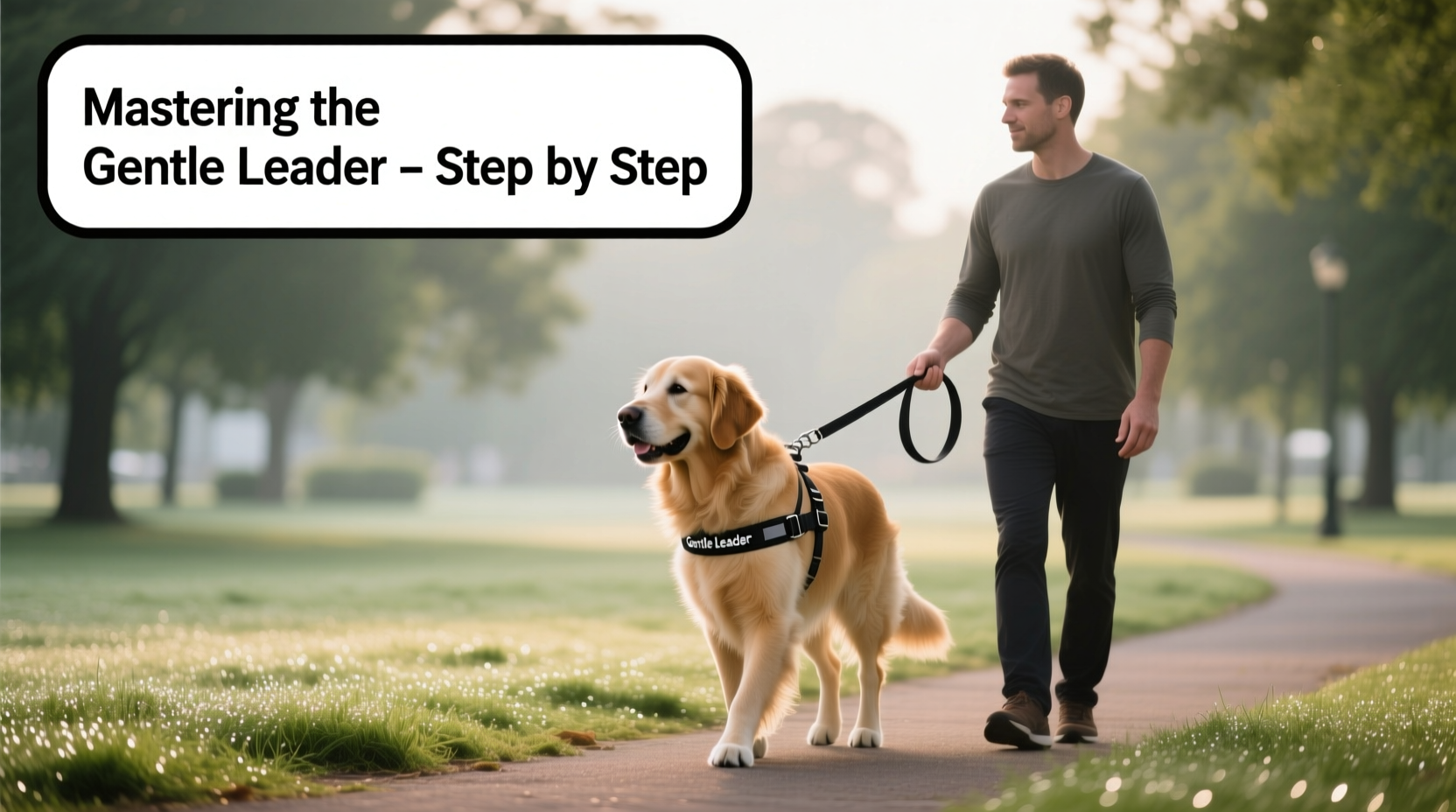
The Gentle Leader is a head collar that fits around your dog’s muzzle and behind the ears, with two connection points: one on the nose loop and one on the back of the neck. When your dog pulls forward, gentle pressure is applied to the back of the neck and across the muzzle, turning their head toward you. This mimics how mother dogs guide their puppies and aligns with canine body language.
It's important to note that the Gentle Leader is not a muzzle. Your dog can still open their mouth, pant, drink, and pick up treats. It also doesn’t stop barking or aggressive behavior—but it does give you the control needed to manage reactivity during training.
“Head collars like the Gentle Leader are among the most humane and effective tools for managing leash pulling when introduced properly.” — Dr. Sophia Yin, DVM, Applied Animal Behaviorist
Step-by-Step Guide to Introducing the Gentle Leader
Rushing the process is the most common mistake. Dogs unfamiliar with head collars may resist, paw at it, or freeze. Success depends on patience and positive reinforcement.
- Let your dog explore the collar: Place the Gentle Leader on the floor with treats nearby. Allow your dog to sniff and investigate without pressure.
- Touch introduction: Gently touch the collar to your dog’s face while offering high-value treats. Do not fasten it yet—just create positive associations.
- Short fittings (5–10 seconds): Fasten the collar briefly while feeding treats continuously. Remove it before your dog shows discomfort.
- Gradual duration increase: Over 3–5 days, extend wear time from seconds to minutes while your dog eats treats, plays, or relaxes indoors.
- Add leash and practice indoors: Once your dog accepts the collar, attach the leash and practice walking in a distraction-free area. Reward attention and loose-leash walking.
Fitting the Gentle Leader Correctly
An improperly fitted Gentle Leader reduces effectiveness and may cause discomfort. Follow these guidelines for a secure, comfortable fit:
- The nose loop should sit snugly but allow one finger between the loop and the bridge of the nose.
- The strap behind the ears must rest flat—not twisted—and fit like a well-fitted collar (two fingers space).
- The metal ring for the leash should sit at the back of the neck, not under the jaw.
- Your dog should be able to open their mouth freely.
| Fitting Area | Correct Fit | Incorrect Fit |
|---|---|---|
| Nose Loop | Snug across the muzzle, one finger space | Too loose (slipping) or too tight (pinching) |
| Neck Strap | Two fingers fit comfortably | Loose enough to slip off or so tight it causes chafing |
| Leash Attachment | Metal ring centered at the back of the neck | Twisted or hanging under the chin |
| Mouth Function | Dog can pant, drink, and take treats | Dog avoids eating or seems distressed |
Mastering Controlled Walks: Technique and Timing
Once your dog accepts the Gentle Leader, focus shifts to walking mechanics. The key is consistency and immediate response to pulling.
Start in a low-distraction environment like your backyard or quiet driveway. Use a standard 4–6 foot leash—avoid retractable leashes, which teach inconsistent boundaries.
As you begin walking:
- If the leash stays loose, praise and treat frequently.
- If your dog pulls ahead, say “Let’s go” or use a neutral cue and turn immediately in the opposite direction.
- Keep the turn smooth and confident. The moment your dog follows, reward with a treat beside your leg.
- Practice frequent changes in direction to keep your dog attentive.
This technique teaches your dog that forward motion only happens when the leash is slack. Over time, they learn to stay by your side to maintain momentum.
“The Gentle Leader isn’t a shortcut—it’s a communication tool. Paired with positive reinforcement, it reshapes expectations.” — Victoria Stilwell, Positive Dog Training Expert
Real-Life Example: Transforming Max, the Reactive Labrador
Max, a 2-year-old Labrador, would lunge at other dogs, cyclists, and squirrels during walks. His owner, Sarah, tried harnesses and choke chains with little success. After introducing the Gentle Leader over six days using gradual desensitization, she began short indoor sessions with treats and turns.
By week three, Max walked calmly around the block. When he spotted another dog, Sarah turned smoothly, preventing rehearsal of reactive behavior. Within five weeks, Max’s walks were relaxed, and he routinely checked in with her for treats. The Gentle Leader gave Sarah the split-second control she needed to redirect before escalation.
Today, Max still wears the Gentle Leader on walks. While he could likely transition to a front-clip harness, Sarah keeps it for safety during high-distress moments. The transformation wasn’t overnight—but it was sustainable.
Common Mistakes to Avoid
Even with the right tool, missteps can undermine progress:
- Pulling back hard on the leash: This creates tension and fear. Use light guidance—think “steering,” not “yanking.”
- Using the Gentle Leader only on bad walks: If your dog associates it only with stressful outings, they’ll resist. Use it during fun, successful walks too.
- Skipping indoor training: Jumping straight to outdoor walks sets both of you up for failure.
- Expecting instant results: Most dogs need 2–6 weeks to adjust fully.
FAQ: Gentle Leader Questions Answered
Can the Gentle Leader hurt my dog?
No, when properly fitted and used, the Gentle Leader applies gentle, even pressure without restricting breathing or causing pain. It’s widely endorsed by veterinarians and trainers as a safe alternative to aversive tools.
Will my dog hate wearing it?
Some dogs resist at first, but with slow introduction and positive reinforcement, most come to accept—or even prefer—it because walks become less stressful. Never force it; build trust through rewards.
Can I leave the Gentle Leader on all day?
No. It should only be worn during walks or training sessions. Leaving it on unsupervised can lead to entanglement or skin irritation. Always remove it afterward.
Checklist: Mastering the Gentle Leader in 30 Days
- Unpack and inspect the Gentle Leader for proper size.
- Let your dog sniff and interact with the collar (Day 1).
- Touch the nose loop to your dog’s face with treats (Days 2–3).
- Fasten briefly (5–10 seconds) with continuous rewards (Days 4–5).
- Increase wear time to 5+ minutes during meals or play (Days 6–10).
- Attach leash indoors and practice turns and focus (Days 11–14).
- Begin short outdoor walks in quiet areas (Days 15–21).
- Introduce mild distractions with redirection (Days 22–28).
- Refine timing and reinforce loose-leash walking daily (Days 29–30).
- Reassess fit and progress; consult a trainer if needed.
Conclusion: A Calmer Walk Starts Today
The Gentle Leader isn’t magic—it’s a bridge to better communication. When combined with patience, consistency, and positive reinforcement, it empowers you to guide your dog with clarity and compassion. Every walk becomes an opportunity to reinforce trust, attention, and calm behavior.
You don’t need to endure years of pulling or invest in endless gadgets. Start small, celebrate progress, and stay committed to the process. Your dog is learning, and so are you. With the right approach, peaceful walks aren’t just possible—they’re within reach.




 浙公网安备
33010002000092号
浙公网安备
33010002000092号 浙B2-20120091-4
Comments
No comments yet. Why don't you start the discussion?