
The magnetic flip closure has become a hallmark of modern wallet design—blending minimalist aesthetics with functional security. Unlike traditional snap buttons or zippers, this mechanism offers a smooth, silent, and reliable way to keep your essentials protected. Yet, many users overlook its full potential, either misusing it or failing to maintain it properly. This guide dives into the nuances of using and caring for a magnetic flip closure wallet, ensuring you get both longevity and elegance from your everyday carry.
Understanding the Magnetic Flip Closure Mechanism
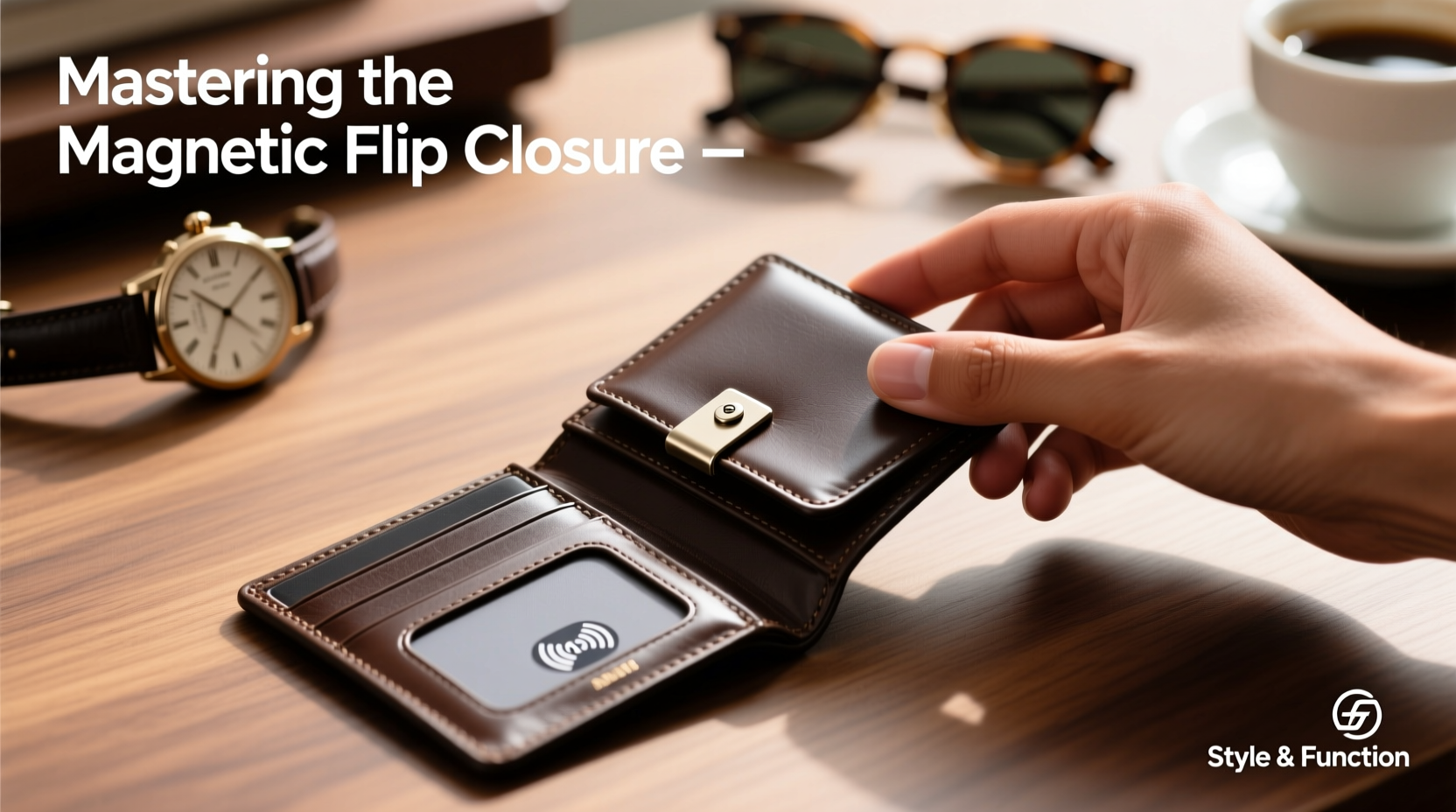
At its core, the magnetic flip closure uses two small but powerful magnets embedded in opposing flaps of the wallet. One magnet is typically positioned on the outer flap, the other on the inner body. When brought together, they create a secure seal that resists accidental opening while remaining effortless to open with one hand.
This design emerged from high-end leather goods and quickly gained popularity across minimalist, RFID-blocking, and smart wallets. The appeal lies in its balance: protection without bulk, style without compromise.
However, not all magnetic closures are created equal. Strength varies based on magnet size, placement, and material shielding. A well-engineered closure should:
- Hold firmly under normal movement (walking, sitting, pulling from a pocket)
- Open smoothly with deliberate thumb pressure
- Not attract metal debris or interfere with credit cards
Step-by-Step: How to Use the Closure Correctly
Proper usage extends the life of the magnets and prevents wear on the leather or fabric surrounding them. Follow this sequence for optimal performance:
- Close with alignment: Bring the flap over the wallet body slowly, ensuring the magnets meet face-to-face. Avoid sliding the flap sideways into position, as lateral friction can degrade stitching over time.
- Use even pressure: Press the center of the flap lightly with your index finger to ensure full contact. This prevents partial engagement, which weakens long-term hold.
- Open with precision: Place your thumb on the edge of the flap and lift upward at a slight angle. Yanking straight up can stress the hinge point.
- Avoid overloading: Excess weight inside the wallet increases tension on the closure. Keep only essential cards and folded bills.
- Check daily alignment: Over months, repeated misalignment may cause the magnets to shift microscopically. Re-center them gently if you notice reduced attraction.
With consistent technique, the closure will feel intuitive—like a reflex rather than an action.
Caring for Your Magnetic Closure Wallet
Maintenance isn’t just about cleaning; it’s about preserving mechanical integrity. Magnets can lose strength when exposed to extreme conditions, and materials around them degrade faster if neglected.
Do’s and Don’ts of Closure Care
| Do | Don't |
|---|---|
| Wipe the closure area weekly with a dry microfiber cloth | Use water or cleaners directly on the magnet surface |
| Store the wallet flat when not in use to maintain shape | Leave it in direct sunlight or hot car interiors |
| Condition leather every 6–8 weeks to prevent cracking near seams | Overstuff the card slots—this warps the structure and misaligns magnets |
| Inspect for lint or dust buildup between the flaps monthly | Drop the wallet frequently—impact can dislodge internal components |
Dust and lint are silent enemies. Tiny particles trapped between the magnets reduce contact efficiency, leading to premature weakening. A quick blow of air or soft brush once a month keeps the connection strong.
Real-World Example: From Frustration to Mastery
Take James, a graphic designer in Portland, who purchased a premium Italian bifold with a magnetic closure. Within three weeks, he complained the flap wouldn’t stay shut. He assumed it was defective and nearly returned it.
Upon inspection, the issue wasn’t the magnet—it was user error. James had been tossing the wallet into his jeans pocket with keys, causing constant abrasion. He also stored it folded in half under books, distorting the alignment. After adjusting his habits—keeping it upright in a jacket pocket, cleaning weekly, and avoiding overloading—the closure performed flawlessly.
His experience underscores a key truth: the magnetic flip closure is only as effective as the care behind it.
“Most ‘faulty’ closures we see are actually victims of misuse. Proper handling turns a good feature into a lifelong asset.” — Lena Torres, Product Engineer at Apex Leatherworks
Expert Tips for Long-Term Performance
To maximize durability and function, integrate these expert-backed practices into your routine:
In addition to maintenance, consider environmental factors. Humidity, temperature swings, and exposure to salt (from sweat or winter roads) accelerate material fatigue. If you live in a coastal or cold climate, conditioning becomes even more critical.
Checklist: Monthly Wallet Maintenance Routine
- Empty all contents and check for tears or loose stitching
- Wipe interior and exterior with a dry, lint-free cloth
- Remove debris from the magnetic flap interface
- Apply leather conditioner (if applicable) and let absorb for 30 minutes
- Test closure strength and alignment
- Reorganize cards—remove expired or rarely used ones
Frequently Asked Questions
Can magnets in wallets damage credit cards or smartphones?
Modern credit cards use EMV chips and contactless RFID, neither of which are affected by the low-strength magnets in flip closures. Similarly, smartphones are designed to resist everyday magnetic fields. However, avoid placing hotel key cards or older magnetic stripe cards directly against the magnet for long periods, as they may degrade faster.
Why does my wallet’s closure feel weaker after a few months?
Weakening can result from physical misalignment, dirt buildup, or structural warping due to overuse. It’s rarely the magnet itself failing. Try cleaning the contact points and reshaping the wallet by storing it flat under light pressure (e.g., in a drawer with a book above it).
Are magnetic closures suitable for travel?
Yes—especially for air travel. Unlike zippers, they won’t snag on other items, and their silent operation is ideal for quiet environments. Just ensure the wallet isn’t subjected to rough baggage handling. Use a protective sleeve if packing in luggage.
Conclusion: Elevate Your Everyday Carry
The magnetic flip closure is more than a convenience—it’s a statement of thoughtful design meeting daily utility. When used correctly and maintained mindfully, it enhances both security and sophistication. Whether you’re drawn to sleek minimalism or need reliable protection for your cards and cash, mastering this feature transforms a simple wallet into a trusted companion.




 浙公网安备
33010002000092号
浙公网安备
33010002000092号 浙B2-20120091-4
Comments
No comments yet. Why don't you start the discussion?