
High-end rope belts have surged in popularity, blending nautical elegance with modern sophistication. Whether crafted from braided marine-grade polyester, silk-wrapped hemp, or hand-knotted nylon, these accessories are more than just functional—they’re statements of craftsmanship and personal style. But even the most beautifully made rope belt will fall short if it doesn’t fit right. Achieving that ideal balance between snug comfort and effortless adjustment is an art. With proper technique, you can ensure your belt stays secure, sits comfortably, and enhances your silhouette without constant readjustment.
The Anatomy of a High-End Rope Belt
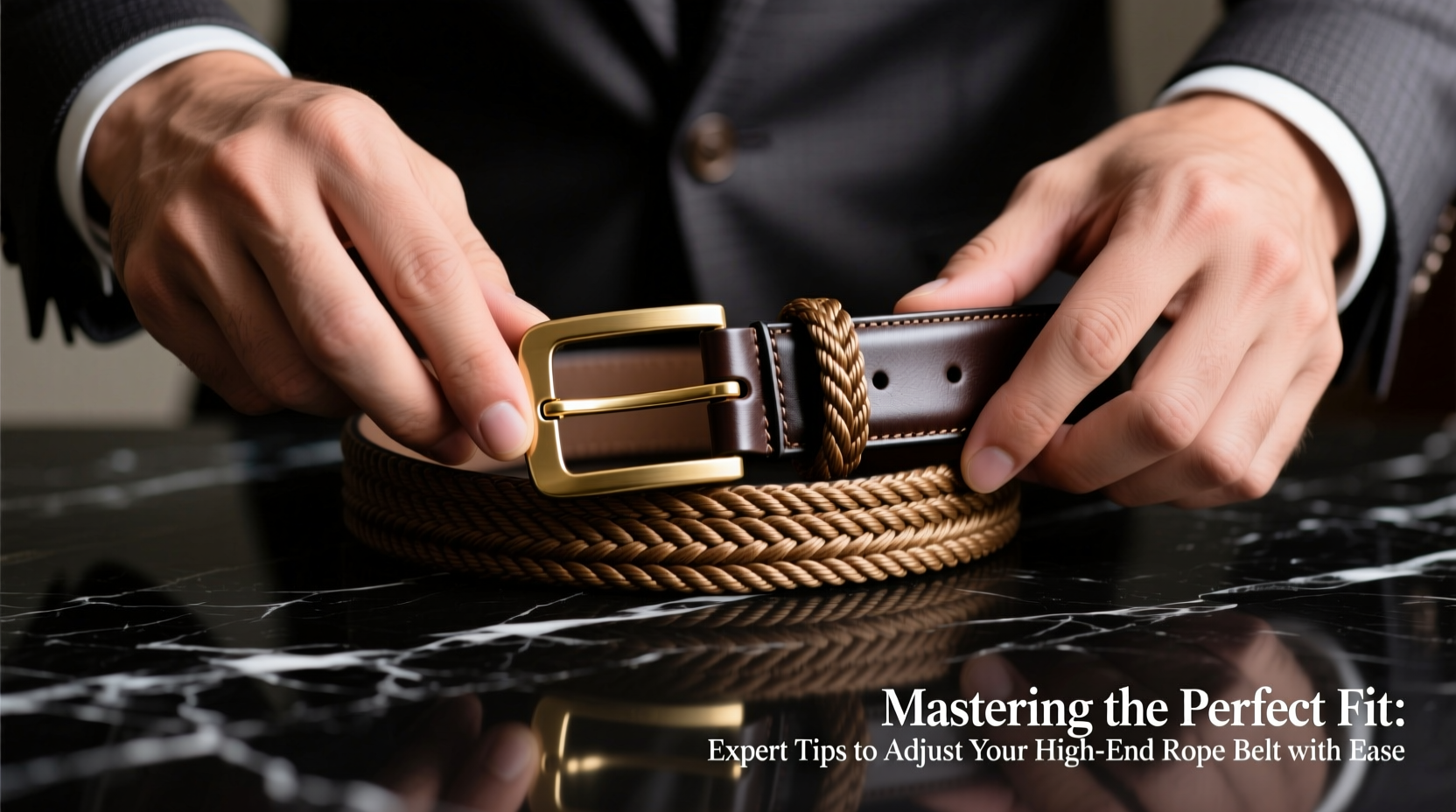
Before making adjustments, it’s essential to understand the components that define a premium rope belt. Unlike traditional leather or metal-buckle designs, rope belts rely on knot mechanics and material resilience. Most high-end versions consist of:
- Core Rope: Typically made from durable, weather-resistant fibers like kernmantle braid (a strong inner core wrapped in a protective sheath).
- Adjustable Knot System: Often a sliding knot such as a diamond knot, monkey’s fist, or adjustable loop closure that allows for micro-adjustments.
- Finials or End Caps: Decorative metal or resin tips that prevent fraying and add aesthetic weight.
- Woven or Braided Texture: Provides grip and visual depth, influencing how the belt holds shape over time.
Understanding these elements helps demystify how adjustments affect both performance and appearance. A well-fitted rope belt should sit flush against the waistband of your trousers, neither slipping nor pinching, while allowing enough play to breathe during movement.
Step-by-Step Guide to Perfect Adjustment
Getting the precise fit isn’t guesswork—it’s a repeatable process. Follow this six-step method to fine-tune your rope belt every time you wear it.
- Loosen Completely: Untie the closure fully. This resets any hidden tension and gives you a clean starting point.
- Wrap Around Waist: Position the belt so the tail end rests just above your hip bone. The working end should extend across your front with about 6–8 inches of excess.
- Form Initial Loop: Create a simple overhand loop near the finial end—this becomes your anchor point.
- Slide & Secure: Thread the working end through the loop, pulling gently until the belt meets your desired tightness. Avoid over-tightening; rope has slight elasticity.
- Lock the Knot: For added security, tie a half-hitch around the standing part of the rope. This prevents slippage without compromising aesthetics.
- Trim Excess (if applicable):strong> Only for non-adjustable models. If your belt uses a fixed-length system, consult a tailor or use heat-sealing tools for synthetic fibers.
This sequence ensures consistent results whether you're dressing for a boardroom meeting or a weekend sail. Practice the steps three times to build muscle memory—soon, adjustment will take less than 30 seconds.
Common Fit Mistakes and How to Avoid Them
Even experienced users make subtle errors that undermine comfort and longevity. Below is a comparison of frequent missteps versus correct practices.
| Don’t | Do |
|---|---|
| Tightening the knot directly against the hip bone | Allow 0.5 inch of slack for natural waist expansion |
| Using pliers or tools to pull knots tight | Use fingers only—excessive force damages fiber integrity |
| Leaving the belt adjusted overnight | Unknot and store flat to preserve elasticity |
| Cutting ends flush without sealing | Apply light flame to synthetic ends to prevent unraveling |
| Ignoring moisture exposure | Remove before swimming or heavy rain; dry flat if wet |
Mistakes often stem from treating rope belts like conventional ones. Remember: they respond differently to pressure, temperature, and humidity. A little attention goes a long way in maintaining their refined look and structural integrity.
“Rope belts are engineered for dynamic fit—not static rigidity. The best ones adapt to your body, not the other way around.” — Julian Reed, Artisan Accessory Designer at Nautica Atelier
Real-Life Example: From Slippage to Seamless Wear
Consider Daniel, a financial consultant based in Miami, who invested in a handcrafted silk-core rope belt for client dinners and coastal events. Initially, he struggled with slippage during presentations, especially when gesturing. He assumed the issue was poor sizing. After consulting a stylist, he realized his mistake: he’d been tying the knot too loosely and positioning it off-center. By relearning the sliding knot technique and aligning the closure with his natural waistline, he eliminated slippage entirely. Within a week, the belt became his go-to accessory—secure, stylish, and conversation-starting.
Daniel’s experience underscores a broader truth: fit issues are rarely about the product itself, but rather how it’s used. Small corrections yield dramatic improvements in both function and confidence.
Essential Care Checklist for Longevity
To keep your high-end rope belt looking pristine and adjusting smoothly, follow this monthly maintenance checklist:
- ✅ Inspect for fraying or loose braids along the length
- ✅ Clean gently with a damp microfiber cloth; avoid soaking
- ✅ Condition natural fibers (like cotton or hemp) with beeswax rub
- ✅ Realign the knot structure if loops feel uneven
- ✅ Store flat or coiled loosely—never compressed in a drawer
- ✅ Rotate usage if worn daily; allow 24 hours between wears for recovery
Regular upkeep preserves tensile strength and color vibrancy. Think of it like caring for a fine watch—precision demands respect.
Frequently Asked Questions
Can I resize my rope belt permanently?
Yes, but only if it’s made from synthetic materials. Natural fibers risk weakening when cut. For permanent shortening, consult the manufacturer or a specialty leatherworker familiar with cordage. Many luxury brands offer complimentary resizing for registered customers.
Why does my knot loosen throughout the day?
This usually happens due to improper knot type or incorrect tension. Use a locking slide knot instead of a basic loop. Also, check that the rope diameter matches the finial’s eyelet size—if it's too narrow, it’ll slip more easily.
Is it safe to wash a rope belt?
Hand-washing is acceptable for synthetic ropes using mild soap and cold water. Never machine-wash or tumble-dry. Air-dry flat away from direct sunlight. Natural fiber belts should never be submerged—spot clean only.
Final Thoughts: Elevate Your Everyday Style
A perfectly adjusted rope belt does more than hold up trousers—it reflects attention to detail, appreciation for craftsmanship, and a commitment to personal presentation. Once you master the nuances of fit and maintenance, you unlock a new level of sartorial ease. No more tugging or second-guessing; just confidence with every step.




 浙公网安备
33010002000092号
浙公网安备
33010002000092号 浙B2-20120091-4
Comments
No comments yet. Why don't you start the discussion?