
Learning to play \"We\" on the guitar—whether you're interpreting a specific song titled \"We\" or referring to playing in a collaborative musical context—opens doors to expressive playing, emotional depth, and ensemble confidence. For many beginners, the idea of mastering even simple pieces can feel overwhelming. But with structured practice, foundational knowledge, and consistent technique development, any guitarist can move from uncertainty to fluency. This guide walks through essential steps, common pitfalls, and advanced applications to help you grow from first chords to nuanced performance.
Understanding What “We” Means in Guitar Context
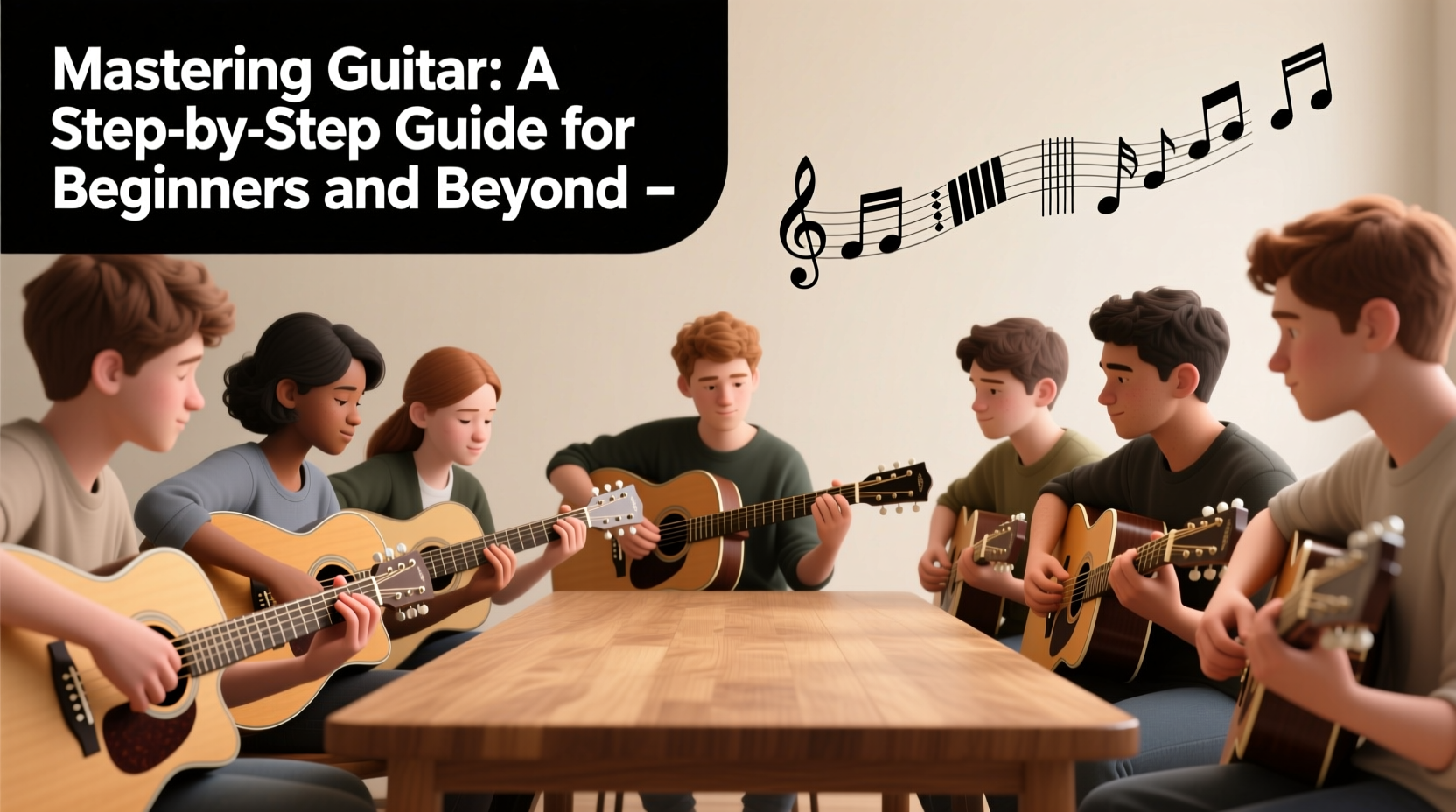
In music, \"we\" often symbolizes collaboration—playing with others, supporting vocals, or blending rhythm and melody in group settings. It may also refer to a specific piece like Coldplay’s \"We,\" or more abstractly, to the act of co-creating sound. Regardless of interpretation, mastering this concept means developing both technical skill and musical sensitivity.
To begin, focus on three core areas:
- Rhythm stability – maintaining consistent timing when playing alone or with others.
- Chord transitions – moving smoothly between shapes without hesitation.
- Listening awareness – tuning into other instruments or voices to stay in sync.
Step-by-Step Guide to Building Foundational Skills
True mastery begins with deliberate, incremental learning. Follow this timeline to build competence over eight weeks:
- Week 1–2: Open Chords & Basic Strumming
Learn Em, G, C, D, and A major/minor variations. Practice transitioning between them slowly using downstrokes only. - Week 3–4: Timing and Coordination
Introduce a metronome at 60 BPM. Use simple quarter-note strumming patterns. Focus on clean changes before increasing speed. - Week 5–6: Dynamic Control
Experiment with volume (piano/forte), muting strings with your palm, and alternating bass notes for richer texture. - Week 7–8: Play Along with Songs
Choose tracks in moderate tempos (e.g., “Let It Be,” “Horse With No Name”) and match your strumming to the recording.
This progression ensures that muscle memory develops alongside musical awareness—critical when stepping into collaborative environments where precision matters.
Essential Techniques for Playing “With” Others
When multiple musicians perform together, each part must support the whole. On guitar, this means knowing when to lead and when to blend. Here are key techniques to master:
- Muting unwanted noise: Use left-hand pressure control and right-hand palm muting to avoid ringing strings during transitions.
- Varying strumming intensity: Soften strokes during verses; emphasize beats in choruses.
- Using simplified voicings: In group settings, drop complex barre chords for partial shapes that don’t clash with bass or keyboards.
| Situation | Recommended Approach | Avoid |
|---|---|---|
| Acoustic duo (guitar + voice) | Full chords, steady rhythm | Overstrumming or rushing tempo |
| Band setting (drums, bass, keys) | Syncopated rhythms, sparse comping | Dense chord clusters that muddy mix |
| Lead-in moments | Arpeggios or single-note fills | Busy riffs during vocal lines |
“Great rhythm guitar isn't about how much you play—it's about how well what you play serves the song.” — David Santos, Session Musician & Producer
Common Challenges and How to Overcome Them
Every guitarist encounters roadblocks. Recognizing them early prevents frustration and accelerates growth.
Fretting Hand Pain or Fatigue
New players often press too hard on strings. The goal is just enough pressure to produce clear tone. Build strength gradually through short, frequent sessions rather than long, painful ones.
Strumming Inconsistency
Erratic strumming breaks groove. Anchor your picking hand lightly on the bridge or lower strings to stabilize motion. Record yourself playing to identify timing wobbles.
Difficulty Following Other Instruments
Train your ear by clapping along to songs, counting aloud, or tapping your foot to the beat. Try playing along with backing tracks to simulate real ensemble dynamics.
From Beginner to Beyond: Expanding Your Repertoire
Once basic coordination is solid, challenge yourself with more advanced concepts:
- Barre chords: Master F major and Bm as gateway forms. Use index finger placement drills to improve even pressure.
- Capo use: Learn how a capo shifts key while preserving familiar shapes—ideal for singing in comfortable ranges.
- Improvisation basics: Experiment with pentatonic scales over simple progressions to develop melodic intuition.
Consider learning a full song like “Blackbird” by The Beatles—a piece that combines fingerpicking, melody, and harmony. It teaches independence between fingers and strengthens coordination across both hands.
Mini Case Study: From Solo Player to Band Member
Jamie, a self-taught guitarist, played alone for months but struggled when joining a friend’s open mic night. Despite knowing dozens of chords, he found himself rushing during transitions and overpowering the singer. After focusing on three changes—G to C, C to D, and Em to Am—with a metronome at half-speed, Jamie rebuilt his approach. He began listening more intently to vocal phrasing and reduced his strumming pattern to two beats per measure during verses. Within four weeks, he was invited to join a weekly jam session. His breakthrough wasn’t new chords—it was restraint and responsiveness.
Checklist: Are You Ready to Play “We” Confidently?
Use this checklist to assess your readiness for collaborative playing:
- ✅ Can you switch between G, C, D, and Em cleanly at 70 BPM?
- ✅ Do you maintain steady rhythm without speeding up?
- ✅ Can you play softly enough to accompany a singer without competing?
- ✅ Have you practiced with a backing track or metronome regularly?
- ✅ Can you count out loud while strumming?
- ✅ Do you mute unused strings to reduce noise?
If most answers are yes, you’re ready to engage musically with others. If not, revisit earlier sections with focused drills.
FAQ
What does “playing we” mean practically?
It means shifting focus from solo performance to shared expression—supporting vocals, locking in with drums, or harmonizing with another instrument. It’s less about showing off and more about serving the music.
How do I stay in time when playing with others?
Focus on the drummer or percussionist—they anchor the beat. Tap your foot, nod your head, or count internally. Avoid watching your hands exclusively; keep some attention outward.
Can I use a pick when playing in a group?
Absolutely. Picks offer clarity and projection, especially in louder settings. However, be mindful of attack—lighten your grip to avoid harsh tones during quiet passages.
Conclusion
Mastering “we” on guitar transcends technical ability. It’s about connection—to the music, to fellow players, and to the moment. Whether you're accompanying a friend, performing live, or simply expanding your expressive range, the journey from isolated practice to integrated playing is transformative. Each chord change refined, every beat internalized, brings you closer to becoming not just a guitarist, but a true musical partner.




 浙公网安备
33010002000092号
浙公网安备
33010002000092号 浙B2-20120091-4
Comments
No comments yet. Why don't you start the discussion?