
A chronograph watch is more than a timepiece—it’s a precision instrument capable of measuring elapsed time, tracking multiple intervals, and even doubling as a tachymeter or telemeter in advanced models. While its intricate dials and pushers may appear intimidating at first glance, understanding how to read and use them transforms the chronograph from a decorative feature into a functional tool. Whether you're new to mechanical watches or upgrading from a basic analog model, this guide demystifies the chronograph face, breaks down each component, and shows you how to use it effectively in real-world scenarios.
Understanding the Chronograph: What Makes It Different?
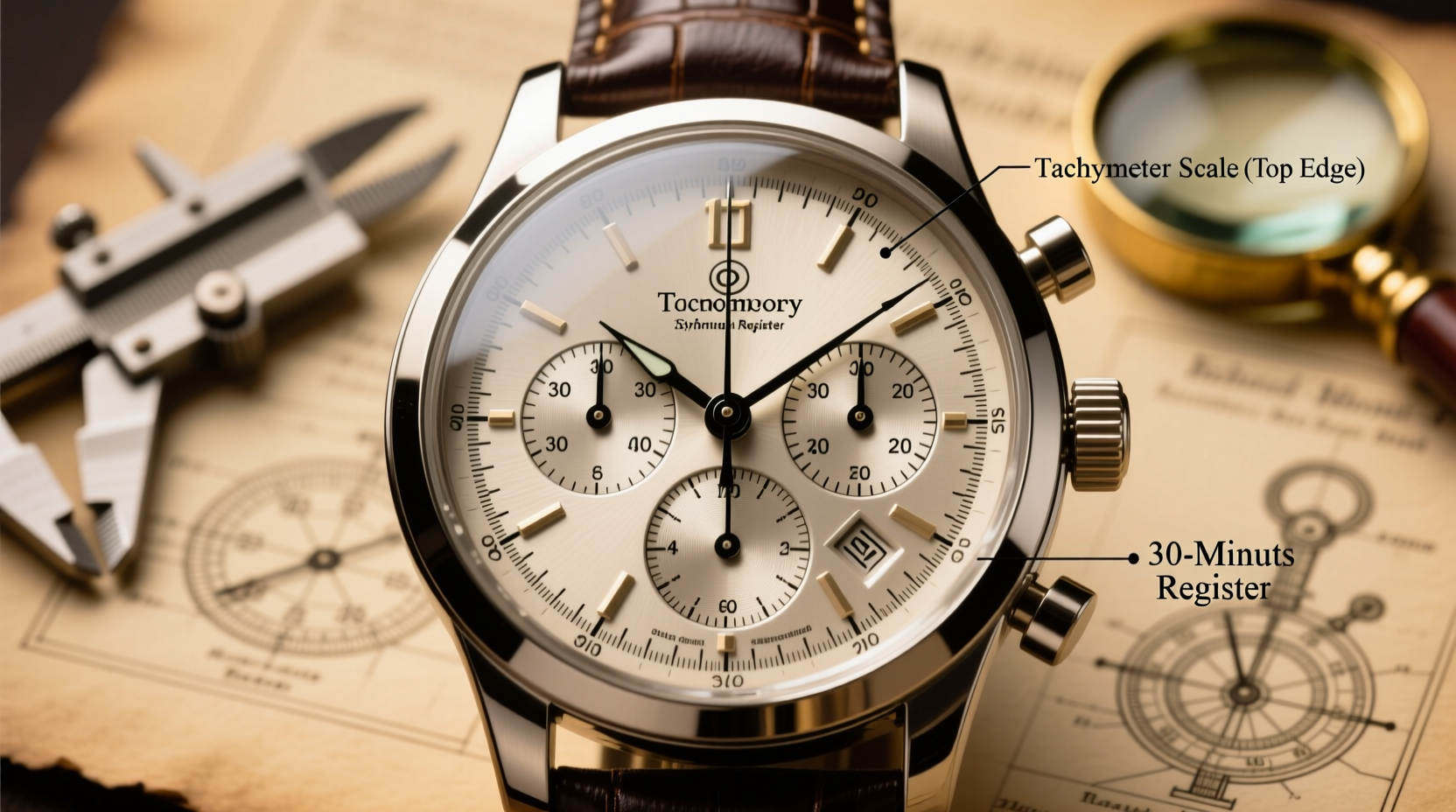
Unlike a standard analog watch that displays hours, minutes, and seconds with three hands on a single dial, a chronograph includes additional subdials—typically two or three—and extra pushers on the side of the case. These additions enable stopwatch functionality. The main crown adjusts time, while the upper pusher starts and stops the chronograph, and the lower reset button returns all hands to zero.
The central chronograph second hand moves only when activated, unlike the continuous sweep of the main seconds hand (if present). Subdials usually track elapsed minutes and hours, allowing measurements up to 12 or 30 minutes—or even 12 hours, depending on the movement. Some high-end models include a running seconds subdial for constant timekeeping separate from the stopwatch function.
“Chronographs blend engineering elegance with practical utility. Knowing how to interpret their layout unlocks both performance and heritage.” — Daniel Reeves, Horology Curator at the National Watch Museum
Decoding the Dial Layout: Functions of Each Subdial
Most modern chronographs follow a standard configuration, though variations exist across brands and complications. Below is a breakdown of typical subdial placements and their purposes:
| Subdial Position | Common Function | Description |
|---|---|---|
| Top-left (3 o’clock) | Elapsed Minutes | Counts minutes passed during timing (usually up to 30 or 60). |
| Bottom-left (6 o’clock) | Running Seconds | Shows constant seconds independently of the chronograph (not always present). |
| Top-right (9 o’clock) | Elapsed Hours | Tracks full hours after longer durations (e.g., races or flight times). |
The central hand is the primary timer—when activated, it sweeps around the main dial counting seconds. Once it completes a full rotation (60 seconds), the minute counter in the top-left subdial advances by one. After 60 minutes, the hour recorder increments. This coordination allows precise measurement of events lasting several hours.
Step-by-Step Guide to Using Your Chronograph
Operating a chronograph doesn’t require technical expertise—just attention to sequence. Follow these steps to measure elapsed time accurately:
- Ensure all hands are reset to zero. If not, press the lower pusher (reset) until each subdial hand returns to 12 o’clock.
- Press the upper pusher to start timing. The central second hand will begin moving; subdials remain static until thresholds are reached.
- Let the event run. Monitor the central hand for seconds, the top-left subdial for minutes, and the top-right for hours if applicable.
- Press the upper pusher again to stop timing. All hands freeze in place, showing total duration.
- Record the result. Read minutes from the top-left subdial, hours from the top-right, and seconds from the center.
- Reset by pressing the lower pusher. All hands return to zero, ready for next use.
This process works whether timing a sprint, cooking pasta, or monitoring meeting length. With practice, activation and reading become instinctive.
Real-World Example: Timing a Morning Run
Imagine Sarah, an amateur runner, wants to track her 5K time using her new chronograph watch. She begins by checking that all chronograph hands sit at zero. At the starting line, she presses the upper pusher as she begins running. Her eyes flick occasionally to the watch: the central hand sweeps steadily, and after 5 minutes, the top-left subdial jumps to “5.” She finishes strong and stops the timer with another press of the upper pusher. The display reads: 24 minutes (top-left), 7 seconds (center). No hour accumulation occurred, so the top-right remains at zero. Total time: 24:07. After jotting this down, she resets the hands for future use.
In this scenario, the chronograph provided accurate, easy-to-read feedback without requiring smartphone access or voice commands—ideal for outdoor athletes seeking simplicity and reliability.
Advanced Features: Tachymeters, Telemeters, and More
Beyond basic timing, many chronographs include scale markings on the bezel or dial periphery. Two common types are tachymeters and telemeters:
- Tachymeter: Measures speed based on travel over a fixed distance. For example, if you drive one mile and the chronograph stops at 45 seconds, the tachymeter scale opposite the hand shows approximately 80 mph.
- Telemeter: Calculates distance from an observable and audible event, like lightning and thunder. Start the chronograph at the flash and stop it at the sound. The hand points to the approximate distance in miles or kilometers.
These features were historically vital for pilots, drivers, and military personnel. Today, they serve as nods to horological history—but remain usable for enthusiasts who enjoy analog problem-solving.
Do’s and Don’ts of Chronograph Use
| Do | Don't |
|---|---|
| Reset before each new timing session. | Leave the chronograph running unnecessarily—this can wear the movement faster. |
| Familiarize yourself with your model’s layout through manual reference. | Use the reset button while the chronograph is still running—this can damage internal gears. |
| Use screw-down pushers correctly by unscrewing before pressing, then re-tightening. | Expose pushers to water pressure unless the watch is rated for it (e.g., 100m+). |
Frequently Asked Questions
Can I use the chronograph continuously for long periods?
While possible, extended continuous use increases mechanical strain and power consumption, especially in automatic movements. Limit prolonged runs to necessary occasions and allow the watch to rest periodically.
Why does my chronograph second hand jump in small ticks instead of sweeping smoothly?
Most quartz chronographs tick in 1/4 or 1-second intervals due to motor mechanics. Mechanical chronographs typically sweep smoothly, but some entry-level models may have a semi-stepping motion. This is normal and does not indicate malfunction.
What should I do if the subdial hands don’t reset exactly to zero?
Minor misalignment (a few degrees off) is common. Many chronographs include a “hand alignment mode” accessible via specific button combinations. Refer to your manufacturer’s instructions for calibration procedures.
Maintaining Accuracy and Longevity
Regular use enhances a mechanical chronograph’s performance, but maintenance is essential. Experts recommend servicing every 5–7 years to clean lubricants, inspect gear wear, and recalibrate timing accuracy. Avoid exposing pushers to sudden impacts or magnetic fields, which can disrupt synchronization. For automatic models, ensure adequate wrist motion or use a winder to keep the mainspring tensioned.
“A well-maintained chronograph can last generations. Treat it not just as a gadget, but as a legacy instrument.” — Luca Moretti, Master Watchmaker, Geneva Institute of Horology
Conclusion
Mastering your chronograph watch face is about more than telling time—it’s about engaging with a tradition of precision engineering. From decoding subdials to executing flawless start-stop-reset sequences, each interaction builds confidence and appreciation. Whether timing personal goals, navigating with analog tools, or simply enjoying the craftsmanship on your wrist, the chronograph serves as both companion and testament to human ingenuity.




 浙公网安备
33010002000092号
浙公网安备
33010002000092号 浙B2-20120091-4
Comments
No comments yet. Why don't you start the discussion?