
For vapers who rely on their iStick devices daily, understanding puff count isn’t just about curiosity—it’s about control. Whether you're monitoring nicotine intake, managing coil lifespan, or simply optimizing battery efficiency, tracking how many puffs you take can transform your vaping experience. While iStick models don’t natively display puff counts, with the right techniques and tools, you can master this metric effortlessly.
This guide walks through practical methods to estimate, set, and track puff count on your iStick, helping you make informed decisions about usage patterns, maintenance, and overall device performance.
Why Puff Count Matters for iStick Users
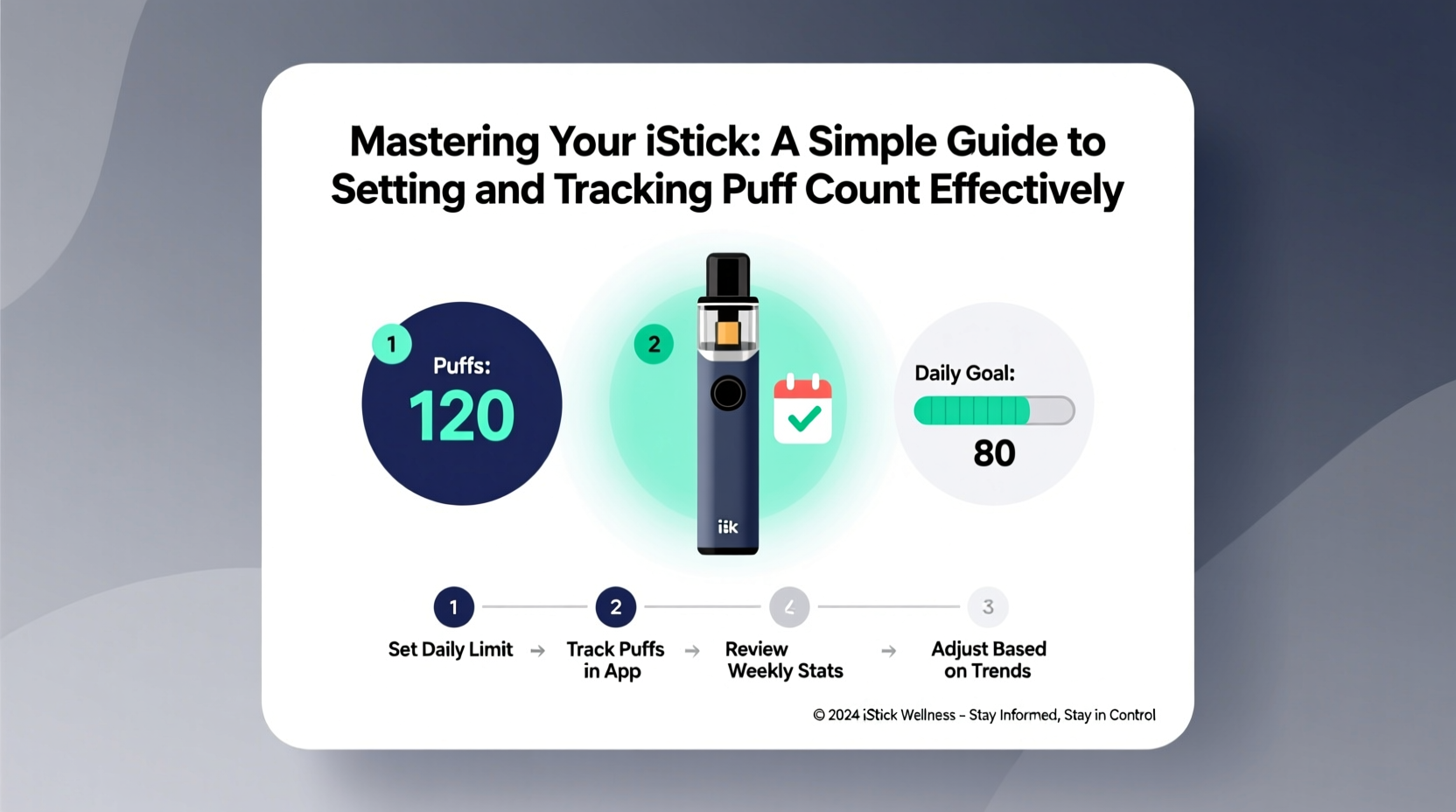
Puff count may seem like a minor detail, but it plays a significant role in several aspects of vaping:
- Coil Longevity: Coils degrade with use. Knowing your average puff count per day helps predict when to replace them—typically between 1,500 and 3,000 puffs depending on wattage and e-liquid composition.
- Battery Management: More puffs mean more drain. Tracking usage allows you to anticipate charging needs and avoid mid-day power failures.
- Nicotine Awareness: If you're using vaping as part of a reduction plan, knowing how many puffs you take daily provides measurable insight into consumption trends.
- Device Performance: Sudden changes in puff frequency might signal issues—like a leaky tank or degraded airflow—that require attention.
“Vapers who track their usage tend to have longer-lasting devices and more consistent flavor profiles.” — Dr. Alan Reyes, Vaping Behavior Researcher, Institute for Tobacco Harm Reduction
How to Estimate Your Average Puff Count
Since most iStick models (such as the iStick TC100, iStick Pico, or iStick Power) don’t feature built-in puff counters, estimation is the first step. Begin by establishing a baseline over three to five days using a consistent routine.
Step-by-Step Guide to Manual Puff Tracking
- Select a tracking period: Choose a typical week—not one with unusual travel or stress-related vaping spikes.
- Use a notebook or app: Record each puff session with time, duration, and estimated number of puffs.
- Define a “puff”: Standardize what counts—e.g., a 2–3 second inhalation equals one puff.
- Calculate daily totals: Add up all puffs at the end of each day.
- Average the results: Sum the totals and divide by the number of days tracked.
Example: Over five days, you record 280, 310, 260, 330, and 290 puffs. Your average is (280 + 310 + 260 + 330 + 290) ÷ 5 = 294 puffs per day. This becomes your reference point.
Using Third-Party Tools to Automate Puff Tracking
Manual tracking works, but automation improves accuracy and reduces effort. Several external tools and apps can help simulate puff counting for iStick users.
Recommended Apps for Vape Tracking
| App Name | Platform | Key Features | Best For |
|---|---|---|---|
| Vape Tracker | iOS, Android | Session logging, puff estimates, nicotine intake calculator | Beginners seeking simplicity |
| MyVaporRecord | Web, Mobile | Customizable logs, export data, trend graphs | Data-driven users |
| Smokeless | Android | Habit tracking, reminders, health insights | Those reducing nicotine |
These apps allow you to input your iStick model, coil type, wattage, and e-liquid strength to generate personalized puff estimates and usage forecasts.
Smart Cases and Bluetooth Adapters
Emerging accessories like smart vape sleeves or Bluetooth-enabled drip tips can detect activation and sync with smartphones. Though not officially supported by iStick, third-party adapters such as the \"VapeBand\" or \"PuffLogger\" clip onto your device and record firing events—effectively acting as an external puff counter.
Mini Case Study: How Sarah Reduced Her Usage by Tracking Puffs
Sarah, a 34-year-old office worker and long-time iStick Pico user, noticed she was refilling her tank twice a day and replacing coils every five days—well ahead of the expected two-week lifespan. Concerned about cost and habit formation, she decided to track her puff count manually for one week.
She discovered she averaged 420 puffs per day, mostly clustered during work hours and after meals. With this data, she set a goal of reducing to 300 puffs daily. Using the Vape Tracker app, she logged each session and received hourly summaries. Within two weeks, she cut her usage by 30%, extended coil life to 10 days, and reported improved throat comfort and flavor clarity.
“Seeing the numbers made me realize I wasn’t vaping for satisfaction—I was doing it out of habit,” Sarah said. “Tracking gave me back control.”
Best Practices for Maintaining Accuracy
To ensure your puff count remains a reliable metric, follow these guidelines:
- Reset tracking after coil changes: Start fresh to monitor performance from the beginning of a coil’s life.
- Account for variable puff lengths: Long drags (over 4 seconds) may equate to two standard puffs in terms of e-liquid and coil stress.
- Sync with battery cycles: Note puff count at full charge and again at depletion to assess efficiency over time.
- Avoid double-counting: Don’t log priming puffs or dry fires unless they’re part of regular use.
Checklist: Setting Up Effective Puff Monitoring
- Choose a tracking method (manual log, app, or device)
- Standardize what counts as one puff
- Track for at least 3 full days
- Calculate your average daily puff count
- Set realistic goals (reduction, consistency, or awareness)
- Review weekly and adjust habits accordingly
- Replace coils based on puff estimates, not just taste loss
Frequently Asked Questions
Can I add a puff counter to my iStick through firmware?
No official firmware updates for iStick devices include puff counters. Some open-source mods exist for advanced users, but they may void warranties and risk device stability. Stick to external tracking methods for safety.
How many puffs should a coil last on an iStick?
Most coils last between 1,500 and 3,000 puffs under normal conditions (30–60W, standard VG/PG e-liquids). Higher wattages, sweetened e-liquids, or chain vaping reduce lifespan significantly.
Does puff count affect battery life directly?
Yes. Each puff draws power. A typical iStick with a 3000mAh battery lasts approximately 800–1,200 puffs depending on wattage, coil resistance, and puff duration. Tracking helps predict recharge timing.
Conclusion: Take Control of Your Vaping Journey
Mastering your iStick goes beyond wattage settings and airflow adjustments—it includes understanding your usage patterns through puff count. While the device itself doesn’t provide this data, the combination of disciplined tracking, smart apps, and behavioral awareness puts powerful insights in your hands. You’ll extend coil and battery life, manage nicotine intake more effectively, and gain deeper appreciation for your vaping habits.




 浙公网安备
33010002000092号
浙公网安备
33010002000092号 浙B2-20120091-4
Comments
No comments yet. Why don't you start the discussion?