
For many nonprofits, unlocking additional funding doesn’t always require launching a new campaign or hiring more staff. Often, the resources are already within reach—hidden in plain sight through corporate matching gift programs. These initiatives, offered by over 26,000 companies in the U.S., allow employees to double or even triple their charitable contributions when their employers match them dollar for dollar. Yet, studies show that nearly 75% of available matching gift funds go unclaimed each year. This represents a massive missed opportunity for organizations striving to expand their reach and deepen their impact.
By strategically identifying, promoting, and streamlining access to these programs, nonprofits can significantly increase revenue without asking donors for more. The key lies not just in awareness but in execution—ensuring donors know about matching gifts, understand how to activate them, and complete the process with minimal friction.
Understanding Matching Gift Programs: How They Work
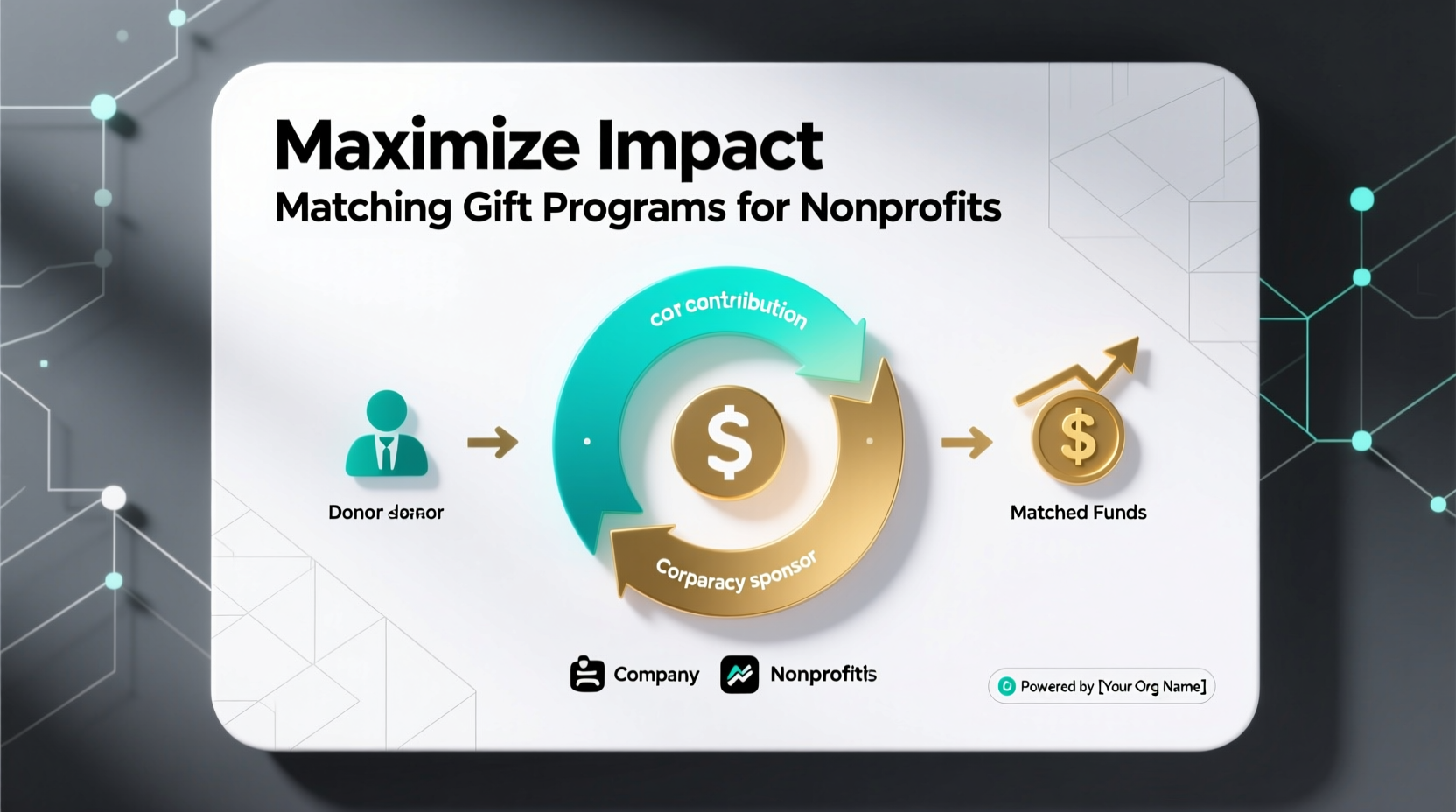
Matching gift programs are employer-sponsored initiatives that financially support employee charitable giving. When an employee donates to a qualified nonprofit, they can submit a request through their company’s platform for the employer to match that donation. Matches typically range from 1:1 to 2:1, with some companies offering up to $15,000 per employee annually.
Eligibility varies: most programs require the donor to be a current full-time or part-time employee, though some include retirees and board members. The nonprofit must also meet certain criteria—usually tax-exempt status under Section 501(c)(3) of the IRS code.
The process generally follows three steps:
- The donor makes a contribution to the nonprofit.
- The donor submits a matching gift request via their employer’s portal or form.
- The employer verifies the donation and sends the matching funds directly to the nonprofit.
Despite the simplicity, confusion and lack of follow-through often derail submissions. Nonprofits that proactively guide donors through this process see dramatically higher claim rates.
Strategies to Increase Matching Gift Participation
Maximizing impact starts with visibility. Too many donors are unaware their employer offers matching gifts. Others begin the process but abandon it due to unclear instructions or cumbersome forms. Addressing both awareness and usability is essential.
Integrate Matching Gifts into Your Donation Workflow
Embed matching gift information directly into your online donation flow. After a donor completes a gift, display a message such as:
“Did you know your employer might match your gift? Check if your company participates and learn how to double your impact.”
Pair this with a searchable matching gift tool embedded on your donation page. Tools like Double the Donation or CyberGrants integrate seamlessly with major fundraising platforms and instantly identify whether a donor’s employer offers matching.
Train Staff and Volunteers
Frontline fundraisers should be trained to mention matching gifts during conversations. A simple script like, “Many of our donors have employers who will match their gifts—would you like to check if yours does?” can open doors to significant additional funding.
Leverage Email Campaigns Strategically
Launch targeted email campaigns during peak giving seasons (end-of-year, Giving Tuesday) that highlight matching opportunities. Segment your list to target past donors whose employers are known to offer matching programs.
Promote Year-Round, Not Just During Appeals
Matching gifts shouldn’t be an afterthought. Feature them consistently on your website’s donate page, in newsletters, and on social media. Create a dedicated section titled “Double Your Impact” with clear instructions and FAQs.
Essential Checklist for Launching a Matching Gift Initiative
To ensure your organization captures every eligible match, follow this actionable checklist:
- Research which major employers your donors work for and verify their matching policies.
- Integrate a real-time matching gift lookup tool on your donation page.
- Update acknowledgment emails to include personalized matching gift instructions.
- Create downloadable PDF guides explaining how to submit a match request by company.
- Designate a staff member or volunteer to track submitted requests and follow up on pending matches.
- Audit your donor database quarterly to identify unclaimed matches from previous gifts.
- Send reminder emails to donors six months after a gift, prompting them to check eligibility.
Real Example: How One Food Bank Doubled Its Corporate Revenue
The Central Harvest Food Bank in Ohio struggled to engage mid-level donors beyond annual appeals. In 2022, they partnered with a matching gift platform and launched a pilot campaign targeting donors employed at local corporations like Procter & Gamble, Fifth Third Bank, and Nationwide Insurance—all known for robust matching programs.
They updated their donation confirmation page with a dynamic matching tool and trained development staff to discuss matching during donor calls. Within six months, they identified $87,000 in previously unclaimed matches. By adding automated email reminders and simplifying submission instructions, their match redemption rate jumped from 18% to 63% in one fiscal year.
“We weren’t asking for more money—we were just helping people give more effectively,” said Maria Tran, Director of Development. “The response was overwhelming once donors realized their $50 could become $100 with just two extra clicks.”
“Matching gifts are low-hanging fruit that too many nonprofits ignore. With minimal effort, you can unlock tens of thousands in free funding.” — James Reed, Executive Director, National Nonprofit Growth Council
Do’s and Don’ts: Matching Gift Best Practices
| Do | Don’t |
|---|---|
| Provide step-by-step instructions tailored to top donor employers. | Assume donors know how to find their company’s matching policy. |
| Follow up with donors who haven’t submitted a match request within 30 days. | Wait until year-end to promote matching opportunities. |
| Track matched gifts separately in your CRM to measure ROI. | Use generic language like “Check with your employer” without guidance. |
| Celebrate matched gifts publicly (with permission) to encourage others. | Forget to thank the employer as well as the donor. |
Frequently Asked Questions
Can volunteers or board members qualify for matching gifts?
Yes, many companies extend matching gift eligibility to retirees, spouses, and board members. Policies vary, so it’s important to check individual guidelines. For example, Microsoft matches gifts from employees and retirees, while Goldman Sachs includes spouse contributions if combined with the employee’s donation.
What happens if a donor changes jobs after making a gift?
In most cases, the donor must be employed by the company at the time the original donation was made. If they leave before submitting the match request, they may still qualify depending on the employer’s policy. Some companies allow submissions up to 12 months post-donation or post-employment.
How long does it take to receive matching funds?
Processing times vary widely—from two weeks to six months. Companies like Google and Intel process matches quickly (within 30 days), while others may require manual review. Maintain records and follow up politely if payments are delayed beyond the stated timeline.
Conclusion: Turn Missed Opportunities into Measurable Impact
Matching gift programs represent one of the most cost-effective ways for nonprofits to increase revenue. Unlike traditional fundraising, they require no additional asks—only better education and smoother processes. By embedding matching gift outreach into your standard operations, training your team, and using technology to reduce friction, you can transform overlooked benefits into sustainable growth.
The next time a donor gives $100, imagine receiving $200—with no extra effort on their part. That’s the power of a well-executed matching gift strategy. Start today by auditing your current approach, integrating a lookup tool, and empowering your donors to amplify their generosity. Every unclaimed match is a promise waiting to be fulfilled.




 浙公网安备
33010002000092号
浙公网安备
33010002000092号 浙B2-20120091-4
Comments
No comments yet. Why don't you start the discussion?