
In an era of rising energy costs and increasing environmental awareness, using your air conditioner wisely isn’t just about staying cool—it’s about doing so efficiently and affordably. Many homeowners rely heavily on their AC systems during hot months, often without realizing how small changes in usage can lead to significant savings. Smart AC use balances thermal comfort with energy conservation, helping you avoid high electricity bills while maintaining a pleasant indoor climate.
This guide explores proven strategies for optimizing your cooling system—without sacrificing comfort. From thermostat settings to maintenance routines, each tip is designed to deliver real results in both cost reduction and improved efficiency.
Set the Right Temperature for Optimal Efficiency
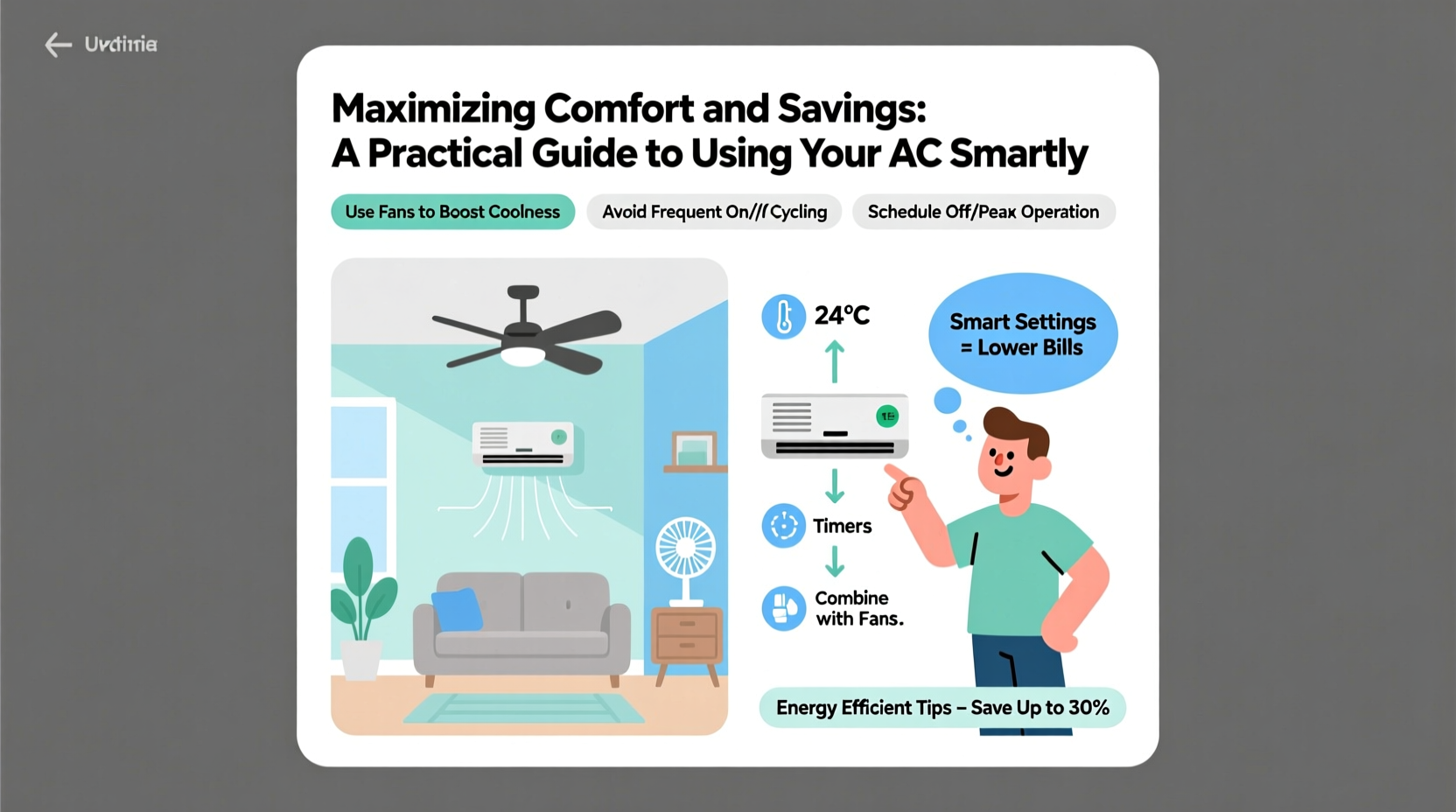
One of the most impactful decisions you make daily is your thermostat setting. The U.S. Department of Energy recommends setting your thermostat to 78°F (26°C) when you're at home and awake. This temperature strikes a balance between comfort and energy efficiency. Every degree lower can increase cooling costs by 6–8%.
When leaving the house, avoid turning the AC off completely. Instead, raise the temperature by 7–10°F. Modern systems work more efficiently maintaining a moderate differential than cooling down a sweltering space from scratch.
Maintain Your System Regularly
A well-maintained air conditioner runs more efficiently and lasts longer. Neglect leads to increased strain on components, reduced airflow, and higher energy consumption. Routine maintenance doesn't require professional help every time—many tasks can be done yourself.
- Replace or clean air filters every 30–90 days, depending on usage and air quality.
- Inspect and clear debris from outdoor condenser units monthly during peak season.
- Check for refrigerant leaks or unusual noises annually.
- Schedule a professional tune-up at least once per year, preferably before summer begins.
Dusty filters restrict airflow, forcing the system to work harder. A study by the Environmental Protection Agency (EPA) found that replacing a dirty filter can lower AC energy consumption by 5–15%.
Smart Thermostats: Automate for Savings
Upgrading to a programmable or smart thermostat is one of the best investments for efficient cooling. These devices learn your schedule, adjust temperatures automatically, and provide remote control via smartphone apps.
For example, you can program the system to warm up the house during work hours and begin cooling 30 minutes before you return. Some models even detect when no one is home and enter energy-saving mode.
| Thermostat Type | Energy Savings Potential | Key Features |
|---|---|---|
| Manual | None (baseline) | Basic dial or button controls |
| Programmable | Up to 10% | Schedule-based adjustments |
| Smart Thermostat | Up to 23% | Learning algorithms, geofencing, app control |
“Smart thermostats pay for themselves within two years through energy savings alone.” — Dr. Laura Chen, Energy Efficiency Researcher at NREL
Block Heat Before It Enters
The easiest way to reduce AC load is to prevent heat gain in the first place. Sunlight through windows, poor insulation, and external heat radiation significantly increase indoor temperatures.
- Close blinds, shades, or curtains during peak sun hours (10 a.m.–4 p.m.).
- Install reflective window films or use exterior awnings.
- Seal air leaks around doors, windows, and ducts with weatherstripping or caulk.
- Ensure attic insulation meets recommended R-values for your climate zone.
Dark-colored roofs absorb more heat. If possible, consider cool roofing materials or reflective coatings, which can reduce roof surface temperatures by up to 50°F, according to the Lawrence Berkeley National Laboratory.
Real-World Example: How the Martinez Family Cut Cooling Costs
The Martinez family lives in Phoenix, Arizona, where summer highs regularly exceed 110°F. Their previous electric bills averaged $320 per month in July and August. Determined to reduce costs, they implemented several smart AC practices over two months:
- Installed a smart thermostat programmed to 78°F during the day and 74°F in the evening.
- Cleaned the outdoor unit and replaced the HVAC filter monthly.
- Added blackout curtains to west-facing bedrooms.
- Began using ceiling fans consistently.
Within one summer, their cooling costs dropped to $245 per month—a 23% reduction. More importantly, they reported greater comfort due to more consistent temperatures and less humidity.
Step-by-Step Guide to Smart AC Usage
Follow this actionable plan to optimize your air conditioning system throughout the year:
- Spring: Schedule a professional inspection, clean coils, check refrigerant levels, and replace filters.
- Summer: Set thermostat to 78°F when home, use fans, close blinds during daylight, and monitor energy bills weekly.
- Fall: Cover the outdoor unit if in a debris-prone area, clean gutters to prevent water damage, and assess insulation needs.
- Winter: Turn off the AC circuit breaker in cold climates, inspect ductwork for leaks, and plan upgrades if needed.
This seasonal rhythm ensures your system operates at peak performance while minimizing wear and tear.
Do’s and Don’ts of Air Conditioning Use
| Do’s | Don’ts |
|---|---|
| Use ceiling fans to enhance perceived cooling | Run the AC with windows or doors open |
| Keep vents unobstructed by furniture or drapes | Ignore strange noises or reduced airflow |
| Upgrade to ENERGY STAR-rated equipment when replacing | Set the thermostat extremely low to cool faster |
| Utilize programmable settings for daily adjustments | Forget to change filters for months at a time |
Frequently Asked Questions
Is it cheaper to leave the AC on all day or turn it off when I’m out?
No, it’s not cheaper. Leaving the AC running all day maintains a constant cool temperature, which requires continuous energy. It's more efficient to set the thermostat higher when away and let it cool down just before you return. Smart thermostats automate this process effectively.
Can a dirty AC filter really increase my bill?
Yes. A clogged filter forces your system to work harder to circulate air, increasing energy consumption by up to 15%. It also reduces indoor air quality and can lead to premature system failure.
How do I know if my AC is the right size for my home?
An oversized unit cools too quickly without removing humidity, leading to clammy conditions. An undersized unit runs constantly and struggles to reach the desired temperature. A licensed HVAC contractor should perform a Manual J load calculation to determine the correct system size based on square footage, insulation, and local climate.
Final Thoughts: Comfort and Conservation Go Hand in Hand
Using your air conditioner smartly isn’t about enduring discomfort—it’s about making informed choices that enhance both your living experience and financial well-being. By combining behavioral adjustments, technological tools like smart thermostats, and regular maintenance, you can stay cool without overspending.
Every degree you raise the thermostat, every fan you turn on, and every filter you replace contributes to a more sustainable and economical home environment. The habits you build today will serve you for years, especially as energy prices continue to rise.




 浙公网安备
33010002000092号
浙公网安备
33010002000092号 浙B2-20120091-4
Comments
No comments yet. Why don't you start the discussion?