
In an age dominated by digital tools, there’s a quiet resurgence in the power of analog organization—especially when it comes to capturing ideas during meetings. A vintage A5 notebook, with its tactile feel, timeless design, and personal character, offers more than just nostalgia. When used intentionally, it becomes a powerful tool for clarity, focus, and retention. Unlike digital note-taking, which often encourages verbatim transcription, writing by hand engages deeper cognitive processing, helping you synthesize information rather than simply record it.
The key lies not in the notebook itself, but in how you structure your approach. With deliberate formatting, consistent habits, and mindful review practices, a simple A5 notebook can outperform even the most feature-rich apps in terms of long-term recall and actionable insight.
Why Analog Note-Taking Enhances Cognitive Engagement
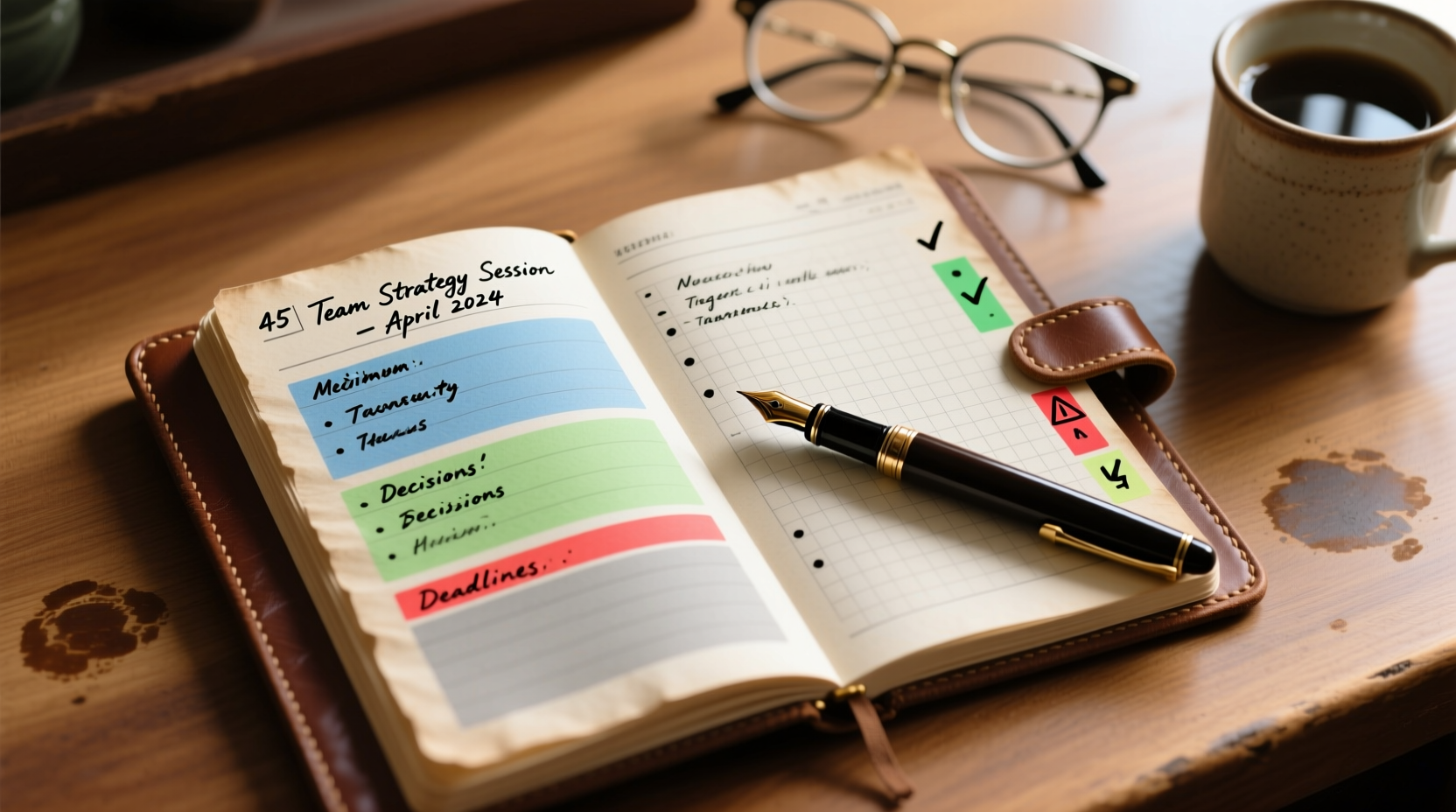
Research from Princeton and UCLA has shown that students who take notes by hand perform better on conceptual questions than those who type. The reason? Writing slows you down, forcing you to listen, process, and rephrase—not just transcribe. This selective filtering strengthens memory and comprehension.
A vintage A5 notebook amplifies this effect. Its physical limitations—no copy-paste, no search function, no endless scrolling—encourage intentionality. You must decide what matters, where it goes, and how it connects. These micro-decisions build mental ownership over the content.
“Writing is thinking. To write well is to think clearly. That’s why it’s so hard.” — William Zinsser, author of *On Writing Well*
This principle applies equally to meeting notes. When you’re limited to blank pages and a pen, every word carries weight. That constraint is not a drawback—it’s the source of its power.
Designing Your Meeting Note Framework
To get the most from your vintage A5 notebook, avoid random scribbling. Instead, adopt a repeatable structure that turns each meeting into a clear, retrievable record. Here’s a step-by-step system:
- Header Block: At the top of each page, write the date, meeting title, attendees, and objective (e.g., “Q3 Marketing Strategy Review – Goal: Finalize campaign timeline”).
- Agenda Mapping: List agenda items as bullet points before the meeting starts. Leave space under each for notes.
- Two-Column Layout: Draw a vertical line 1/3 from the left. Use the narrow column for keywords, decisions, action items, and time stamps. Use the wider right side for explanations and context.
- Decision & Action Tags: Circle all decisions. Star all action items. Write names next to tasks assigned to individuals.
- Summary Box: Reserve the bottom 3–4 lines of the page for a 1-sentence takeaway: “What was decided?” or “What happens next?”
Optimizing Page Layout: A Comparison of Methods
| Method | Best For | Pros | Cons |
|---|---|---|---|
| Cornell System | Review & retention | Clear summary section; great for follow-up | Takes practice to master spacing |
| Outline Method | Hierarchical topics | Natural flow; easy to scan | Hard to revise if structure shifts |
| Boxed Sections | Action-oriented meetings | Visually distinct decisions/tasks | Can waste space if overused |
| Freeform + Tags | Fast-paced discussions | Flexible; captures spontaneity | Requires strong tagging discipline |
For most professionals, a hybrid approach works best: start with the Cornell layout, then adapt using visual tags (arrows, stars, boxes) to highlight urgency and ownership.
Real-World Example: Weekly Team Syncs at a Design Studio
At Studio Lumen, a small creative agency, the lead designer, Maya, switched from digital minutes to a leather-bound A5 notebook inherited from her grandfather. Initially skeptical, she implemented a structured format after reading about the Zeigarnik effect—the psychological tendency to remember uncompleted tasks better than completed ones.
She began using a two-page spread per meeting: the left page for live notes during the session, the right for post-meeting synthesis. After each discussion, she transferred action items to the right-hand page, assigning names and deadlines. She also drew small icons—a lightbulb for ideas, a checkmark for closed items, a clock for pending decisions.
Within three weeks, team members reported higher clarity on responsibilities. One junior designer noted, “I finally know exactly what I’m supposed to do after meetings, not just what was discussed.” The notebook now sits in the center of the table during syncs, serving as both recorder and accountability anchor.
Essential Habits for Long-Term Success
A beautiful notebook won’t improve your productivity unless supported by consistent habits. Integrate these practices to make your A5 system sustainable:
- Pre-Meeting Prep: Skim past notes and agenda. Jot down 1–2 key questions you want answered.
- Time-Stamped Entries: Note the time beside major topic shifts (e.g., “2:15 PM – Budget discussion begins”). Helps track pacing and revisit moments later.
- Daily Review: Spend 5 minutes at day’s end scanning new entries. Highlight unresolved items.
- Weekly Indexing: Dedicate the first two pages of your notebook as a running index. Log page numbers, dates, and key topics (e.g., “p. 18 – Client X Feedback, Mar 3”).
- Monthly Archive: Once full, store notebooks chronologically in a labeled box. Reference them before recurring meetings or performance reviews.
Frequently Asked Questions
Can I still collaborate if I use a paper notebook?
Absolutely. While the original stays analog, share outcomes digitally. After the meeting, snap a photo of your summary box and action list, then distribute via email or messaging app. Focus on delivering clarity, not replicating every note.
What if I run out of space mid-meeting?
Use the back of the previous page or continue on the next sheet, but always draw a prominent arrow and label it (“Continued from p. 24”). Avoid cramming. If meetings regularly exceed one page, consider switching to a two-page spread format upfront.
Isn’t paper less secure than cloud storage?
It depends on your needs. Paper avoids hacking risks but requires physical safeguarding. Keep your notebook locked when not in use, especially if handling sensitive topics. For maximum security, avoid writing full client names or financial figures—use codes or abbreviations only you understand.
Conclusion: Reclaim Focus, One Page at a Time
In a world of constant notifications and fragmented attention, the vintage A5 notebook stands as a quiet act of resistance. It doesn’t buzz, update, or distract. It asks only for your presence and rewards you with clarity. By structuring your meeting notes with intention—using proven layouts, disciplined tagging, and regular review—you transform a simple artifact into a productivity engine.
The goal isn’t to reject technology, but to choose the right tool for the task. When understanding, retention, and decision-making matter more than speed, analog wins. Pick up your notebook, define your system, and start capturing not just what was said—but what truly matters.




 浙公网安备
33010002000092号
浙公网安备
33010002000092号 浙B2-20120091-4
Comments
No comments yet. Why don't you start the discussion?