
A small pencil case is often an afterthought—just a compact container for pens and pencils. But when poorly organized, even the most minimalist stationery collection can become chaotic. Whether you're a student juggling highlighters and mechanical pencils, an artist carrying fine liners and erasers, or a professional needing quick access to precision tools, how you organize your pencil case directly impacts productivity and daily convenience. The key isn’t buying a bigger case—it’s maximizing what you already have. With thoughtful layout, strategic selection, and smart categorization, you can transform a cramped compartment into a highly functional, streamlined toolkit.
Assess Your Essentials: Quality Over Quantity
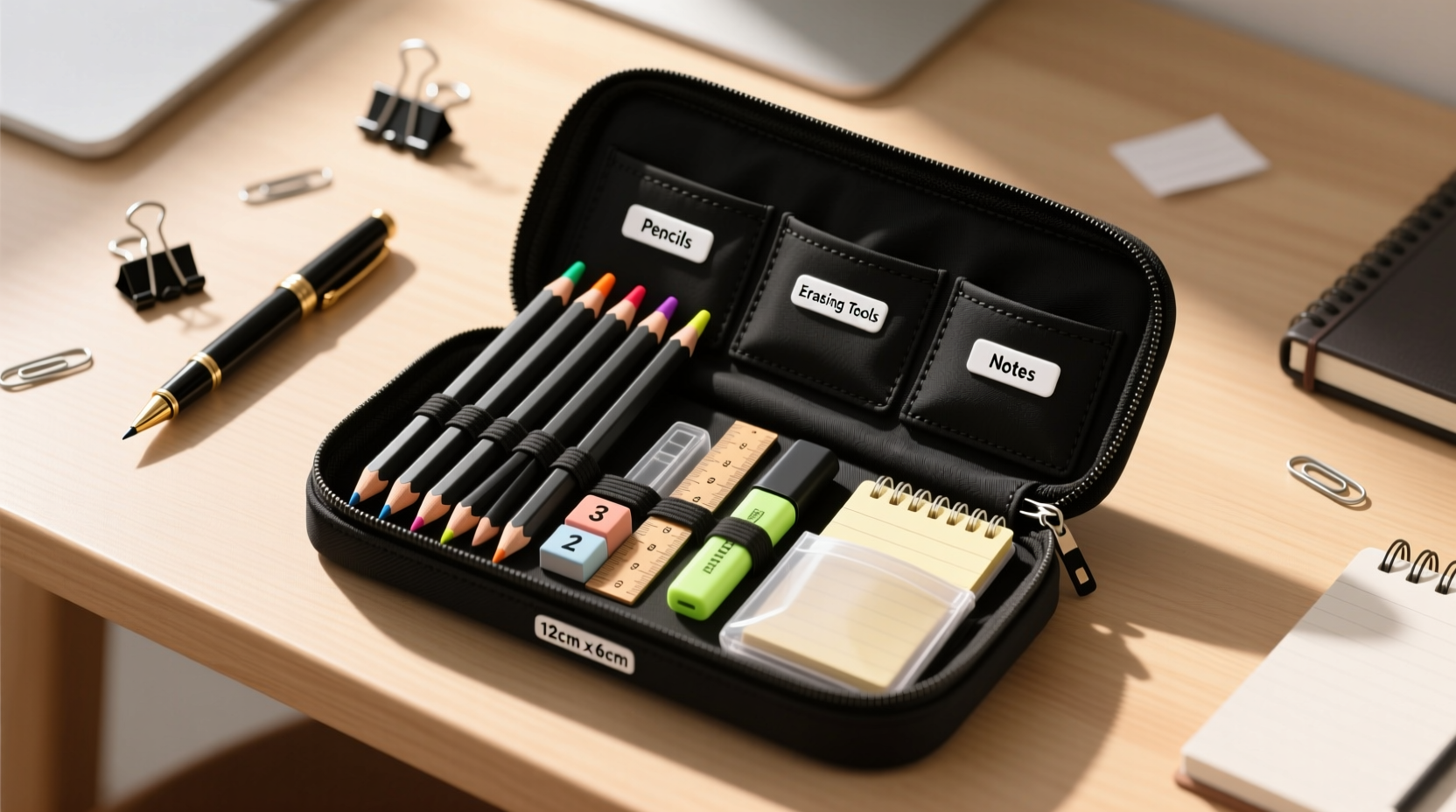
The first step toward efficient space use is determining exactly what belongs in your pencil case. Many people overfill their cases out of habit, not necessity. Begin by emptying everything and laying it out on a flat surface. Then ask yourself: How often do I use this? Is it functional, or just sentimental clutter? Does it serve a unique purpose, or duplicate another item?
Streamlining your collection reduces bulk and makes retrieval faster. For instance, carrying three blue pens may seem practical, but if only one is used regularly, the others are just occupying valuable real estate. Consider consolidating multi-functional tools—a mechanical pencil with a built-in eraser, a retractable ballpoint, or a highlighter with a fine tip and chisel edge—can replace multiple single-use items.
Choose the Right Pencil Case Design
Not all pencil cases are created equal. The shape, internal structure, and material significantly affect storage potential. A flat, zippered pouch might look sleek, but it offers poor visibility and limited compartmentalization. Conversely, a standing case with multiple tiers or mesh pockets allows vertical stacking and category-based sorting.
Consider these design features when selecting or evaluating your current case:
- Internal dividers: Help separate categories (e.g., pens, erasers, sharpeners).
- Clear front panel: Enables quick visual scanning without opening.
- Zip-around closure: Expands capacity slightly and prevents contents from spilling.
- Sturdy fabric or hard shell: Maintains shape under pressure, preventing crushing.
If your current case lacks structure, consider inserting a slim foam insert or folded cardboard to maintain rigidity and prevent tools from shifting.
Smart Organization Strategies
Once you’ve curated your essentials and selected the right case, apply intelligent organization techniques to enhance both space and usability.
Group by Function
Categorize tools into logical groups: writing, correcting, measuring, drawing, etc. This reduces search time and prevents overlap. Use small silicone bands or mini paper envelopes to bundle tiny items like spare leads or tacks.
Use Vertical Space
In upright cases, place longer items vertically rather than horizontally. Pens stand neatly when grouped together, making each one visible and easy to grab. Shorter tools like erasers or glue sticks go at the bottom or in side pockets.
Label Sections (Optional)
For complex setups—especially among artists or technical users—labeling sections with tiny tags or color-coded stickers adds clarity. Even subtle cues, like wrapping rubber bands of different colors around pen clusters, can speed up identification.
| Organization Method | Space Efficiency | Best For |
|---|---|---|
| Horizontal layering | Moderate | Flat pouches, infrequent access |
| Vertical stacking | High | Tall cases, frequent tool rotation |
| Pocket segregation | Very High | Multipurpose cases with accessories |
| Bundling with bands | Medium-High | Loose leads, clips, or small parts |
“Efficiency in small spaces comes not from adding more room, but from eliminating friction in access.” — Dana Reyes, Productivity Consultant
Step-by-Step: Optimize Your Pencil Case in 20 Minutes
Follow this timeline to reorganize your pencil case efficiently:
- Minute 0–3: Empty all contents onto a clean surface.
- Minute 4–7: Sort items into categories (writing, art, utility).
- Minute 8–10: Remove duplicates, dried-out markers, and unused items.
- Minute 11–14: Assign zones in your case (e.g., left side for pens, right for accessories).
- Minute 15–18: Arrange tools vertically or in labeled bundles; test ease of access.
- Minute 19–20: Close and open the case several times to ensure nothing shifts or jams.
This routine takes less time than scrolling through social media—and the payoff in daily efficiency is immediate.
Mini Case Study: From Chaos to Clarity
Sophie, a third-year architecture student, struggled with a stuffed zipper pouch that burst open during lectures. She carried 12 pens, four types of lead, two erasers, a mini ruler, sticky notes, and a USB drive—all tangled together. After adopting a tiered organizational system, she downsized to seven essential tools, stored vertically in a rigid, transparent case. She placed her USB and sticky notes in a rear mesh pocket. The result? She now accesses tools 60% faster during studio critiques, and her case has lasted twice as long due to reduced strain on the zipper.
Common Mistakes That Waste Space
Avoid these pitfalls that sabotage even the best-intentioned systems:
- Overloading “just in case” items: Extra batteries or backup scissors belong in a backpack, not a pencil case.
- Mixing personal and professional tools: Lip balm or medication doesn’t belong with stationery.
- Ignoring tool condition: Dried markers and blunt pencils take up space without serving a purpose.
- Using oversized tools: Full-size staplers don’t belong in pencil cases—opt for mini versions if needed.
FAQ: Frequently Asked Questions
Can I use a makeup organizer as a pencil case?
Yes—many cosmetic organizers feature adjustable compartments and clear views, making them excellent alternatives. Just ensure the size fits your bag and the materials protect delicate tools from pressure.
How do I keep small items like erasers from getting lost?
Store them in a tiny reusable pouch, attach them to a binder ring, or use a case with sealed side pockets. Silicone fingertip grips also work well to hold small pieces in place.
Is a hard case better than a soft one?
It depends on your needs. Hard cases protect contents and maintain shape but offer less flexibility. Soft cases compress easily but may collapse under weight. Choose based on portability vs. protection priorities.
Final Checklist: Achieve a Smarter Pencil Case
Before closing your newly organized case, run through this checklist:
- ✅ Removed all dried, broken, or redundant tools
- ✅ Grouped items by function (writing, correcting, measuring)
- ✅ Arranged long tools vertically for visibility
- ✅ Secured small parts in pockets or bands
- ✅ Tested access speed and case durability
- ✅ Scheduled next review in 4 weeks
Conclusion: Small Changes, Big Impact
Maximizing space in a small pencil case isn’t about squeezing more in—it’s about designing for clarity, speed, and sustainability. When every item has a purpose and a place, you reduce decision fatigue, avoid frustration, and gain confidence in your daily tools. The habits you build here—curating, categorizing, maintaining—extend far beyond stationery. They reflect a mindset of intentionality and efficiency that benefits every area of life.




 浙公网安备
33010002000092号
浙公网安备
33010002000092号 浙B2-20120091-4
Comments
No comments yet. Why don't you start the discussion?