
A clean desk is more than just visually pleasing—it's a foundation for clarity, focus, and sustained productivity. In today’s fast-paced work environments, whether in an office or at home, small distractions accumulate quickly. One of the most overlooked yet impactful tools in maintaining a streamlined workspace isn’t a high-tech gadget or an ergonomic chair—it’s a simple mini trash can. When strategically placed and properly used, this compact solution plays a pivotal role in eliminating physical clutter, reducing mental noise, and enhancing overall work efficiency.
The Hidden Cost of Desk Clutter
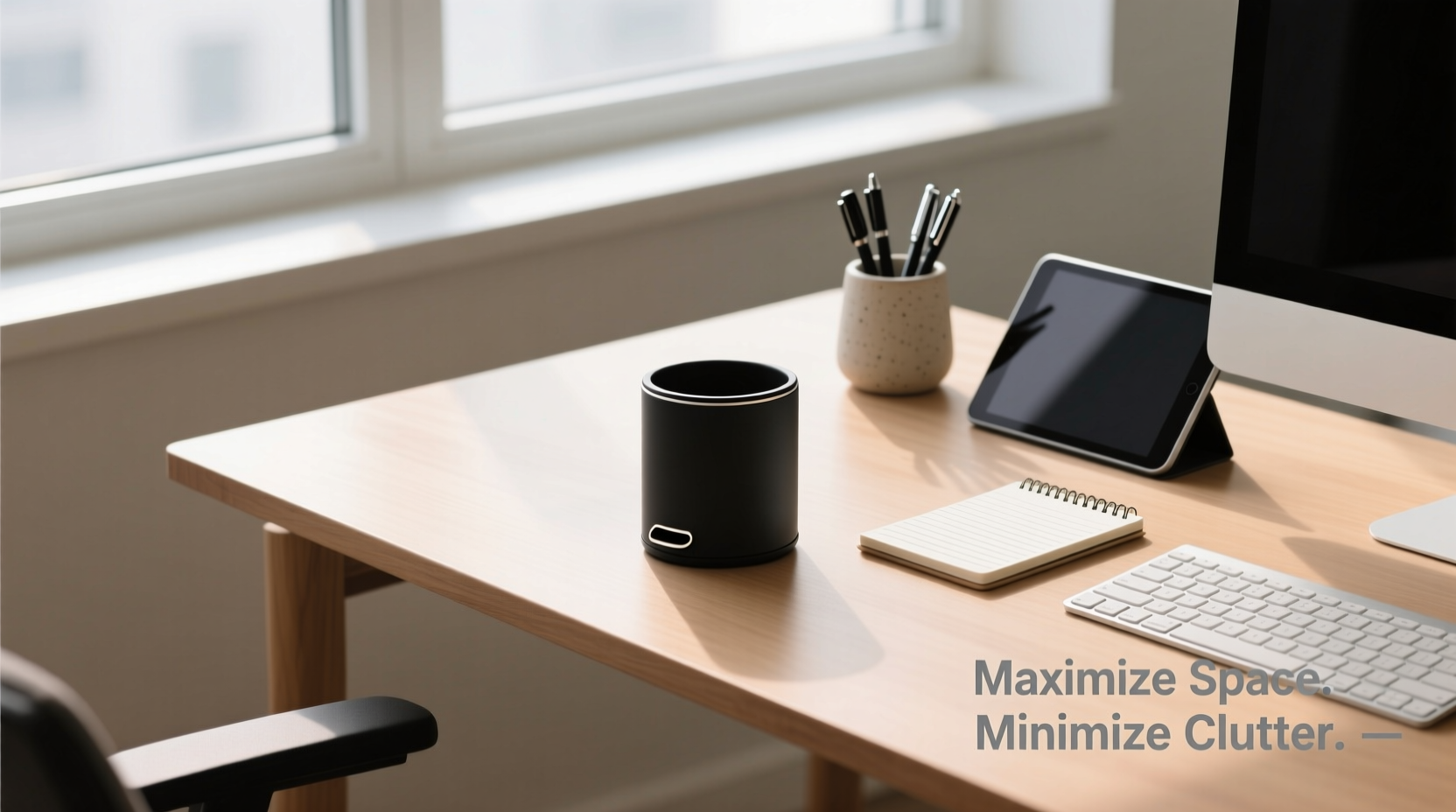
Clutter on your desk may seem harmless—used sticky notes, crumpled paper scraps, empty pen caps, snack wrappers—but its effects are far from trivial. Studies in environmental psychology show that visual disarray competes for cognitive resources, increasing stress and reducing concentration. A 2011 Princeton University study found that multiple stimuli in one’s environment compete for attention, leading to decreased performance and increased fatigue.
Every time you glance at a pile of discarded items, your brain registers it as unfinished business. Over time, this background noise wears down mental stamina. The solution? Intercept waste before it accumulates. That’s where the mini trash can becomes not just convenient, but essential.
Why Size Matters: The Advantage of Going Mini
Larger trash bins often live under desks or in corners, making them inconvenient for quick disposals. The distance creates friction; people delay throwing things away, which leads to temporary “holding zones” like desk corners or drawers filling up with junk. A mini trash can eliminates this gap.
Measuring typically between 3 to 7 inches in height, these compact containers are designed to fit seamlessly into tight spaces. Their small footprint means they don’t steal valuable real estate on your desk, yet they’re large enough to handle daily micro-waste: paper clips, rubber bands, tea bag tags, receipt scraps, or disposable coffee stirrers.
Beyond convenience, their visibility serves as a constant behavioral cue. When waste has a designated, immediate destination, the habit of tidying becomes automatic rather than effortful.
Choosing the Right Mini Trash Can for Your Workflow
Not all mini trash cans are created equal. Selecting the right one depends on your specific work habits, desk layout, and aesthetic preferences. Consider these factors:
- Material: Metal or ceramic options offer durability and a premium feel; plastic models are lightweight and budget-friendly.
- Opening Type: Swing-top lids help contain odors and maintain discretion; open tops allow faster access.
- Capacity: Aim for 0.5 to 1 liter—large enough to last a day, small enough to avoid overflow.
- Design: Minimalist styles blend with modern setups; colorful or quirky designs can add personality and even improve mood.
| Feature | Best For | Trade-offs |
|---|---|---|
| Open-top design | Fast-paced work (e.g., writing, admin) | May expose waste; less odor control |
| Hinged lid | Home offices with food/snacks nearby | Slightly slower access |
| Magnetic lid closure | Premium setups needing quiet operation | Higher cost |
| Wall-mounted | Ultra-minimalist or space-constrained desks | Installation required |
Step-by-Step: Integrating a Mini Trash Can Into Your Daily Routine
Simply placing a small bin on your desk won’t automatically transform your workspace. Integration requires intentionality. Follow this five-step process to make it stick:
- Assess Your Waste Patterns: For one workday, note every item you discard at your desk. Is it mostly paper? Food packaging? Used tape? This reveals what kind of container and liner (if any) you’ll need.
- Select Placement Strategically: Position the can near your non-dominant hand or beside your mouse pad. Avoid blocking ventilation ports or cable paths.
- Pair With a Weekly Reset: Empty the bin every evening or morning. Use this moment to wipe it down and assess if anything recyclable slipped in.
- Label If Needed: In shared or hybrid setups, consider labeling the can “Paper Only” or “General Waste” to prevent misuse.
- Evaluate Monthly: After four weeks, ask: Has clutter decreased? Do I forget to use it? Adjust size, location, or type accordingly.
“Efficiency isn’t about doing more—it’s about removing friction. A well-placed trash receptacle cuts decision fatigue by giving clutter a clear exit.” — Dr. Lena Torres, Workplace Ergonomics Researcher, MIT Human Systems Lab
Real Impact: A Case Study from a Remote Marketing Team
A mid-sized digital marketing agency in Portland noticed declining focus during virtual stand-ups. Employees reported feeling “mentally heavy” despite manageable workloads. As part of a broader workspace audit, the operations team introduced standardized mini trash cans across all remote setups.
Each employee received a 0.8L brushed aluminum can with a magnetic lid, along with guidelines on placement and maintenance. Over six weeks, participants logged self-reported focus levels and completed weekly desk audits.
The results were telling: 78% reported improved mental clarity, and photo submissions showed a 63% average reduction in visible desk clutter. One team member noted, “I didn’t realize how much I was subconsciously avoiding my right desk corner because it was always piled with sticky notes. Now that I have a spot to toss them immediately, I actually use that space again.”
Common Mistakes and How to Avoid Them
Even a simple tool can be misused. Watch out for these pitfalls:
- Overfilling: Letting the can overflow defeats its purpose. Set a reminder to empty it daily.
- Poor Placement: Putting it behind monitors or under keyboards makes it inaccessible. Accessibility ensures consistency.
- Ignoring Hygiene: Crumbs or coffee spills can attract pests or create odors. Wipe the interior weekly with a disinfectant cloth.
- Using It as a Catch-All: A trash can isn’t a storage bin. Avoid tossing pens, chargers, or important papers into it “temporarily.”
Frequently Asked Questions
Can a mini trash can really improve productivity?
Yes—not directly, but indirectly through environmental design. By reducing visual distractions and minimizing interruptions (like getting up to throw something away), you preserve cognitive flow. Small efficiencies compound over time.
Should I use liners or go liner-free?
Liners make cleanup easier but generate additional waste. Compostable cornstarch bags or reusable silicone liners offer eco-friendly compromises. If you only discard dry waste, going liner-free with a quick wipe-down is viable.
What if I work in a sterile environment like a lab or medical office?
In regulated settings, choose a mini can made from non-porous, chemical-resistant materials like stainless steel. Ensure compliance with biohazard disposal rules—this solution works best for general, non-contaminated waste.
Final Checklist: Optimizing Your Mini Trash Can Setup
- ✅ Choose a can that fits your desk dimensions and workflow.
- ✅ Position it within easy reach, not obstructing movement.
- ✅ Empty it daily to prevent overflow and odor.
- ✅ Clean the interior weekly with mild disinfectant.
- ✅ Pair it with a recycling or compost cup if applicable.
- ✅ Reassess effectiveness after 30 days.
Conclusion: Small Tool, Significant Return
The pursuit of workplace efficiency doesn’t always require grand overhauls. Sometimes, the most powerful changes come from rethinking the smallest details. A mini trash can is more than a receptacle—it’s a behavioral anchor, a boundary against entropy, and a silent partner in maintaining order. When integrated thoughtfully, it supports cleaner surfaces, sharper focus, and smoother workflows. In an era where attention is the rarest commodity, anything that preserves it deserves a place on your desk.




 浙公网安备
33010002000092号
浙公网安备
33010002000092号 浙B2-20120091-4
Comments
No comments yet. Why don't you start the discussion?