
In a world of constant stimulation and digital overload, more people are turning to meditation and mindfulness for mental clarity, emotional balance, and improved well-being. While these terms are often used interchangeably, they represent distinct practices with overlapping benefits. Understanding the difference between meditation and mindfulness—and knowing where to begin—can help you choose the right path for your personal growth.
What Is Meditation?
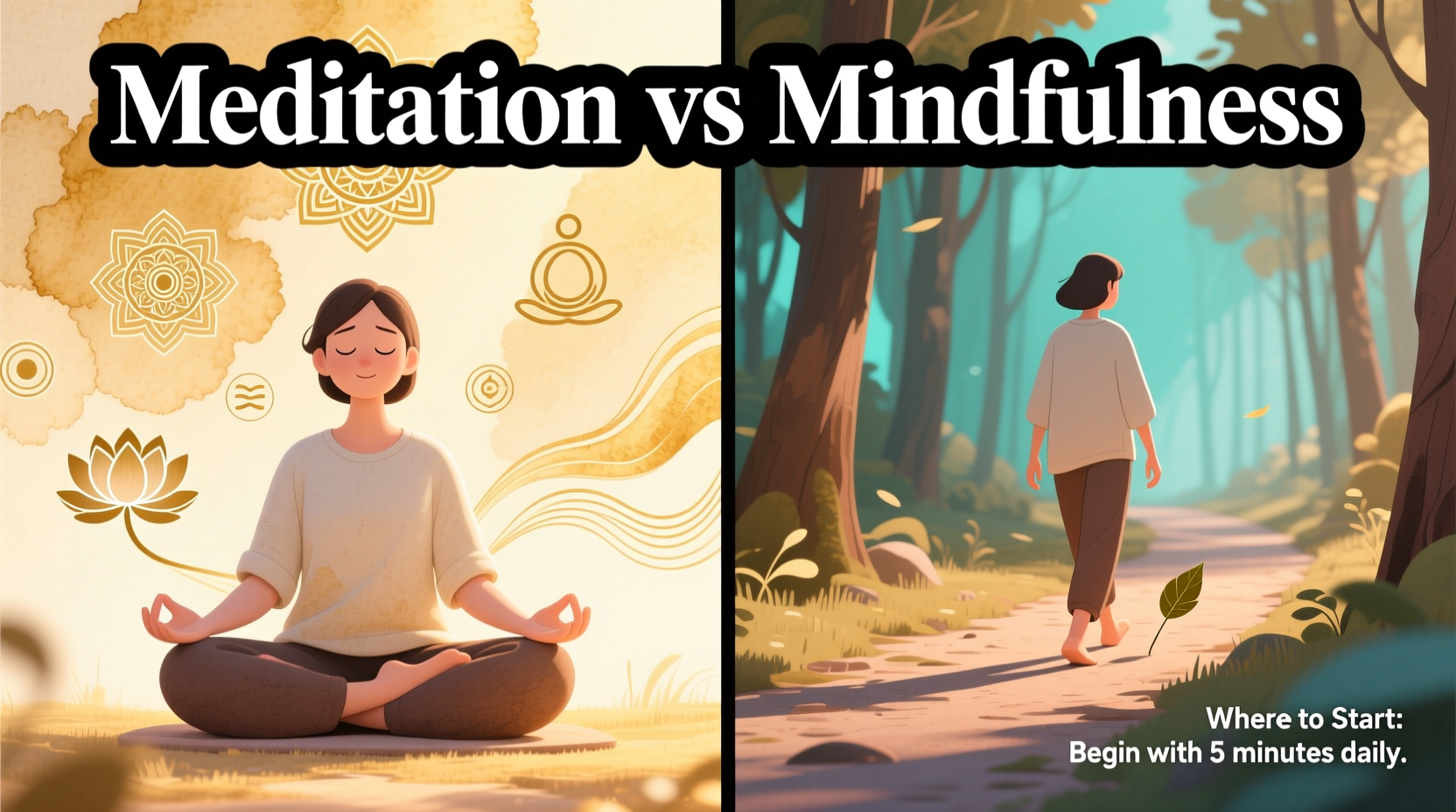
Meditation is a structured mental exercise designed to train attention, awareness, and emotional regulation. It typically involves setting aside dedicated time to sit quietly, focus on a specific object (such as the breath, a mantra, or bodily sensations), and observe thoughts without judgment. There are many forms of meditation, including:
- Focused Attention Meditation: Concentrating on a single point, like the breath or a candle flame.
- Loving-Kindness (Metta) Meditation: Cultivating feelings of compassion toward oneself and others.
- Transcendental Meditation: Using a silently repeated mantra to settle the mind.
- Body Scan Meditation: Bringing awareness gradually through different parts of the body.
- Zen (Zazen) Meditation: A seated practice emphasizing posture, breath, and open awareness.
Meditation is usually practiced in a quiet environment for a set duration—anywhere from five minutes to an hour. The goal isn’t necessarily to stop thinking but to develop a deeper relationship with your inner experience by observing it with detachment.
What Is Mindfulness?
Mindfulness is the quality of being fully present and engaged in the current moment, aware of your thoughts, emotions, and sensations without reacting impulsively. Unlike meditation, which is a formal practice, mindfulness can be applied throughout daily life. You can be mindful while eating, walking, listening, or even doing the dishes.
The essence of mindfulness lies in intentional awareness. For example, instead of scrolling through your phone while eating breakfast, you might slow down, notice the taste and texture of your food, and appreciate the act of nourishing your body. This non-judgmental attention fosters greater self-awareness and emotional resilience.
“Mindfulness means paying attention in a particular way: on purpose, in the present moment, and nonjudgmentally.” — Jon Kabat-Zinn, founder of Mindfulness-Based Stress Reduction (MBSR)
While mindfulness can be cultivated through meditation, it doesn’t require sitting still. It’s a skill that grows with practice, regardless of what you’re doing.
Key Differences Between Meditation and Mindfulness
Though closely related, meditation and mindfulness differ in scope, structure, and application. The table below outlines their distinctions:
| Aspect | Meditation | Mindfulness |
|---|---|---|
| Definition | A formal practice involving focused attention or open monitoring over a set period. | The state or practice of being present and aware in everyday activities. |
| Structure | Structured, scheduled sessions (e.g., 10–30 minutes daily). | Can be informal and integrated into any activity. |
| Setting | Typically requires a quiet space and time commitment. | Can be practiced anywhere—at work, during conversations, while driving. |
| Primary Goal | To train the mind, deepen concentration, or achieve insight. | To stay present and respond thoughtfully rather than react automatically. |
| Examples | Sitting with eyes closed, focusing on breath; repeating a mantra. | Noticing tension in your shoulders during a meeting; savoring the flavor of coffee. |
Think of meditation as training at the gym and mindfulness as using those fitness skills in real-life situations. One builds capacity; the other applies it.
How They Work Together
Meditation and mindfulness are not mutually exclusive—they complement each other. Regular meditation strengthens your ability to be mindful throughout the day. Conversely, practicing mindfulness can enhance your meditation by improving focus and reducing mental clutter.
For instance, someone who meditates daily may find it easier to pause and breathe before responding to a stressful email. On the flip side, someone who practices mindfulness during walks may bring greater presence to their seated meditation.
Many evidence-based programs, such as MBSR and Mindfulness-Based Cognitive Therapy (MBCT), combine both elements. Participants engage in formal meditation practices while also learning to apply mindfulness to daily challenges like chronic pain, anxiety, or recurring negative thoughts.
Where to Start: A Step-by-Step Guide
If you're new to both meditation and mindfulness, starting can feel overwhelming. Here’s a clear, actionable plan to help you build a sustainable practice.
- Clarify Your Intention
Ask yourself why you want to begin. Is it to reduce stress? Improve focus? Enhance emotional regulation? Having a clear purpose will keep you motivated. - Choose a Starting Point
Decide whether you want to begin with formal meditation, informal mindfulness, or both. Beginners often benefit from starting with short meditation sessions to build foundational awareness. - Set a Realistic Schedule
Commit to 5–10 minutes per day at a consistent time—morning after waking or evening before bed works well for most people. - Find a Quiet Space
Sit comfortably in a chair or on a cushion with your back straight but relaxed. You don’t need special equipment—just a distraction-free zone. - Focus on the Breath
Close your eyes and bring attention to your natural breathing. Notice the rise and fall of your chest or the sensation at your nostrils. When your mind wanders (and it will), gently return to the breath without judgment. - Expand Into Daily Mindfulness
Once comfortable with brief meditation, begin integrating mindfulness into routine tasks. Try eating one meal without distractions, or take a walk while noticing sights, sounds, and physical sensations. - Use Guided Resources
Apps like Insight Timer, Headspace, or Calm offer beginner-friendly guided meditations. Free YouTube videos and podcasts can also support early practice. - Track Progress and Adjust
Keep a simple journal. Note how you feel before and after practice. Over time, adjust duration, timing, or technique based on what feels most beneficial.
Common Challenges and How to Overcome Them
New practitioners often encounter obstacles. Recognizing them early helps prevent discouragement.
- \"I don’t have time.\" Even 60 seconds of mindful breathing counts. Anchor practice to existing habits—like brushing your teeth or waiting for your coffee to brew.
- \"I can’t stop thinking.\" Thoughts are normal. Meditation isn’t about stopping them but changing your relationship to them. Acknowledge them like passing clouds.
- \"I fall asleep.\" Try meditating earlier in the day or sitting upright instead of lying down.
- \"It feels pointless.\" Benefits accumulate subtly. Look for small shifts—less reactivity, better sleep, increased patience.
Mini Case Study: From Burnout to Balance
Sarah, a 34-year-old project manager, struggled with chronic stress and insomnia. After months of feeling overwhelmed, she attended an introductory mindfulness workshop. Skeptical but curious, she began with 5-minute breath-focused meditations each morning.
Within two weeks, she noticed she was pausing before reacting to urgent emails. She started taking mindful walks during lunch, really feeling her feet hit the pavement. By week six, her sleep improved, and she reported feeling “more in control” during high-pressure meetings.
Sarah didn’t eliminate stress, but she developed tools to respond differently. Her formal meditation strengthened her ability to be mindful under pressure—a transformation rooted in consistency, not perfection.
Checklist: Your First 7 Days of Practice
Use this checklist to establish a strong foundation:
- ☐ Choose a fixed time and place for daily practice.
- ☐ Commit to 5–10 minutes of seated meditation (use a timer).
- ☐ Focus on your breath; gently return when distracted.
- ☐ Practice one mindful activity daily (e.g., drinking tea, washing hands).
- ☐ Reflect briefly: How do I feel before and after?
- ☐ Be kind to yourself—no session is “failed” if you showed up.
- ☐ Repeat for seven days, then assess what worked and adjust.
Frequently Asked Questions
Can I practice mindfulness without meditating?
Yes. Mindfulness can be practiced independently of formal meditation. Simply bringing nonjudgmental awareness to daily activities—like listening fully in conversations or noticing your mood changes—is mindfulness in action.
Do I need to believe in spirituality to benefit?
No. While meditation has roots in Buddhist and contemplative traditions, modern mindfulness and meditation are secular, science-backed practices. You don’t need any religious belief to benefit from reduced stress or improved focus.
How long until I see results?
Some people notice subtle shifts within a week—like slightly less reactivity or better sleep. More significant changes in emotional regulation and cognitive flexibility typically emerge after consistent practice over 4–8 weeks. Think of it like physical fitness: regular effort yields cumulative rewards.
Conclusion: Begin Where You Are
Meditation and mindfulness are not quick fixes or mystical escapes. They are practical disciplines that cultivate awareness, resilience, and presence. Whether you start with a minute of breath awareness or a mindful commute, the most important step is the first one.
You don’t need perfect conditions, special gear, or hours of free time. You only need willingness and curiosity. As you integrate these practices, you’ll likely discover not just calmer moments, but a deeper connection to your life as it unfolds—here and now.




 浙公网安备
33010002000092号
浙公网安备
33010002000092号 浙B2-20120091-4
Comments
No comments yet. Why don't you start the discussion?