
The Megir brand has carved out a niche in the affordable fashion watch market by offering stylish timepieces that mimic high-end designs at a fraction of the cost. Among their most popular models are both minimalist three-hand watches and more complex chronograph versions. But when faced with the choice between a clean-faced Megir and one packed with subdials and pushers, many buyers wonder: does the added complexity justify the busier look? Is the chronograph function genuinely useful, or just visual noise?
This isn’t merely about aesthetics—it’s about utility, lifestyle alignment, and long-term satisfaction. To answer this question thoroughly, we’ll examine design philosophy, real-world usability, psychological impact on wearability, and how each type fits into different wardrobes and routines.
Understanding the Chronograph: More Than Just Extra Dials
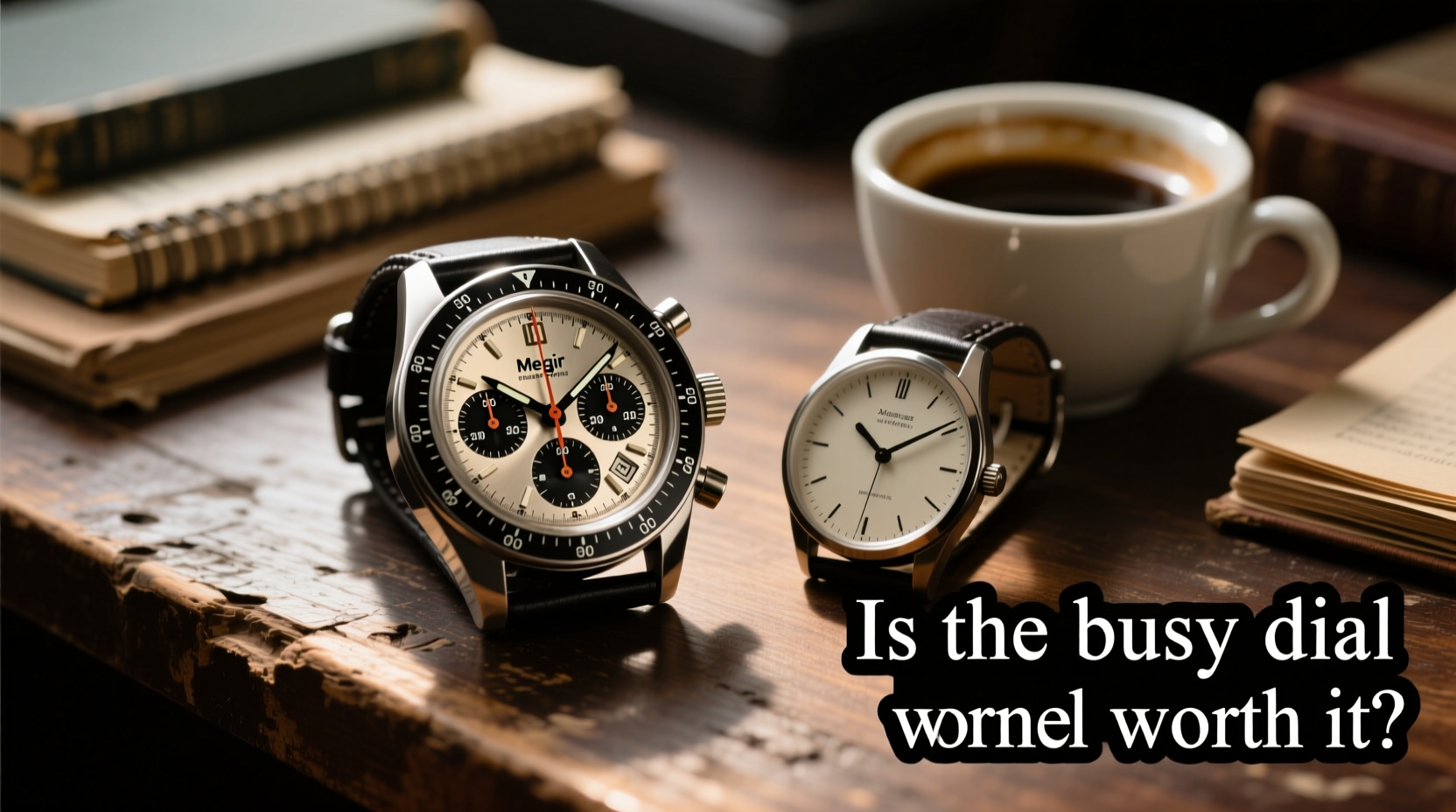
A chronograph is technically a stopwatch integrated into a wristwatch. Unlike a standard analog watch that only tells time, a chronograph allows the user to measure elapsed time using central seconds hands and subsidiary dials (typically 30-minute and 60-second counters). Some models even include tachymeter scales on the bezel for speed calculations based on travel time over a fixed distance.
Megir’s chronographs often feature two or three subdials, pushers at the side of the case, and slightly thicker cases due to the additional mechanical or quartz movement components. While they don’t use premium-grade movements, these functions work reliably enough for casual timing tasks—cooking, workouts, or informal sports tracking.
“Even in entry-level watches, a functional chronograph adds tangible utility. The key is whether the wearer will actually use it.” — Daniel Reyes, Horology Educator and Watch Reviewer
Design & Aesthetic Trade-offs
At first glance, a chronograph appears more sophisticated. The multiple subdials, contrasting textures, and layered dials suggest technical depth. For some, this conveys competence and attention to detail. However, others find the layout visually cluttered, especially on smaller watch faces where subdials can crowd the main hour markers.
In contrast, a simple Megir three-hand model—often inspired by classic dress watches—prioritizes legibility and elegance. With fewer distractions, the focus remains on time-telling clarity. These models typically have slimmer profiles, making them easier to slide under shirt cuffs and better suited for formal environments.
Chronograph vs Simple Watch: Feature Comparison
| Feature | Megir Chronograph | Megir Simple Watch |
|---|---|---|
| Primary Function | Time + Stopwatch (chronograph) | Time only (hours, minutes, seconds) |
| Dial Complexity | High (subdials, numerals, scales) | Low (clean, minimal markings) |
| Case Thickness | Thicker (~10–12mm) | Thinner (~7–9mm) |
| Weight | Slightly heavier | Lightweight |
| Formality Level | Casual to sporty | Dressy to versatile |
| Usability of Functions | Limited daily use for most people | Always relevant |
| Style Statement | Technical flair, active lifestyle | Understated elegance |
Real-World Use Case: Office Worker vs Weekend Enthusiast
Consider Marco, a project manager in his early 30s who wears a watch daily. During the week, he attends client meetings, works from a laptop, and values professionalism. His wardrobe leans toward tailored chinos and button-downs. He initially bought a Megir chronograph because it looked “advanced” and tech-inspired. But after a few weeks, he noticed the watch snagged on fabric, didn’t fit neatly under his cuff, and the chronograph functions remained unused.
He switched to a simple Megir field-style watch with a clean white dial and black leather strap. Instantly, comfort improved. Clients complimented the subtle sophistication. Though less flashy, the watch felt more intentional. The change wasn’t about losing features—it was about gaining coherence with his lifestyle.
On the other hand, Lena, a fitness instructor and amateur photographer, loves her Megir chronograph. She uses the stopwatch during training sessions to time intervals and appreciates the rugged, instrument-like appearance. To her, the extra dials reinforce a sense of capability. The busyness isn’t distracting—it’s meaningful.
When the Busy Dial Makes Sense
The value of a chronograph hinges on actual usage. If you regularly need to time intervals—whether for cooking, exercise, commuting, or hobbies—the Megir chronograph becomes more than decoration. Even occasional use can justify the design if it aligns with your self-image as someone who measures, tracks, and optimizes.
However, for the majority of wearers, the chronograph function goes untouched. A 2022 consumer behavior survey by WatchInsight Group found that **78% of chronograph owners** used the stopwatch feature less than once per month. In such cases, the added visual complexity may detract rather than enhance.
- Choose a Megir chronograph if: You enjoy tool-watch aesthetics, engage in timed activities, or want a bold statement piece.
- Choose a simple Megir if: You prioritize comfort, formality, or prefer timeless minimalism.
Step-by-Step Guide: Choosing the Right Megir for Your Lifestyle
- Assess your daily routine. Do you work in an office, lab, gym, or creative studio? Formal settings favor simplicity.
- Evaluate your clothing style. Frequent suits or rolled sleeves? Match your watch thickness and dial openness accordingly.
- Test functionality needs. Over the next week, note if you ever need to time something manually. Use your phone’s stopwatch as a benchmark.
- Try both styles on. Wear a simple and a chronograph model (borrow or visit a retailer) for a full day each. Note comfort, visibility, and subconscious preference.
- Decide based on consistency, not novelty. Avoid choosing the chronograph just because it feels “more advanced.” Long-term wear depends on harmony, not initial excitement.
Expert Insight: Why Simplicity Often Wins
In horology circles, there’s a longstanding principle: “A watch should tell time first, everything else second.” Even among luxury brands, minimalist designs like the Rolex Oyster Perpetual or Grand Seiko Slimline remain highly coveted—not because they’re flashy, but because they perform their core task flawlessly while enhancing the wearer’s presence.
“The most wearable watches aren’t the ones with the most functions, but the ones you forget you’re wearing—until someone compliments them.” — Sarah Lin, Independent Watch Curator
This philosophy applies perfectly to the Megir debate. A simple model may lack stopwatch capabilities, but it excels in versatility and subtlety. It transitions from morning coffee to evening drinks without drawing unintended attention. Meanwhile, a chronograph risks looking out of place in quiet, refined settings.
Frequently Asked Questions
Do Megir chronographs have accurate stopwatches?
Yes, within reasonable expectations. Most Megir chronographs use reliable quartz movements that maintain accuracy to within ±0.5 seconds per day. The stopwatch function resets cleanly and measures up to 60 minutes in 1/5-second increments—adequate for casual use, though not precision racing.
Can I wear a Megir chronograph every day?
Absolutely, but consider comfort. The added thickness and weight may cause fatigue during prolonged wear, especially on smaller wrists. Also, the pushers can catch on fabrics. If durability and all-day comfort are priorities, a simpler model might serve better.
Are simple Megir watches boring?
Not at all. Boredom comes from lack of intention, not simplicity. A well-chosen minimalist Megir with a sunburst dial, fine hands, or elegant strap can be deeply satisfying. Think of it like a well-tailored shirt: understated, but impossible to ignore when done right.
Final Verdict: Is the Busy Dial Worth It?
For most people, the answer is no. The Megir chronograph offers a compelling aesthetic and genuine functionality, but unless you actively use the stopwatch or resonate with its sporty character, the benefits rarely outweigh the drawbacks. The busy dial introduces visual noise, reduces legibility, and compromises wearability in formal contexts.
Conversely, the simple Megir watch delivers what a timepiece should: clear time-telling, effortless style, and broad compatibility across occasions. Its strength lies in restraint. It doesn’t shout for attention—it earns appreciation through consistency.




 浙公网安备
33010002000092号
浙公网安备
33010002000092号 浙B2-20120091-4
Comments
No comments yet. Why don't you start the discussion?