
For decades, memory foam has been celebrated for its contouring comfort and pressure relief. But as sleep science evolves, a persistent concern lingers: does memory foam really trap too much heat? With the rise of hybrid mattresses—blending coils and foam—the debate between memory foam and hybrid designs has intensified. Consumers want support, durability, and above all, a cool sleeping surface. This article dives deep into the thermal performance of both types, separates myths from facts, and helps you make an informed decision based on real-world experience and material science.
The Science Behind Heat Retention in Mattresses
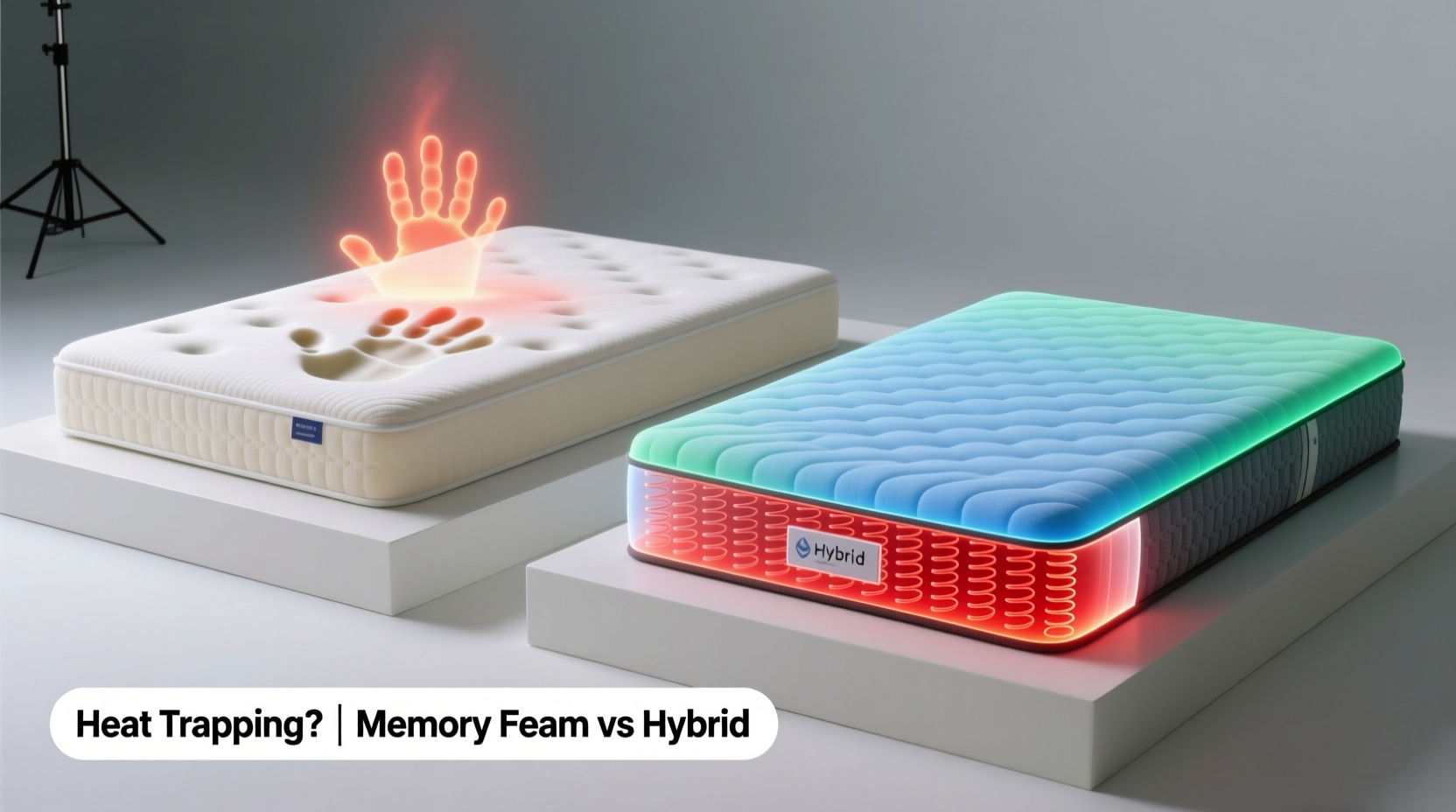
Heat retention isn’t just about comfort—it’s rooted in material density and airflow. Traditional memory foam is made from viscoelastic polyurethane, a dense material that responds to body heat by softening and conforming closely to your shape. While this provides excellent spinal alignment and motion isolation, it also limits air circulation. The foam essentially acts like an insulator, similar to how a thick winter coat traps warmth.
In contrast, hybrid mattresses combine pocketed coils with layers of foam (often including memory foam). The coil system creates internal channels for airflow, allowing heat to escape more efficiently. This structural difference is key to understanding why hybrids are often perceived as cooler.
However, not all memory foam is created equal. Advances in foam technology have led to the development of gel-infused, open-cell, and phase-change material (PCM) foams designed specifically to dissipate heat. These newer formulations challenge the old stereotype that memory foam must be hot.
“Early memory foams were notorious for heat buildup, but today’s cooling technologies have significantly narrowed the gap between foam and hybrid models.” — Dr. Lena Torres, Sleep Researcher at the National Sleep Foundation
Memory Foam vs Hybrid: A Direct Comparison
To understand which mattress type suits your needs, consider these core differences:
| Feature | Memory Foam Mattress | Hybrid Mattress |
|---|---|---|
| Heat Dissipation | Moderate to poor (standard foam); improved with gel/open-cell tech | Good to excellent due to coil ventilation |
| Pressure Relief | Excellent—deep contouring adapts to body curves | Good—top foam layers provide cushioning over supportive coils |
| Motion Isolation | Superior—minimal transfer across the surface | Fair to good—coils can transmit some movement |
| Edge Support | Fair—edges may sag without reinforced foam | Strong—coils provide stable perimeter support |
| Durability | 7–10 years with high-density foams | 8–12 years with quality coils and foam layers |
| Price Range | $800–$1,800 | $1,200–$2,500+ |
This comparison shows that while hybrids generally offer better breathability, modern memory foam mattresses have closed the thermal gap significantly through innovation. Your personal sleep habits—such as body temperature, sleeping position, and room climate—play a crucial role in determining which type feels cooler to you.
Do Memory Foam Mattresses Really Trap Heat?
The short answer: some do, but not all. The idea that memory foam is inherently hot stems from early versions developed in the 1990s and 2000s, which used solid, closed-cell structures with little airflow. Today, manufacturers use several strategies to combat heat retention:
- Gel Infusion: Tiny gel beads are embedded in the foam to absorb and disperse body heat.
- Copper or Graphite Infusion: These thermally conductive materials pull heat away from the body.
- Open-Cell Structure: Microscopic pores allow air to flow through the foam, improving breathability by up to 30% compared to traditional foam.
- Phase-Change Materials (PCM): These fabrics or foams absorb excess heat when temperatures rise and release it when cooler, maintaining a stable microclimate.
Independent testing by organizations like Consumer Reports and Sleepopolis shows that high-end memory foam models now perform nearly as well as hybrids in temperature regulation. However, budget-friendly memory foam options often skip these advanced features, leading to discomfort for hot sleepers.
It's also worth noting that external factors—such as bedding, pajamas, and bedroom temperature—can amplify or mitigate heat issues. A breathable cotton sheet set or moisture-wicking pajamas can make a noticeable difference, even on a standard memory foam bed.
Real-World Experience: A Case Study
Samantha, a 42-year-old nurse from Austin, Texas, struggled with night sweats for years. After switching from an innerspring to a basic memory foam mattress, she found herself waking up drenched multiple times per week. “I thought I just needed to tough it out,” she said. “But after six months of restless nights, I returned it.”
She then tried a hybrid model with individually wrapped coils and a top layer of copper-infused memory foam. Within two weeks, her sleep quality improved dramatically. “It’s not just cooler—it feels more responsive. I don’t sink in as deeply, and there’s definitely more airflow.”
Samantha’s experience reflects a common pattern: individuals who sleep hot often benefit from hybrid designs, especially in warm climates. However, her success was also tied to choosing a mattress with active cooling technology—not all hybrids automatically solve heat issues.
How to Choose the Right Mattress for Temperature Control
Selecting a mattress isn’t just about foam vs hybrid—it’s about matching materials to your physiology and environment. Follow this step-by-step guide to find a cooler sleeping surface:
- Assess Your Sleeping Habits: Do you wake up sweaty? Are your sheets damp in the morning? Track your sleep patterns for a week to confirm if heat is truly the issue.
- Evaluate Your Bedroom Environment: Ideal sleep temperature ranges from 60–67°F (15–19°C). Use fans, AC, or smart thermostats to maintain a cool room.
- Look Beyond Marketing Claims: Terms like “cooling” or “breathable” aren’t regulated. Check independent reviews and lab tests for thermal performance data.
- Check the Top Layer Composition: Prioritize mattresses with open-cell foam, gel infusion, or PCM layers within the first 2–3 inches of comfort material.
- Consider Cover Fabric: Some brands use phase-change fabric covers or TENCEL™ blends that wick moisture and regulate temperature.
- Test Before You Buy: Take advantage of sleep trials (ideally 100+ nights) to evaluate long-term comfort and temperature control.
“The best mattress for heat management isn’t one type—it’s the one engineered with intentional cooling features, regardless of construction.” — Mark Chen, Product Engineer at RestWell Labs
Checklist: What to Look for in a Cool-Sleeping Mattress
Use this checklist when shopping to avoid overheating at night:
- ✅ Open-cell foam or aerated structure in comfort layers
- ✅ Gel, copper, or graphite infusion in the top layer
- ✅ Breathable cover made from TENCEL™, bamboo, or moisture-wicking fabric
- ✅ Coil base (in hybrids) with sufficient spacing for airflow
- ✅ Independent customer reviews mentioning temperature performance
- ✅ At least a 100-night sleep trial and transparent return policy
- ✅ CertiPUR-US® certification for low emissions and safe materials
FAQ: Common Questions About Memory Foam and Heat
Does all memory foam sleep hot?
No. While traditional memory foam has poor breathability, newer versions with gel infusion, open-cell technology, or phase-change materials are designed to sleep cooler. Always check the specific foam composition before assuming heat buildup.
Are hybrid mattresses always cooler than memory foam?
Generally yes, due to their coil systems promoting airflow. However, a poorly constructed hybrid with thin coils and dense foam can still trap heat. The quality of materials matters more than the category alone.
Can my bedding affect how hot my mattress feels?
Absolutely. Polyester sheets, thick comforters, and non-breathable pajamas can compound heat retention. Opt for natural fibers like cotton, linen, or TENCEL™ to enhance cooling.
Conclusion: Making the Right Choice for Cooler, Deeper Sleep
The question isn’t whether memory foam traps heat—but whether the memory foam you choose is designed to prevent it. While hybrid mattresses have a structural advantage in airflow, advancements in foam engineering have blurred the line between the two categories. Today, many high-performance hybrids actually use cooling memory foam as their top layer, combining the best of both worlds.
If you're a hot sleeper, don't rule out memory foam entirely. Instead, focus on models with proven cooling technologies and strong user feedback on temperature regulation. Likewise, don’t assume every hybrid will keep you cool—some prioritize support over breathability.
Your ideal mattress balances pressure relief, support, durability, and thermal comfort. By understanding the materials behind the marketing and testing options in your own home, you can find a sleep surface that keeps you cool, supported, and refreshed night after night.




 浙公网安备
33010002000092号
浙公网安备
33010002000092号 浙B2-20120091-4
Comments
No comments yet. Why don't you start the discussion?