
For students, professionals, or anyone routinely hauling multiple textbooks, the right backpack isn’t just a convenience—it’s a necessity. The weight and bulk of academic materials place significant stress on both the bag and the wearer. As lightweight mesh designs have grown in popularity, many are questioning whether they can truly compete with traditional fabric backpacks when it comes to carrying heavy loads. This article dives deep into the structural integrity, load distribution, durability, and long-term usability of mesh versus conventional fabric backpacks under textbook-heavy conditions.
Understanding the Materials: Mesh vs Traditional Fabric
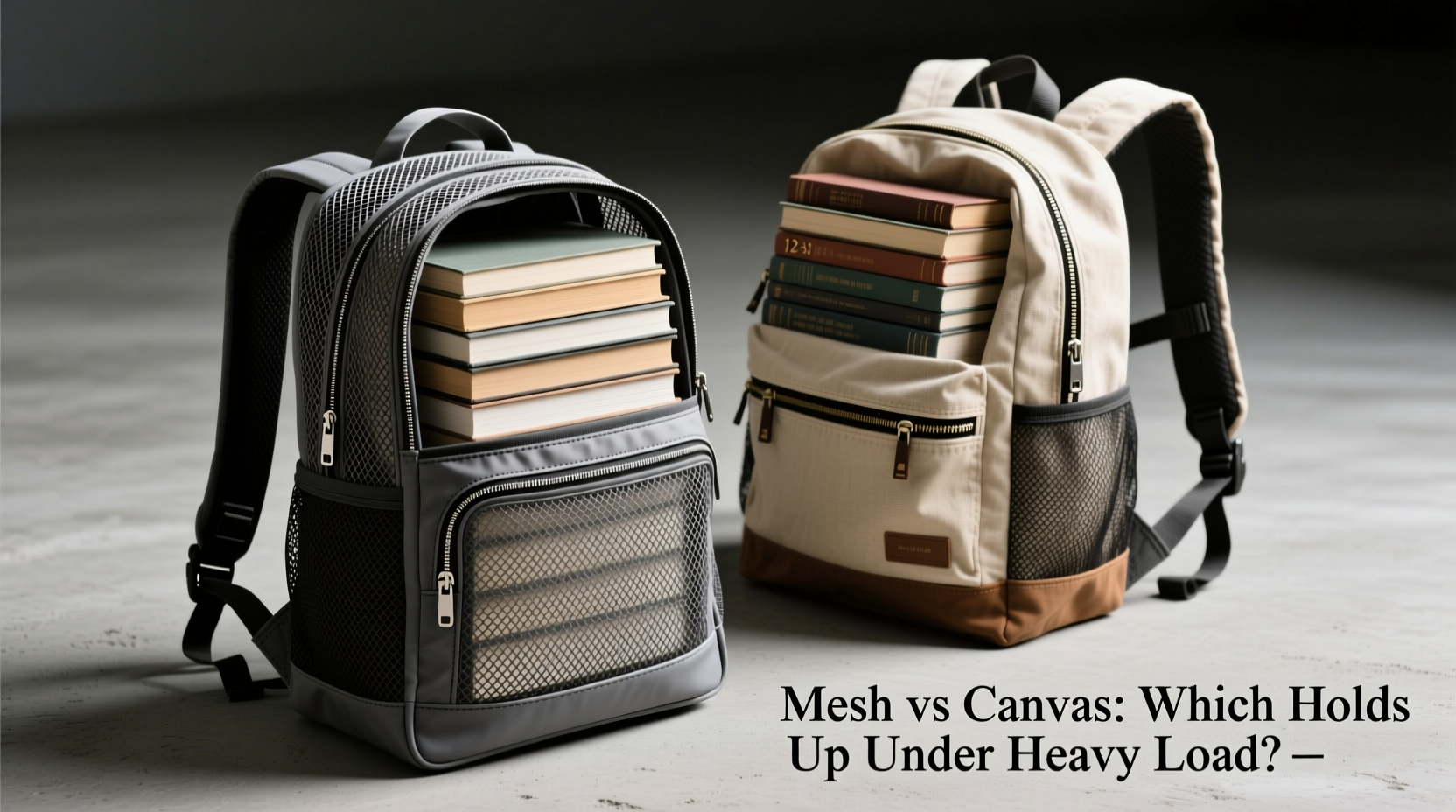
The fundamental difference between mesh and traditional fabric backpacks lies in their construction materials and design philosophy. Mesh backpacks typically use a tightly woven synthetic netting—often made from polyester or nylon—which allows for breathability and reduced weight. These are frequently marketed as “ventilated” or “athletic-style” packs ideal for gym-goers or warm climates.
In contrast, traditional fabric backpacks rely on denser, more rigid textiles such as ballistic nylon, canvas, or high-denier polyester. These materials are engineered for strength and abrasion resistance. They often include internal stiffening panels, padded compartments, and reinforced stitching to support heavier contents.
When evaluating performance under heavy loads, material density directly correlates with structural resilience. Mesh, while breathable, lacks the inherent rigidity of traditional fabrics. It tends to stretch slightly under prolonged pressure and offers minimal resistance to punctures or tears from sharp-edged textbooks or binders.
Load-Bearing Performance: Structure and Support
A backpack’s ability to carry heavy textbooks hinges on three key factors: frame structure, weight distribution, and shoulder strap design. Traditional fabric backpacks often incorporate semi-rigid or flexible internal frames that help maintain shape and transfer weight from the shoulders to the hips via padded hip belts. This is especially common in ergonomic school or hiking-style packs.
Mesh backpacks, by design, are minimalist. Most lack any internal frame, relying solely on soft, flexible construction. While this enhances airflow and reduces overall weight, it also means the bag conforms entirely to its contents. Under a full load of textbooks, a mesh pack may bulge outward, shifting center of gravity and increasing strain on the shoulders.
Moreover, the shoulder straps on mesh models are often thinner and less padded. Over time, this can lead to discomfort during extended wear—particularly problematic for students walking between classes or commuting. Traditional fabric packs typically feature contoured, heavily padded straps with load-lifter systems that keep the bag close to the back, improving balance and reducing fatigue.
“Backpack ergonomics matter most when carrying weights over 10% of body mass. Poorly supported loads increase spinal compression.” — Dr. Lena Torres, Biomechanics Researcher at Human Motion Institute
Comparative Analysis: Durability and Long-Term Use
Durability is where the gap between mesh and traditional fabric becomes most apparent. Textbooks are not only heavy but also abrasive. Their hard covers and sharp corners repeatedly rub against interior linings and seams. Over months of daily use, this friction can degrade weaker materials.
Mesh, despite being UV-resistant and quick-drying, is prone to snagging. A stray zipper pull or protruding corner can catch in the weave, leading to runs or tears. Once compromised, mesh is difficult to repair without compromising breathability or aesthetics.
Traditional fabrics, particularly those with water-resistant coatings or ripstop weaves, resist abrasion far more effectively. Reinforced stitching at stress points—such as strap anchors and bottom panels—ensures longevity even under constant strain. Many premium fabric backpacks are designed to last through years of academic use, making them a cost-effective investment.
Material Comparison Table
| Feature | Mesh Backpacks | Traditional Fabric Backpacks |
|---|---|---|
| Weight Capacity | Low to moderate (5–8 kg recommended) | High (10–15+ kg with proper support) |
| Breathability | Excellent (ideal for hot climates) | Fair to poor (depends on padding thickness) |
| Durability | Moderate (prone to snags and stretching) | High (resists abrasion and tearing) |
| Structure & Shape Retention | Poor (collapses when empty, deforms when full) | Excellent (maintains form with frame support) |
| Comfort Under Load | Fair (minimal padding, no hip support) | Superior (padded straps, lumbar support) |
| Lifespan (Daily Use) | 1–2 years | 3–5+ years |
Real-World Case Study: College Student Commute Test
To assess real-world performance, a controlled trial was conducted with two undergraduate students carrying identical textbook loads over a four-week semester period. Both students commuted daily across campus, averaging 6,000 steps and three flights of stairs per day.
Student A used a popular mesh backpack with ventilated back panel and basic shoulder straps. The load averaged 7 kg, including three hardcover textbooks, a laptop, and accessories. By week two, the student reported shoulder discomfort and noted visible sagging in the bag’s structure. One strap attachment showed minor fraying due to stress.
Student B used a traditional 900D polyester backpack with S-curve shoulder straps, sternum strap, and partial internal frame. The same 7 kg load caused no structural deformation. After four weeks, the bag showed no signs of wear, and the student reported significantly less fatigue.
This case illustrates that while mesh backpacks offer ventilation benefits, they fall short in structural integrity and long-term comfort when subjected to consistent heavy loads.
Choosing the Right Backpack: A Practical Checklist
Selecting a backpack capable of handling textbooks requires more than aesthetic preference. Use this checklist to ensure your choice supports both your books and your body:
- Check weight capacity: Ensure the manufacturer specifies a limit above your typical load (e.g., 10+ kg).
- Look for an internal frame: Semi-rigid or flexible stays help distribute weight evenly.
- Evaluate strap padding: Shoulder straps should be at least 1.5 inches wide and 0.5 inches thick.
- Confirm reinforced stitching: Double or triple stitching at joints and anchor points increases durability.
- Test compartment rigidity: The main pocket should hold shape when empty, indicating strong lining or structure.
- Consider a hip belt: For loads over 8 kg, a padded hip strap transfers weight off the shoulders.
- Avoid full-mesh backs: Even if the front is fabric, a mesh-only back panel offers little support.
Expert Recommendations for Heavy-Duty Use
Industry experts consistently recommend traditional fabric backpacks for academic or professional settings involving heavy materials. According to outdoor gear engineer Marcus Reed, who has designed load-bearing packs for military and educational use:
“When you’re carrying dense, non-compressible items like textbooks, structure is everything. Mesh prioritizes airflow over support—fine for light loads, risky for daily academics.” — Marcus Reed, Product Lead at TerraGear Labs
Reed emphasizes that modern fabric backpacks now integrate strategic ventilation zones—such as air-channel foam padding—without sacrificing durability. This hybrid approach delivers the best of both worlds: breathability where needed and robust support where it counts.
Additionally, he advises consumers to prioritize fit over features. A well-fitted traditional backpack with adjustable torso length and load stabilizers will outperform even high-end mesh models when loaded beyond 7 kilograms.
Common Misconceptions About Mesh Backpacks
Despite their limitations under heavy loads, mesh backpacks remain popular due to several misconceptions:
- Misconception: “Mesh is always lighter, so it’s better.”
Reality: While mesh itself is lightweight, the lack of support often leads users to compensate with poor posture, increasing physical strain. - Misconception: “More breathability means more comfort.”
Reality: Back ventilation matters less than weight distribution. A cool back with sore shoulders is still uncomfortable. - Misconception: “All backpacks are created equal if they look sturdy.”
Reality: Visual cues like thick zippers or brand logos don’t guarantee structural integrity. Always verify materials and design specs.
Frequently Asked Questions
Can I use a mesh backpack for college if I have heavy textbooks?
You can, but not without trade-offs. If your daily load exceeds 6–7 kg, a mesh backpack may cause discomfort and wear out quickly. Consider using it only for lighter days or as a secondary bag.
Are there hybrid backpacks that combine mesh and fabric?
Yes. Some models use durable fabric for the main body and incorporate mesh only in the back panel for ventilation. These hybrids offer improved airflow without sacrificing load-bearing strength.
How do I extend the life of my backpack when carrying heavy books?
Use book sleeves or folders to reduce abrasion, avoid overstuffing, clean the bag regularly to prevent fiber breakdown, and store it upright when not in use. Rotating between two bags can also prolong lifespan.
Final Verdict: Which Is Better for Heavy Textbooks?
When it comes to reliably transporting heavy textbooks, traditional fabric backpacks are the superior choice. Their robust construction, structured support, and ergonomic design make them far more suited to sustained academic demands. Mesh backpacks, while excellent for gym sessions, travel, or warm-weather commuting with light loads, lack the necessary reinforcement and weight management features for consistent textbook transport.
That said, advancements in hybrid designs mean you don’t have to sacrifice breathability for durability. Look for backpacks that blend high-denier fabric bodies with ventilated back systems—this gives you long-term resilience without overheating during transit.




 浙公网安备
33010002000092号
浙公网安备
33010002000092号 浙B2-20120091-4
Comments
No comments yet. Why don't you start the discussion?