
When the temperature climbs and humidity rises, your footwear choices matter more than ever. Sweaty feet aren’t just uncomfortable—they can lead to odor, blisters, and fungal infections. That’s why many people turn to lightweight, breathable sneakers for summer wear. Two popular options dominate the market: mesh sneakers and those with knit uppers. While both promise ventilation and comfort, they differ significantly in material structure, airflow efficiency, and long-term performance. Understanding these differences helps you make a smarter decision when staying cool is the priority.
The Science of Foot Ventilation
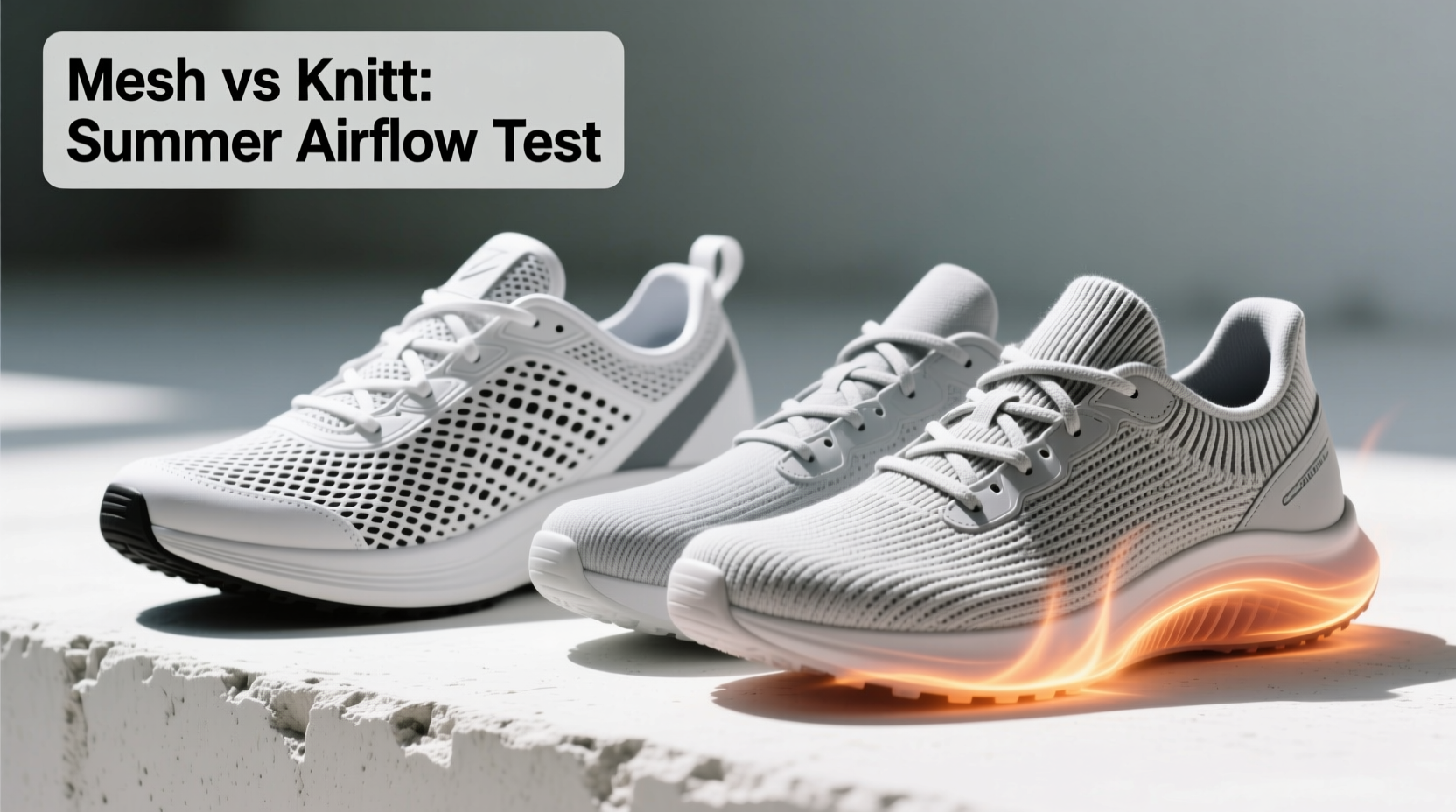
Airflow in footwear isn't just about holes or thin materials—it's about how air moves across the foot, absorbs moisture, and escapes. The human foot contains over 250,000 sweat glands, capable of producing up to half a pint of sweat per day. In warm conditions, that number increases dramatically. Without proper ventilation, trapped moisture creates a breeding ground for bacteria and reduces comfort.
Breathability depends on three key factors:
- Pore density: How many openings exist in the upper material to allow air passage.
- Material thickness: Thinner materials generally allow faster heat dissipation.
- Mechanical stretch and fit: Snug yet flexible materials conform to the foot without restricting circulation or airflow channels.
Both mesh and knit uppers are engineered with breathability in mind, but their construction methods lead to different outcomes in real-world use.
Understanding Mesh Sneakers
Mechanically, mesh refers to any fabric constructed with an open weave pattern that allows air to pass through. Most athletic shoes since the 1990s have used synthetic mesh—typically made from polyester or nylon—with varying weaves depending on the brand and model.
There are two primary types of mesh used in sneakers:
- Single-layer mesh: Lightweight and highly breathable, often found in running shoes. It offers excellent airflow but less structure and durability.
- Multi-layer or reinforced mesh: Combines mesh with overlays (often TPU or rubber) for support. Slightly heavier, with reduced breathability in covered zones.
Brands like Nike, Adidas, and Asics have refined engineered mesh technologies—such as Nike’s Flymesh or Adidas’ Forged Mesh—to balance airflow with structural integrity.
Pros of Mesh Sneakers
- Highly breathable due to large pore structure.
- Rapid drying after exposure to rain or sweat.
- Lightweight and widely available across price points.
- Inexpensive to manufacture, often reflected in lower retail prices.
Cons of Mesh Sneakers
- Limited flexibility; mesh doesn’t stretch much once set.
- Less adaptive fit—can feel loose or tight depending on foot shape.
- Prone to snagging or tearing if low-quality mesh is used.
- Overlays added for durability may block airflow in critical zones.
Exploring Knit Uppers
Knit uppers emerged in mainstream footwear around 2012 with Nike’s Flyknit technology and were quickly adopted by competitors like Adidas (Primeknit), Puma (evoKNIT), and New Balance (Fresh Foam X). Unlike woven mesh, knit fabrics are constructed stitch-by-stitch using computer-guided machines, allowing precise control over texture, elasticity, and thickness.
This precision enables designers to create zones within the shoe that vary in breathability, support, and stretch—all within a single seamless piece. For example, the toe box might feature a looser, more porous knit for airflow, while the heel uses a tighter, denser weave for lockdown.
Most knit uppers are made from proprietary synthetic yarns—polyester blends with spandex or elastane for stretch—and treated for moisture-wicking properties.
“Knit uppers represent a leap in biomechanical design. They don’t just let air in—they manage microclimates around the foot.” — Dr. Lena Torres, Footwear Biomechanics Researcher at MIT Wearable Lab
Pros of Knit Uppers
- Superior adaptability; conforms snugly to individual foot shapes.
- Zonal engineering allows optimized airflow where it’s needed most.
- Seamless construction reduces friction and hot spots.
- Often lighter than traditional mesh+overlay constructions.
Cons of Knit Uppers
- Higher cost due to complex manufacturing.
- Denser knits may feel less airy than open mesh despite claims.
- Can retain moisture longer if tightly woven.
- Vulnerable to abrasion from rough surfaces or improper cleaning.
Direct Comparison: Airflow Performance in Summer Conditions
To determine which material performs better in hot weather, several real-world variables must be considered: ambient temperature, activity level, humidity, and duration of wear.
| Feature | Mesh Sneakers | Knit Uppers |
|---|---|---|
| Air Permeability (CFM*) | High (15–25 CFM) | Moderate to High (10–22 CFM, varies by zone) |
| Moisture Evaporation Rate | Fast | Moderate to Fast (depends on knit density) |
| Heat Dissipation | Excellent | Good (slightly insulated by fiber density) |
| Fit Consistency Across Foot Shapes | Fair (rigid structure) | Excellent (adaptive stretch) |
| Durability Under Daily Use | Good (if reinforced) | Fair (prone to pilling/abrasion) |
| Price Range (USD) | $60–$120 | $100–$180 |
*CFM = Cubic Feet per Minute of airflow through fabric (standard textile measurement)
While mesh generally wins on raw airflow metrics, knit uppers excel in intelligent airflow distribution. For instance, during a midday walk in 90°F (32°C) weather, mesh shoes may feel cooler initially due to immediate air exchange. However, after 45 minutes of continuous wear, knit uppers often maintain more consistent comfort because they wick moisture away and prevent localized heat buildup through dynamic fit.
Real-World Example: Commuter Test in Miami Summer
Jamal, a graphic designer in Miami, tested two pairs of sneakers over a four-week period during peak summer. He wore a pair of Nike React Meso (engineered mesh) on Mondays, Wednesdays, and Fridays, and the Nike Flyknit Racer on Tuesdays and Thursdays. Each day involved a 30-minute outdoor commute and full-day office wear.
His findings:
- The mesh sneakers felt cooler within the first 15 minutes of walking.
- By hour three, his left foot developed a hot spot near the arch due to slight slippage.
- The Flyknit shoes took slightly longer to “breathe,” but maintained even temperature throughout the day.
- After rain showers, the mesh dried 20% faster than the knit.
- He preferred the knit for all-day comfort but chose mesh for quick errands in direct sun.
This case illustrates that neither material is universally superior—the best choice depends on usage patterns and personal sensitivity to heat and fit.
How to Maximize Airflow Regardless of Material
No matter which upper type you choose, small habits can significantly improve ventilation and reduce discomfort.
Action Checklist for Cooler Feet This Summer
- Wear moisture-wicking socks made from merino wool or technical synthetics (avoid cotton).
- Rotate between two or more pairs to allow full drying between wears.
- Use silica gel packs inside shoes overnight to absorb residual moisture.
- Clean insoles monthly with mild soap and water to prevent bacterial buildup.
- Loosen laces slightly or use elastic lacing systems to encourage front-to-back airflow.
- Avoid dark-colored uppers in direct sunlight—they absorb more heat.
Expert Insight: What Designers Prioritize
We spoke with Marco Lin, senior product developer at a leading athletic footwear brand, about how airflow decisions are made during design.
“In summer performance lines, we don’t just ask ‘which material breathes more?’ We map thermal zones of the foot under stress. The forefoot generates 70% of heat during walking. So even if a knit has lower overall porosity, placing open-knit panels there outperforms uniform mesh coverage.” — Marco Lin, Senior Footwear Developer
This approach explains why some knit models outperform mesh shoes despite lower airflow ratings on paper. Strategic placement matters more than blanket ventilation.
FAQ: Common Questions About Summer Sneaker Breathability
Do knit sneakers get smelly faster than mesh?
Not inherently. Odor develops from trapped bacteria feeding on sweat. If both types are cleaned regularly and allowed to dry fully, neither is more prone to smell. However, tightly woven knits may hold moisture longer if not aired properly, increasing risk if neglected.
Can I improve airflow in any sneaker?
Yes. Replace standard insoles with perforated or cork-based ones that promote underfoot ventilation. Using foot powders or antiperspirant sprays also reduces moisture volume, indirectly improving perceived breathability.
Are hybrid designs (mesh + knit) worth considering?
Absolutely. Some newer models combine both materials—like a knit midfoot for snugness and mesh toe boxes for cooling. These hybrids offer balanced performance and are ideal for mixed-use scenarios. Examples include the Adidas SolarGlide 6 and Hoka Arahi 6 Knit.
Final Recommendation: Choose Based on Lifestyle, Not Hype
If your priority is maximum airflow during short bursts of activity—like running errands, walking the dog, or commuting on hot days—high-quality mesh sneakers remain the most effective and affordable option. Their open structure delivers instant cooling and dries quickly, making them ideal for humid climates.
For extended wear, especially if you're on your feet for hours or have irregular foot shapes, knit uppers provide superior comfort through adaptive fit and zonal breathability. While they may not feel as airy at first, their ability to regulate temperature and reduce friction makes them better suited for all-day use.
Ultimately, the best summer sneaker isn’t defined by material alone—it’s the one that aligns with how, when, and where you move.




 浙公网安备
33010002000092号
浙公网安备
33010002000092号 浙B2-20120091-4
Comments
No comments yet. Why don't you start the discussion?