
Choosing the right watch band isn’t just about aesthetics—it affects comfort, longevity, and how your timepiece performs day after day. Two of the most common premium options are metal link and solid link bands, often found on luxury and mid-range watches alike. While they may look similar at first glance, their construction, feel, and long-term value differ significantly. For those considering an upgrade or replacement, understanding these differences is essential to making a smart investment.
Understanding the Basics: What Are Metal Link and Solid Link Bands?
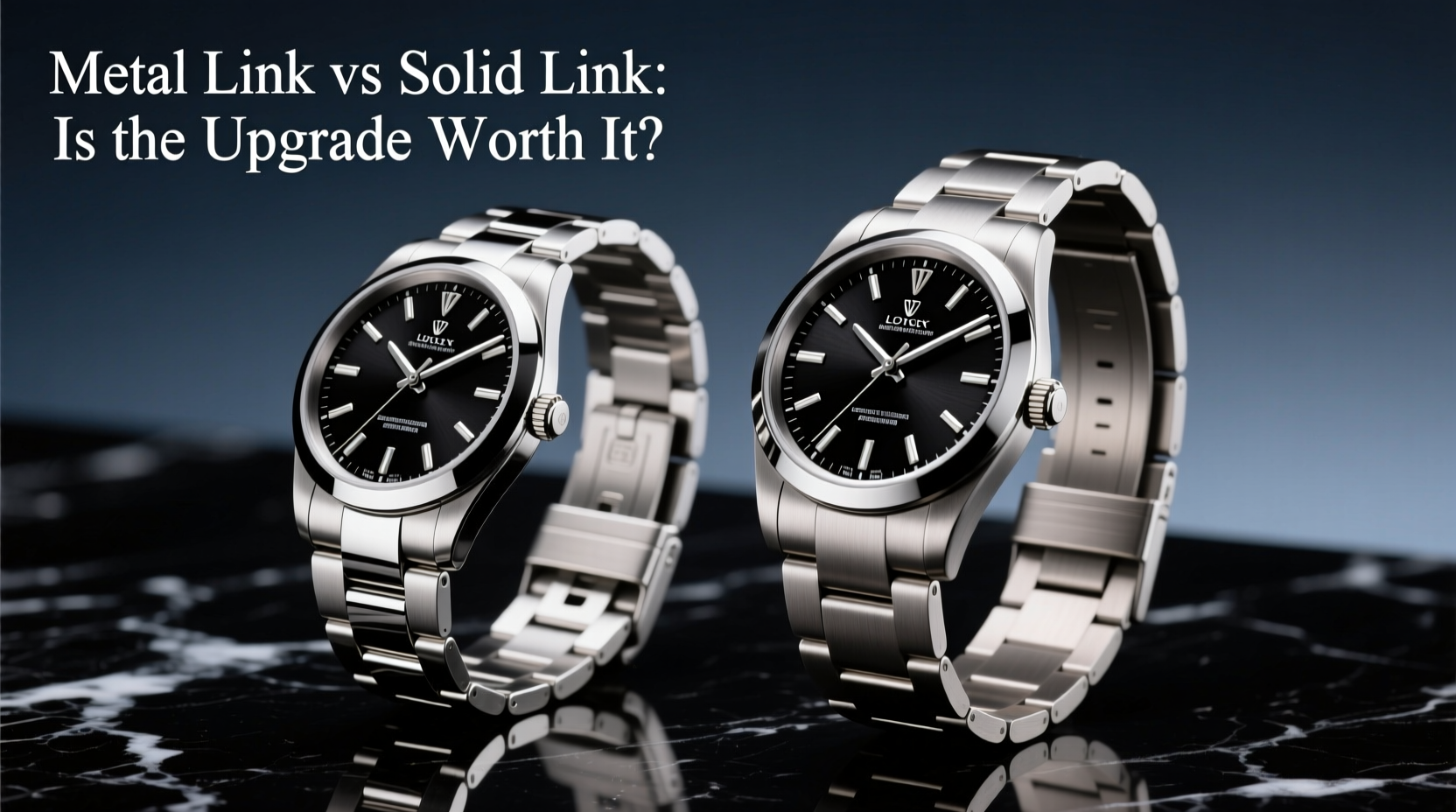
A metal link band—sometimes called a bracelet or Oyster-style band—is constructed from individual metal links connected by pins or screws. These links allow flexibility and adjustability, conforming well to the wrist. Most high-end brands like Rolex, Omega, and Tudor use refined versions of this design. The articulation between links ensures even weight distribution and natural movement.
In contrast, a solid link band typically refers to a style where each link is a single, continuous piece of metal, often milled or forged as one unit. This construction reduces gaps, minimizes creaking, and enhances structural integrity. Though sometimes used interchangeably with \"solid end links,\" the term here refers to full-link bands made with solid center links rather than hollow ones.
The key distinction lies in material density and build quality. Hollow links save on material costs but can feel flimsy; solid links use more metal, increasing heft, durability, and perceived value.
Construction Differences That Matter
| Feature | Metal Link (Hollow) | Solid Link Band |
|---|---|---|
| Link Interior | Hollow or partially filled | Fully solid metal |
| Weight | Lighter | Heavier, more substantial |
| Durability | Good for daily wear | Superior resistance to stress and bending |
| Pricing | Lower cost, common in entry-luxury | Higher due to material and machining |
| Noise & Movement | Can develop creaks over time | Quieter, less flex between links |
Comfort and Wearability: How They Feel on the Wrist
Comfort is subjective but influenced heavily by engineering. Metal link bands with hollow construction tend to be lighter, which some users prefer—especially during prolonged wear or sleep. However, that lightness can come at the expense of sturdiness. Over time, pressure points may develop if the band flexes unevenly.
Solid link bands distribute weight more evenly due to their mass and rigidity. They drape naturally over the wrist curve and resist twisting. Many users report a “premium” sensation—similar to wearing a well-balanced tool watch versus a fashion accessory. That said, heavier bands may take time to adjust to, particularly for smaller wrists or sensitive skin.
Clasp design also plays a role. Both types commonly use folding clasps with micro-adjustments, but solid link bands often pair with upgraded safety mechanisms and heavier-duty deployment systems. This synergy improves both security and user experience.
“Solid link construction isn’t just about durability—it’s about how the watch feels as an extension of your body. There’s a confidence in knowing every component is built to last.” — Daniel Reeves, Watch Design Consultant at Horologica Studio
Longevity and Maintenance: Which Holds Up Better?
Daily exposure to sweat, moisture, and impact tests a watch band’s resilience. Metal link bands with hollow links are more prone to denting and warping under stress. Because they contain thinner walls, accidental drops or knocks can deform individual links, leading to misalignment or pin loosening.
Solid link bands, thanks to their denser structure, resist deformation better. They’re less likely to bend out of shape and maintain alignment longer. Additionally, fewer moving parts mean reduced friction and wear over time. While both types require occasional cleaning and inspection, solid links demand less frequent servicing.
Over five years of regular wear, a hollow-link band may show visible signs of aging—scratches deepen, pins loosen, and links begin to rattle. A solid link equivalent, assuming similar finishing, retains its integrity far longer, preserving both function and resale value.
Step-by-Step Guide: Evaluating Your Current Band
- Inspect the underside of the links: Shine a light under the band. If you see empty space inside, it’s hollow.
- Check the weight: Compare it to a known solid-link model. Solid links feel noticeably denser.
- Listent for noise: Flex the band gently. Creaking or clicking suggests internal movement typical of hollow links.
- Review manufacturer specs: Look up your model online. Brands often specify “solid center links” in product descriptions.
- Assess strap alignment: Over time, hollow links may shift or twist. Solid links stay aligned longer.
Real-World Example: An Upgrade That Made a Difference
Consider Mark T., a software engineer who wore his stainless steel Seiko SKX daily for three years. Originally equipped with a standard hollow-link bracelet, he noticed increased wobble, pin slippage, and discomfort after long workdays. After researching alternatives, he upgraded to a third-party solid link bracelet with brushed finish and quick-release pins.
The change was immediate. The new band felt more secure, eliminated side-to-side play, and matched his watch head flush without gaps. After six months of identical usage—including gym sessions and weekend hikes—he reported no loosening or noise. “It transformed how the watch sits on my wrist,” he said. “It doesn’t feel like I’m wearing a budget model anymore.”
This case illustrates how a thoughtful upgrade can elevate both performance and perception—even without changing the watch itself.
Is the Upgrade Worth It? A Practical Checklist
Before investing in a solid link band, consider the following:
- ✅ Does your current band feel flimsy or noisy?
- ✅ Do you wear your watch daily in varied environments?
- ✅ Are you planning to keep the watch long-term or resell it?
- ✅ Is the price difference justified by improved materials?
- ✅ Will the added weight affect comfort?
If most answers are “yes,” upgrading makes practical sense. The enhanced durability, cleaner appearance, and superior fit often justify the additional cost—especially when paired with a quality watch already in your collection.
Cost vs. Value Considerations
A solid link band typically costs 20–50% more than its hollow counterpart. On a $500 watch, that could mean an extra $100–$150. But when viewed over a decade of ownership, the reduction in maintenance, risk of damage, and need for replacements often offsets the initial premium.
Additionally, solid links improve resale appeal. Collectors and secondary market buyers frequently check for solid center links as a sign of higher-tier craftsmanship. In some models, this single feature can increase trade-in value by 10–15%.
Frequently Asked Questions
Can I replace a metal link band with a solid link version?
Yes, provided the lug width and clasp compatibility match. Many aftermarket brands offer direct-fit solid link bracelets for popular models from Rolex, Omega, Seiko, and others. Always verify dimensions before purchasing.
Do solid link bands scratch more easily?
No—scratch resistance depends on the finish (brushed, polished) and material (316L vs. 904L steel), not whether the link is solid. However, deeper scratches may be more noticeable on solid links due to their thickness and reflective surfaces.
Are solid link bands harder to adjust?
Not necessarily. Most modern solid link bands use screw-in pins similar to OEM designs. With the right tools, resizing is straightforward. Some even feature quick-detach systems for easier customization.
Final Verdict: When the Upgrade Pays Off
Switching from a standard metal link to a solid link watch band isn't merely cosmetic—it's a functional enhancement. You gain better weight distribution, reduced wear, and a more luxurious feel. For enthusiasts, professionals, or anyone who values precision and longevity, the upgrade often proves worthwhile.
That said, it’s not universally necessary. Casual wearers or those using dress watches infrequently may find hollow links sufficient. But if you rely on your timepiece daily, appreciate fine craftsmanship, or plan to hold onto it for years, choosing a solid link band aligns with both practicality and pride of ownership.




 浙公网安备
33010002000092号
浙公网安备
33010002000092号 浙B2-20120091-4
Comments
No comments yet. Why don't you start the discussion?