
For those struggling with thin, patchy, or over-plucked eyebrows, achieving full, defined brows can feel like a daily battle. Two of the most popular semi-permanent solutions—microblading and eyebrow lamination—have taken the beauty world by storm. While both promise dramatic transformations, they differ significantly in technique, outcome, and suitability, especially for individuals with sparse brows. Understanding these differences is essential to choosing the right treatment that aligns with your skin type, lifestyle, and desired aesthetic.
Sparse brows come with unique challenges: lack of natural hair, uneven growth patterns, and often, sensitive or oily skin due to over-tweezing or hormonal changes. The ideal solution should not only fill in gaps but also create a natural, long-lasting result without compromising skin health. This article breaks down microblading and eyebrow lamination in detail, comparing their benefits, limitations, and real-world performance on thin brows.
Understanding Microblading: The Art of Hair-Like Strokes
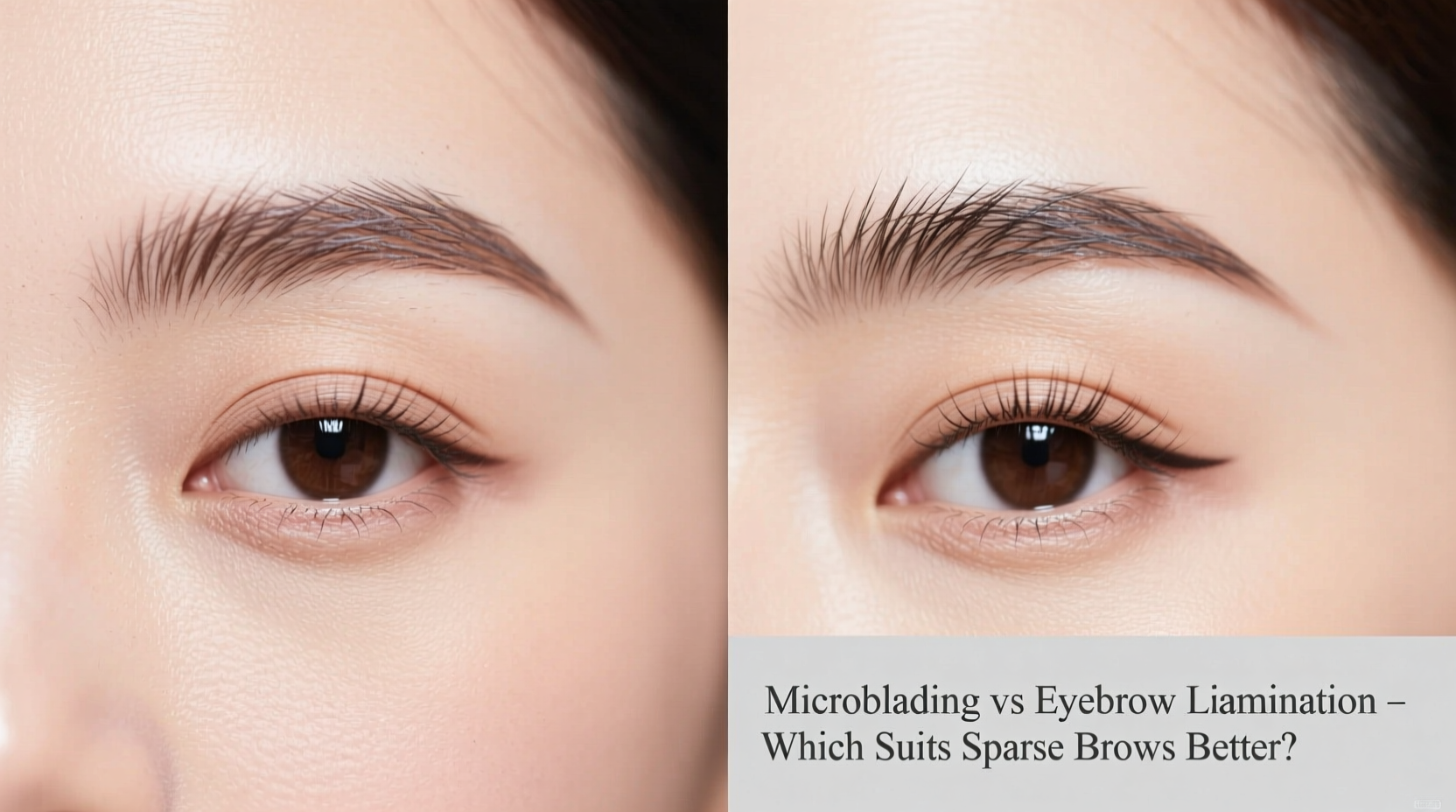
Microblading is a form of cosmetic tattooing that uses a handheld tool with fine needles to deposit pigment into the upper layers of the skin. Unlike traditional tattoos, it targets the epidermis rather than the dermis, resulting in a softer, more temporary effect. The technique mimics the appearance of real eyebrow hairs by creating individual, crisp strokes that blend seamlessly with existing brow hairs.
The process typically takes 1.5 to 2 hours and requires a touch-up session after 6–8 weeks to refine the shape and ensure even pigment retention. Results last between 12 to 18 months, depending on skin type, aftercare, and sun exposure. It’s particularly effective for clients who want defined, structured brows with a natural finish.
For sparse brows, microblading excels in filling in areas where hair is missing, especially along the tail and arch. It allows technicians to reconstruct the entire brow shape from scratch, making it ideal for those with minimal natural hair. However, its success depends heavily on skin condition. Oily skin types may experience faster pigment fading, and those with large pores or active acne around the brow area may see blurred strokes over time.
What Is Eyebrow Lamination? The Brow Perm Revolution
Eyebrow lamination, often referred to as a “brow perm,” involves chemically restructuring the hair to lie flat and uniform in a desired direction. The process includes three main steps: lifting the hairs with a softening cream, setting them in place with a neutralizing solution, and sealing with a nourishing serum. The result is fuller-looking brows with a brushed-up, laminated effect similar to brow gel—but lasting up to 8 weeks.
Unlike microblading, lamination doesn’t add pigment. Instead, it enhances what’s already there by redistributing existing hairs to cover gaps and create volume. A tint is often applied during the treatment to darken fine or light-colored hairs, improving definition. The procedure takes about 45 minutes and is virtually painless.
Lamination works best for people with some natural brow hair, even if it’s sparse or unruly. It lifts and spreads hairs across the brow bone, giving the illusion of density. For very thin brows with little to no hair, however, lamination alone may not provide enough coverage. In such cases, it’s often combined with powder brows or nanobrows for added fullness.
“Lamination is transformative for brows that grow in different directions—it gives order and structure without adding pigment.” — Lena Torres, Certified Brow Artist & Educator
Direct Comparison: Microblading vs Lamination for Sparse Brows
| Feature | Microblading | Eyebrow Lamination |
|---|---|---|
| Technique | Manual pigment deposition with fine blade | Chemical reshaping of hair direction |
| Pigment Added? | Yes, custom-mixed to match natural brows | No (unless combined with tint) |
| Duration | 12–18 months | 6–8 weeks |
| Pain Level | Mild to moderate (numbing cream used) | Minimal to none |
| Best For | Bare patches, no natural hair, defined shape needed | Unruly hairs, slight thinning, added volume desired |
| Skin Type Suitability | Dry to normal skin; less ideal for oily skin | All skin types, including oily |
| Aftercare | Strict: avoid water, sweat, sun for 10+ days | Light: avoid water for 24 hours, use serums |
| Cost (Average) | $400–$800 (includes touch-up) | $75–$150 per session |
Which One Works Better for Very Sparse Brows?
When evaluating treatments for extremely thin or nearly absent brows, microblading has a clear advantage. It physically draws in new “hairs” where none exist, allowing complete reconstruction of the brow architecture. Lamination, while excellent for enhancing existing hairs, cannot compensate for total hair loss. Without sufficient natural hair, lamination lacks material to work with, resulting in a lifted but still visibly thin brow.
That said, lamination is a safer, non-invasive option for those hesitant about semi-permanent pigmentation or with contraindications like keloid scarring, diabetes, or pregnancy. It’s also ideal for testing a new brow shape before committing to microblading.
Real-World Example: Choosing the Right Treatment
Sarah, a 32-year-old client, had severely over-plucked her brows in her teens, leaving her with almost no hair in the tails and a broken arch. She wanted a natural yet defined look that would last. After consultation, her artist recommended microblading due to the lack of structural hair. Over two sessions, the technician created 120+ simulated hair strokes, rebuilding the tail and connecting the arch. Sarah reported high satisfaction, noting she no longer needed daily brow pencils.
In contrast, Maya, age 28, had naturally sparse but present brow hairs growing in multiple directions. Her concern was disorganization, not absence. She opted for lamination with tint. The treatment lifted her fine hairs upward, covering her forehead gap, and the tint gave them visibility. While not as permanent as microblading, she loved the low-maintenance, fluffy-brow look and rebooked every 6 weeks.
Their experiences highlight a key principle: the best treatment depends on the underlying cause of sparseness. Structural loss calls for microblading; misdirection or mild thinning favors lamination.
Step-by-Step Guide: How to Decide Which Treatment Is Right for You
- Assess Your Natural Hair: Hold a mirror and examine your brows under good lighting. Are there any visible hairs? If yes, how many and where? Significant hair presence suggests lamination could help. Minimal or no hair leans toward microblading.
- Identify Your Goal: Do you want more volume and lift (lamination), or are you seeking a completely redrawn, penciled-in shape (microblading)?
- Consider Skin Type: Oily skin may blur microbladed strokes over time. Dry or combination skin retains pigment better. Lamination works well regardless of oiliness.
- Evaluate Lifestyle: Do you sweat heavily, swim often, or spend time in the sun? These factors accelerate microblading fade. Lamination is less affected but requires frequent maintenance.
- Consult a Licensed Professional: Schedule a patch test and consultation. A skilled technician can assess your skin, hair growth, and expectations to recommend the optimal approach—or a hybrid solution.
Can You Combine Both Treatments?
Yes—and many professionals now offer hybrid services. A common approach is to perform microblading first to establish shape and fill bare areas, then apply lamination months later to lift and set remaining hairs for a fluffier effect. Alternatively, some artists integrate “laminated lamination” techniques using keratin-based serums post-microblading to enhance hair appearance without chemicals.
Another emerging trend is pairing lamination with nano brows or shading for clients who want volume plus definition. This combination avoids the commitment of full microblading while still delivering noticeable fullness.
Frequently Asked Questions
Is microblading safe for sensitive skin?
Most people tolerate microblading well when performed by a licensed, experienced artist using sterile tools. However, those with active eczema, psoriasis, or rosacea near the brows should avoid it, as the trauma can trigger flare-ups. A patch test is strongly recommended.
Does eyebrow lamination damage natural hair?
When done correctly, lamination does not damage hair. The chemicals used are milder than traditional perms and are formulated specifically for facial hair. Overuse (more than every 4–6 weeks) or poor aftercare (like using harsh cleansers) can lead to dryness or breakage.
Which option is more cost-effective in the long run?
Microblading has a higher upfront cost but lasts over a year, averaging $30–$60 per month. Lamination costs less per session but requires repeat visits every 6–8 weeks, totaling $100–$200 annually. For long-term savings and convenience, microblading is more economical for those committed to the look.
Final Recommendations and Expert Checklist
Selecting between microblading and eyebrow lamination isn’t about which is “better” overall—it’s about which is better for you. Sparse brows aren’t one-size-fits-all, and the ideal solution should reflect your anatomy, goals, and routine.
📋 Pre-Treatment Checklist- ✔️ Document your current brow condition with clear photos
- ✔️ Research certified technicians with proven experience in treating sparse brows
- ✔️ Disclose medical conditions (e.g., diabetes, herpes simplex) that may affect healing
- ✔️ Avoid blood thinners, retinoids, and alcohol 48 hours before treatment
- ✔️ Schedule your appointment at least 2 weeks before major events
If your brows are extremely thin or nonexistent in key areas, microblading offers unmatched reconstructive power. For those with some natural hair but poor distribution, lamination provides an instant, low-risk transformation. Some clients eventually transition from lamination to microblading once they’re confident in their preferred shape.
Conclusion: Make an Informed Choice for Fuller, Flawless Brows
Both microblading and eyebrow lamination have revolutionized brow enhancement, offering practical solutions for sparse brows. Microblading stands out for its precision and longevity, making it the top choice for significant hair loss. Lamination shines in versatility and safety, perfect for enhancing what’s already there. By understanding your brow needs and consulting a qualified professional, you can achieve the balanced, polished look you’ve been searching for—without guesswork or regret.




 浙公网安备
33010002000092号
浙公网安备
33010002000092号 浙B2-20120091-4
Comments
No comments yet. Why don't you start the discussion?