
Beating Minecraft in under 20 minutes is no longer a myth—it’s a reality achieved by thousands of skilled runners worldwide. While the average player may spend dozens of hours gathering resources and building shelters, speedrunners operate on a completely different level. They combine deep game knowledge, precise execution, and optimized routes to defeat the Ender Dragon faster than most people can finish breakfast. Achieving this milestone requires more than just quick reflexes; it demands strategy, consistency, and an intimate understanding of the game’s mechanics.
This guide breaks down the essential components of a sub-20-minute speedrun, from initial seed selection to endgame execution. Whether you're aiming for personal bests or aspiring to enter the leaderboards, mastering these strategies will dramatically improve your chances of crossing the finish line under the two-decade mark.
Understanding the Speedrun Framework
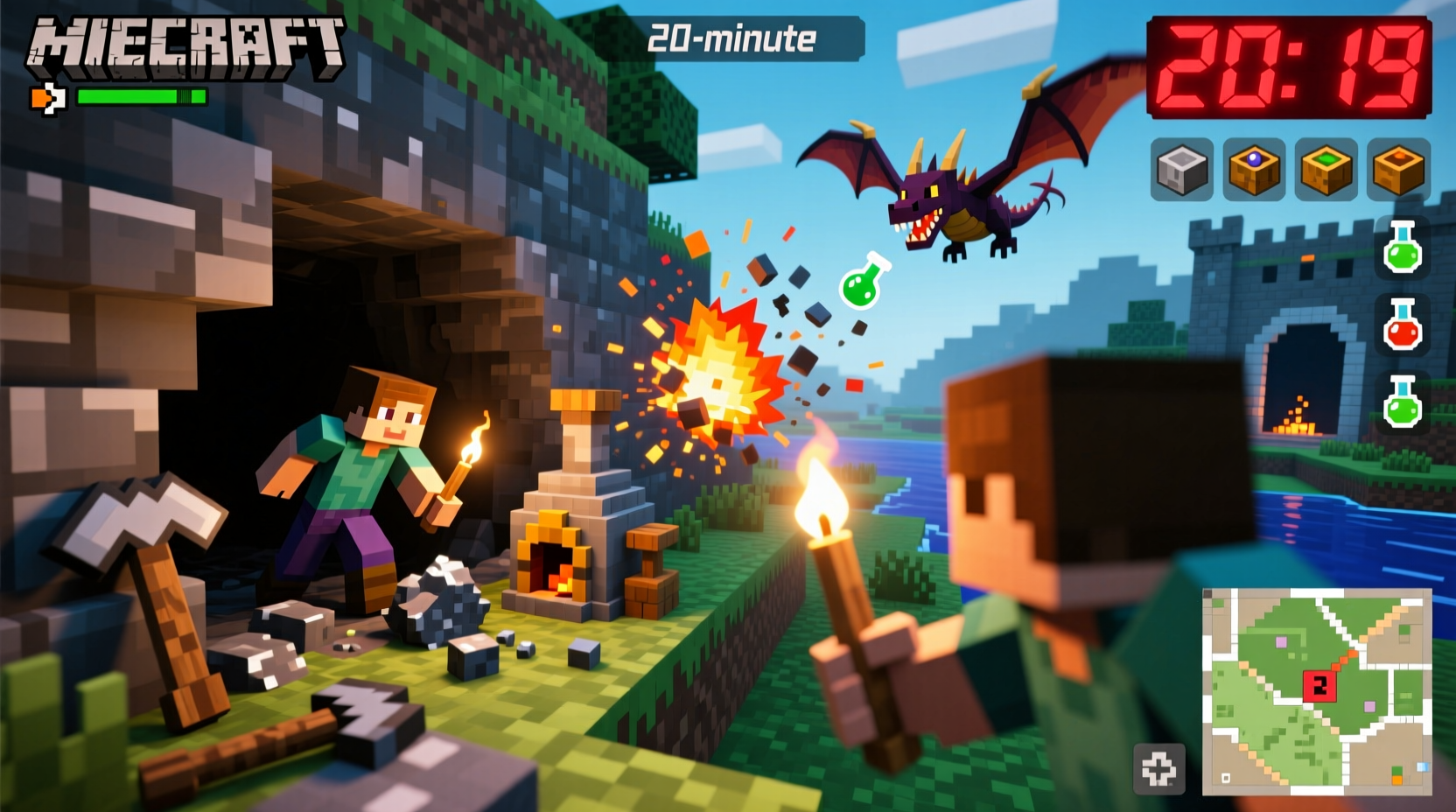
A Minecraft speedrun in the Any% category focuses solely on defeating the Ender Dragon as quickly as possible. Everything else—crafting armor, farming food, or exploring villages—is minimized or eliminated unless it directly contributes to progression. The standard route follows a strict sequence: acquire diamonds, craft an enchantment table and pickaxe, locate a stronghold, activate an end portal, and enter the End dimension.
The key to staying under 20 minutes lies in reducing time-wasting actions and capitalizing on favorable world generation. Randomness plays a significant role—especially in stronghold placement and village layout—but experienced runners use known tricks and probability manipulation to tilt the odds in their favor.
Optimizing the Early Game (0–5 Minutes)
The first five minutes set the tone for the entire run. Efficiency here determines whether you stay on pace or fall behind irrecoverably. Your primary goals are obtaining wood, crafting basic tools, finding iron, and securing food—all before mining for diamonds.
Start by immediately breaking nearby trees. Prioritize birch or jungle trees if available—they often generate near villages, which can provide critical early-game advantages like chests with iron or even diamonds. Craft a wooden pickaxe within the first 30 seconds and begin mining stone for better tools. Never waste time digging straight down; instead, strip-mine at Y=11 to maximize diamond exposure while minimizing risk.
Villages are goldmines in speedruns. A single chest might contain iron ingots, bread, or even a diamond—each saving precious seconds. If a village spawns close to your starting point, prioritize looting blacksmith chests. An iron sword or armor piece reduces combat time against skeletons and zombies, especially during ravager attacks or stronghold encounters.
“Over 70% of sub-15 minute runs involve a favorable village spawn within 200 blocks of the origin.” — Daniel “Dangthatsalongname,” Top-Tier Speedrunner
Essential Early Actions Checklist
- Break wood and craft wooden pick within 30 seconds
- Mine cobblestone and upgrade to stone tools
- Locate and loot nearest village (if accessible)
- Collect at least 15 iron ingots (for shears and armor)
- Obtain 10+ pieces of food (preferably bread or porkchops)
- Reach coal or charcoal supply for furnace fuel
Mid-Game Execution: Diamonds to Enchantments (5–12 Minutes)
Once you have sufficient iron, shift focus to diamond acquisition. This phase hinges on luck but can be influenced through smart mining patterns and awareness of biome-specific generation tendencies. Deserts and savannas often yield exposed diamonds due to sand erosion, while mushroom biomes guarantee no hostile spawns—ideal for safe surface mining.
After collecting three diamonds, craft an enchantment table. Place it near bookshelves arranged in a 1x2 ring around it (five shelves minimum). While higher levels offer better enchants, efficiency IV and fortune III are the true targets. Use lapis lazuli strategically—only enchant when multiple high-level options appear.
Next, craft a diamond pickaxe and mine obsidian for a Nether portal. Two buckets allow for infinite obsidian creation via water-lava interaction. Enter the Nether quickly to find a fortress and blaze rods. Blazes drop rods needed for eyes of ender—critical for locating and activating the stronghold.
Efficient Blaze Farming Strategy
- Enter Nether and navigate toward nearest fortress (use F3 to track X/Z alignment)
- Clear blaze spawner area using strafing tactics to avoid fireballs
- Use piston-free methods: stand diagonally behind nether brick fence to minimize damage
- Collect 10–12 blaze rods (12 required for 6 eyes, extra ensures safety)
- Exit promptly—linger only if magma cube farm is present for additional experience
Navigating the Stronghold and Activating the End Portal
Finding the stronghold is one of the most variable phases. Eyes of Ender are expensive in terms of time and resources, so each throw must count. Hold Shift while throwing to reduce arc and increase precision. Track movement direction carefully—when the eye hovers or returns toward you, you’re directly above or very close to the stronghold.
Dig vertically downward cautiously once aligned. Falling into the library chamber without triggering traps saves vital seconds. Libraries often contain enchanted books, which can be used later for mending or additional protection—though not necessary for sub-20 runs.
Upon reaching the portal room, place remaining eyes of ender. If any slots are missing, mine end stone nearby to retrieve stray eyes or craft replacements. Avoid fighting silverfish unless absolutely necessary—they can swarm and delay activation.
| Aspect | Do | Avoid |
|---|---|---|
| Eyes of Ender Usage | Throw one at a time, observe flight path | Wasting 3+ eyes in rapid succession |
| Portal Room Entry | Drop into room with feather falling boots | Falling directly onto mobs |
| Missing Eyes | Re-craft using ender pearls and blaze powder | Searching endlessly for buried eyes |
| Combat | Use bow or splash potions if overwhelmed | Engaging prolonged melee fights |
Mini Case Study: The 18:47 World Record Attempt
In a recent community tournament, runner AlexK executed a flawless sub-19 run that became a benchmark for intermediate players. Starting in a plains biome adjacent to a taiga village, he looted three iron ingots and six bread within 90 seconds. Using a pre-known seed with favorable lava pool positioning, he generated 10 obsidian in under a minute. His Nether transit was clean—he reached a fortress at coordinates (X: 168, Z: -312) and collected 11 blaze rods in 3:12. After returning, he located the stronghold in just seven eye throws, entered the portal room with only minor damage from a single silverfish, and activated all portals with one crafted eye. He defeated the Ender Dragon in 18:47 with 32 seconds of potion time remaining. What made this run exceptional wasn’t peak luck, but minimal error accumulation across every stage.
Late Game: Entering the End and Defeating the Ender Dragon
The final stretch begins upon entering the End. Immediately target the central island’s Ender Dragon. Ignore the outer islands unless you need additional ender pearls for future attempts. The dragon has 200 health points (100 hearts), and each pass removes roughly 5–10 hearts depending on weapon choice and accuracy.
Best practices include:
- Using a bow with power V and punch I for knockback disruption
- Bringing splash potions of healing and strength (brewed pre-Nether if possible)
- Carrying at least 10 ender pearls for emergency teleportation or repositioning
- Striking during horizontal flybys rather than vertical ascents
When the dragon perches atop the exit portal frame, switch to melee attacks. This is the safest window for dealing consistent damage. Be ready to dodge the explosion wave upon death—many runners lose time (or die) from failing to anticipate the final blast.
After the dragon falls, collect the experience and proceed through the portal to complete the run. Timing ends when the credits roll—do not linger to admire the animation.
Advanced Techniques for Breaking the 18-Minute Barrier
For those pushing beyond 20 minutes into elite territory, advanced glitches and movement optimizations become relevant. While some are patched in newer versions, many remain viable in 1.19–1.20.6 (the current accepted version for official leaderboards).
Notable techniques include:
- Boat Walking: Place a boat mid-air to clip through blocks and bypass terrain
- Suffocation Glitch: Use pistons or sand to trap yourself and reset fall damage
- End Island Clipping: In rare cases, manipulate hitboxes to skip parts of the final fight
However, most top runners emphasize consistency over exploitation. As noted by community moderator LenaR on Speedrun.com: “The fastest legal runs aren’t built on obscure bugs—they’re built on flawless fundamentals.”
Frequently Asked Questions
What version of Minecraft should I use for speedrunning?
The standard version is Java Edition 1.19.4 or 1.20.6, as these are stable and widely accepted on leaderboards. Bedrock Edition is not recognized for official records due to differences in physics and generation.
How important is internet connection for speedrunning?
Critical. Lag spikes or packet loss can ruin timing, especially during Nether travel or dragon fights. Always run on a wired connection with low ping to the server. Local single-player worlds eliminate network variables entirely.
Can I use mods during a speedrun?
Only specific, allowed mods such as the Speedrun Mod (for timer and seed display) are permitted. Automation, X-ray, or flight-enabling mods invalidate the run. Always check rules on platforms like speedrun.com before submitting.
Final Tips for Consistent Sub-20 Runs
Success doesn't come from a single perfect attempt—it comes from repetition, analysis, and refinement. Record every run and review mistakes. Did you waste time searching for coal? Misplace a torch? Hesitate before jumping into lava pools? Each second counts.
Practice specific segments separately: diamond mining, blaze fights, stronghold navigation. Build muscle memory for common tool transitions and hotkey layouts. Optimize your inventory organization so critical items (like eyes of ender or potions) are always within easy reach.
Conclusion: Push Beyond the Clock
Beating Minecraft under 20 minutes is an achievable goal with disciplined practice and intelligent strategy. It's not about playing perfectly every time—it's about reducing variance, eliminating delays, and making smart decisions under pressure. From the moment you hit \"Create New World\" to the final explosion of the Ender Dragon, every action should serve the singular objective: speed.
Now that you’ve learned the core strategies, it’s time to apply them. Launch your next world, start the timer, and chase that sub-20 finish. Share your personal bests, analyze what went wrong, and keep improving. The leaderboards aren’t just for elites—they’re invitations to join the ranks of those who’ve mastered the art of the impossible.




 浙公网安备
33010002000092号
浙公网安备
33010002000092号 浙B2-20120091-4
Comments
No comments yet. Why don't you start the discussion?