
In an age where personal style meets sustainability, reimagining everyday items is more than a trend—it’s a mindset. Your old phone case, once discarded after upgrading devices, can be reborn as a minimalist crossbody bag. Compact, customizable, and eco-conscious, this DIY project turns a forgotten accessory into a fashion-forward statement piece. Whether you're aiming for urban chic or bohemian flair, transforming your phone case into a wearable bag blends practicality with creativity in unexpected ways.
Why Turn a Phone Case Into a Crossbody Bag?
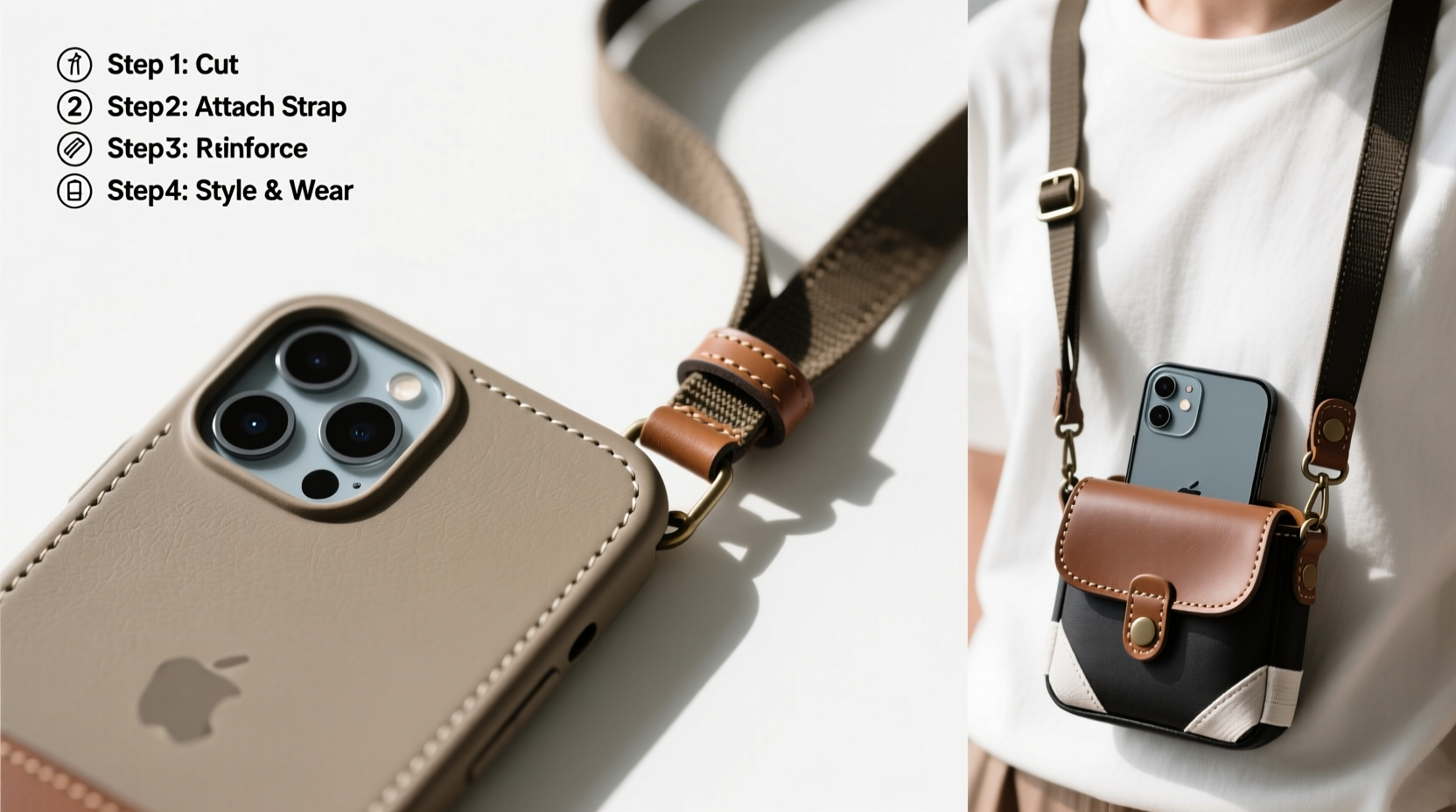
Smartphone cases are typically made from durable materials like silicone, TPU, or polycarbonate—ideal for repurposing due to their resistance to wear and tear. Instead of letting them gather dust, why not give them new life? This transformation reduces waste, saves money, and allows for unique self-expression.
Modern minimalist lifestyles favor small bags that carry only essentials: keys, cash, ID, and perhaps a lipstick. A repurposed phone case fits this need perfectly. It's lightweight, water-resistant in many cases, and already designed to protect delicate items—just like a tiny handbag should.
Materials and Tools You’ll Need
Before beginning the transformation, gather the following supplies. Most can be found at home or purchased inexpensively at craft stores.
- Rigid phone case (preferably with a flat back)
- Scalpel or precision knife
- Hole punch or leather awl
- Measuring tape or ruler
- Strong adhesive (E6000 or fabric glue)
- Narrow strap material (satin ribbon, nylon webbing, or faux leather strip)
- Sewing needle and heavy-duty thread (optional, for reinforcement)
- Sandpaper (fine grit)
- Decorative elements (stickers, paint, studs, etc.)
Ensure your phone case is clean and free of residue. If it has a flip cover or bulky design, consider using only the back panel by carefully removing excess parts.
Step-by-Step Transformation Process
- Prepare the Case: Remove any rubberized coatings or stickers. Use sandpaper to lightly roughen the areas where straps will be attached—this improves glue adhesion.
- Determine Strap Placement: Lay the case flat. Decide whether you want horizontal or vertical orientation. Mark two points on opposite edges where the strap will pass through. Keep holes about 1 cm from each edge for balance.
- Create Holes: Using a hole punch or heated awl, carefully drill holes through the marked spots. If using plastic, heat the tool slightly to prevent cracking.
- Cut and Measure Strap: Cut a strap 100–130 cm long, depending on desired crossbody drop. Test length by draping around your shoulder before final attachment.
- Attach the Strap: Thread one end through a hole from inside to outside. Fold over 1 cm and glue securely. Repeat on the other side. For added strength, stitch the folded end or add a small patch behind the connection point.
- Reinforce Joints: Apply additional glue around the base of each strap anchor. Allow 24 hours to cure fully before use.
- Customize: Decorate with waterproof paint, rhinestones, or fabric appliqués. Consider adding a magnetic clasp or snap button if the case opens easily.
Design Options and Customization Ideas
The beauty of this project lies in its adaptability. No two creations need to look alike. Here are several stylistic directions you can explore:
- Minimalist Chic: Use a clear or matte black case with a slim black satin strap. Ideal for evening wear.
- Boho Vibes: Paint tribal patterns or use washi tape for geometric designs. Pair with a braided cord strap.
- Urban Edge: Add metal studs or chain detailing. Combine with a wide nylon strap for a streetwear aesthetic.
- Retro Glam: Glue on vintage brooches or sequins. Use a velvet ribbon strap for texture contrast.
You can even layer multiple cases together for a chunkier look or attach a detachable pouch for extra storage.
“Repurposing accessories isn’t just about saving money—it’s about reclaiming ownership over our consumption habits.” — Lena Torres, Sustainable Fashion Advocate
Do’s and Don’ts: Common Pitfalls to Avoid
| Do’s | Don’ts |
|---|---|
| Use strong, flexible straps that won’t snap under weight | Use elastic bands or flimsy strings as primary straps |
| Allow glued areas to dry completely before handling | Rush the curing process with heat sources that may warp plastic |
| Test fit the strap length before cutting permanently | Cut the strap too short—always leave room for adjustment |
| Seal painted surfaces with clear waterproof varnish | Apply decorations without sealing—they may peel quickly |
| Reinforce stress points with stitching or backing patches | Assume glue alone is sufficient for long-term durability |
Real-Life Example: From Discarded Case to Festival Favorite
Maria, a college student in Portland, had three old phone cases stashed in a drawer. After seeing a similar concept on social media, she decided to try making her own crossbody during spring break. She used a translucent blue silicone case, added silver glitter with mod podge, and attached a 110 cm adjustable nylon strap.
Within days, friends were asking where she bought it. At a local music festival, her hands-free setup made navigating crowds effortless. “I didn’t lose anything, and I got so many compliments,” she said. “Now I’m planning one for each season.” Her success inspired a mini workshop at her campus art club, turning e-waste into wearable art.
Frequently Asked Questions
Can I use any type of phone case?
Rigid cases work best—especially hard plastic or hybrid models. Avoid soft silicone unless reinforced with a backing board (like thin plastic or felt). Flexibility compromises structure and security.
How much weight can the transformed case hold?
Typically up to 1–1.5 pounds (450–700 grams), depending on strap strength and attachment quality. Stick to essentials: wallet, keys, lip balm, and sunglasses. Avoid heavy items like power banks.
Is this idea suitable for all phone sizes?
Absolutely. Larger cases (like those for tablets or plus-sized phones) create roomier bags. Smaller ones make cute wristlets or clutch alternatives. Adjust strap width accordingly—wider straps suit larger cases.
Final Checklist Before Wearing Your Creation
- ✅ Are all glued joints fully cured?
- ✅ Does the strap lie flat and centered?
- ✅ Can the case close securely (if applicable)?
- ✅ Have decorative elements been sealed against moisture?
- ✅ Is the strap length comfortable when worn across the body?
- ✅ Have sharp edges been sanded down for safety?
Conclusion: Wear Your Creativity, Not Just Your Phone
Transforming a phone case into a crossbody bag is more than a craft—it’s a declaration of mindful living. With minimal tools and maximum imagination, you’ve turned e-waste into a functional accessory that reflects your personality. This project proves that innovation doesn’t require expensive materials or advanced skills, just vision and care.




 浙公网安备
33010002000092号
浙公网安备
33010002000092号 浙B2-20120091-4
Comments
No comments yet. Why don't you start the discussion?