
When it comes to holiday decor, few traditions evoke nostalgia and charm like a miniature train set. Whether chugging beneath the branches of a Christmas tree or circling on a rotating platform, these model railways blend craftsmanship, storytelling, and seasonal joy. But as collectors and decorators debate the best way to present their sets, one question persists: Is a traditional setup under the tree more effective than a modern rotating platform display?
The answer depends on space, theme, audience, and long-term goals. Each approach offers distinct advantages in visibility, ambiance, and maintenance. By examining both setups through practical, aesthetic, and experiential lenses, it becomes possible to determine which method truly showcases a miniature train set with greater impact.
Understanding the Traditional: Train Set Under the Tree
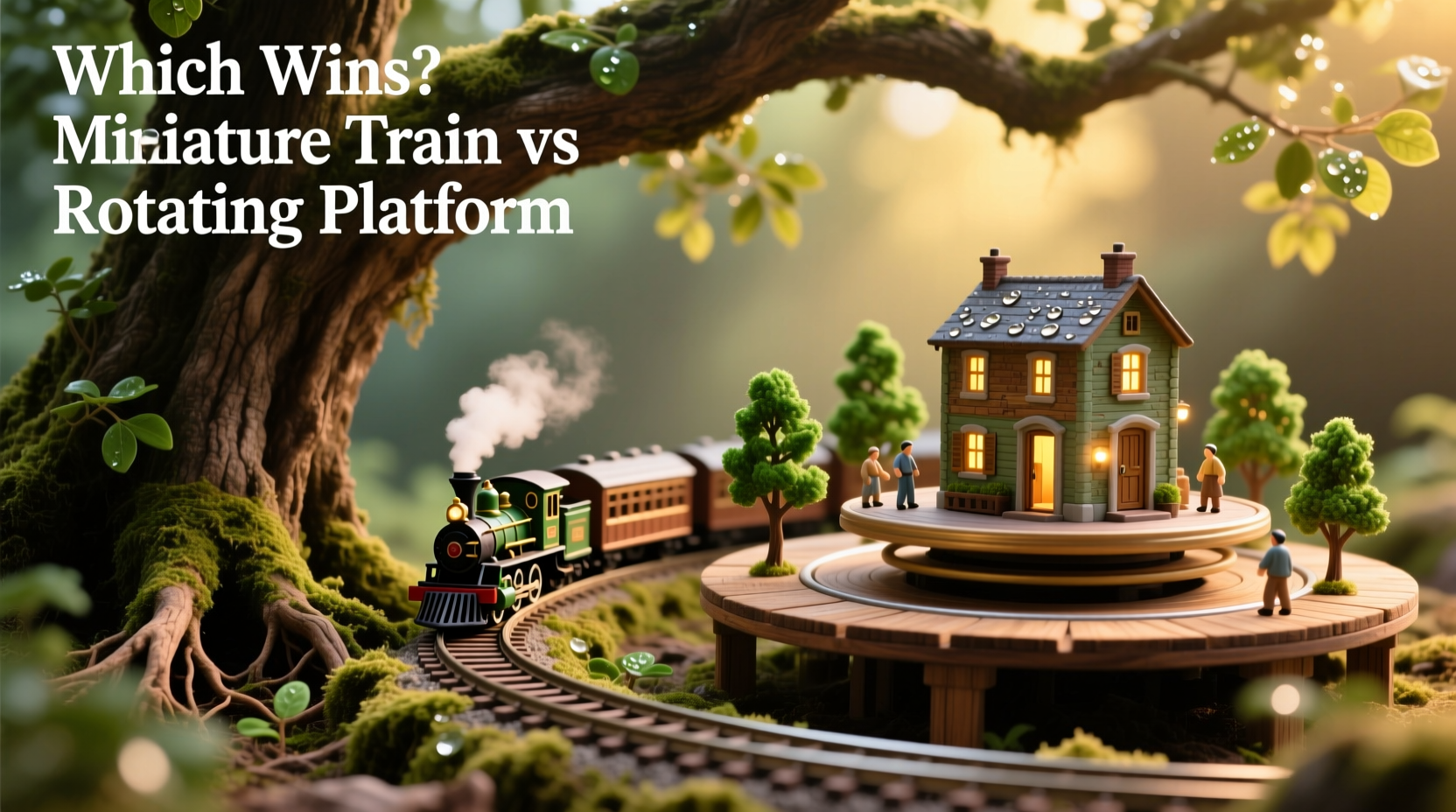
For generations, placing a miniature train beneath the Christmas tree has been a hallmark of American and European holiday traditions. Originating in the early 20th century alongside electric model trains from companies like Lionel and American Flyer, this setup combines natural grandeur with mechanical wonder. The tree acts as a centerpiece, drawing attention downward where the train loops around presents, villages, and snowy landscapes.
This classic arrangement emphasizes integration—blending the train into a broader narrative scene. Tracks often wind through miniature towns, tunnels, and mountains, creating an immersive diorama. The low lighting from tree ornaments enhances the glow of the train’s headlight and village windows, adding depth and warmth.
However, the under-tree setup is not without limitations. Limited sightlines are common—especially in homes with dense lower branches or bulky ornaments. Children and pets may accidentally disrupt the layout, and dust accumulation from pine needles can affect electrical contacts over time. Additionally, storage logistics increase complexity; disassembling and repacking multiple components annually requires careful organization.
The Modern Alternative: Rotating Display Platforms
In recent years, rotating platforms have gained popularity among serious collectors and minimalist decorators. These motorized turntables slowly rotate a circular base (typically 36–72 inches in diameter), allowing unobstructed 360-degree viewing of a single train or locomotive. Often enclosed under glass domes or placed on pedestal stands, they function as sculptural centerpieces rather than integrated scenes.
Rotating displays prioritize focus. With no surrounding clutter, every detail—the gleam of painted metal, the articulation of wheels, even the tiny manufacturer’s logo—is visible from all angles. This makes them ideal for showcasing rare or vintage models, limited editions, or award-winning custom builds.
Mechanically, most platforms operate on quiet DC motors with adjustable speed settings. Some high-end versions include LED spotlights, remote controls, and anti-vibration suspension systems. Because they’re elevated and often protected, dust and physical interference are significantly reduced.
“Rotating platforms transform model trains from playthings into art objects. They command attention in a way static layouts simply can’t.” — Daniel Reeves, Curator at the National Model Railroad Association Archives
Yet, this format sacrifices storytelling. There’s no town, no passengers, no journey implied—just motion for its own sake. For families seeking emotional resonance during the holidays, that absence can feel stark. Moreover, while visually striking, rotating platforms don’t scale well for large collections unless multiple units are used, which increases cost and footprint.
Comparative Analysis: Key Decision Factors
Choosing between the two options isn’t merely about preference—it’s about purpose. Below is a detailed breakdown across seven critical dimensions.
| Factor | Under-Tree Setup | Rotating Platform |
|---|---|---|
| Visibility | Moderate; obstructed by tree limbs and gifts | Excellent; full 360° view, eye-level presentation |
| Ambiance | High; blends with overall holiday atmosphere | Moderate; sleek but less festive, gallery-like feel |
| Space Efficiency | Poor; requires floor space under tree, limits tree placement | Good; compact footprint, works in corners or hallways |
| Maintenance | Moderate to high; cleaning tracks, managing debris | Low; minimal contact, easy dusting |
| Child/Pet Safety | Low; accessible, risk of damage or choking hazards | High; often elevated or enclosed |
| Customization | Very High; expandable with scenery, buildings, lights | Limited; focused on single-unit presentation |
| Longevity & Resale Value | Depends on care; frequent handling reduces condition | Higher; protective display preserves detail and value |
From this analysis, rotating platforms excel in preservation and visibility, making them superior for collectors emphasizing value and craftsmanship. Meanwhile, under-tree arrangements win in emotional engagement and creative expression, appealing to families and traditionalists.
Real-World Example: A Collector’s Dilemma
Consider Sarah Lin, a hobbyist from Portland who inherited her grandfather’s 1952 Lionel 773E steam locomotive. Initially, she displayed it under the family tree each year, surrounded by handmade buildings and working streetlights. Her children loved watching it circle past toy villages, and guests often remarked on the nostalgic warmth.
But after five years, the locomotive began showing signs of wear—oxidation on the rails, minor paint chipping from accidental bumps, and inconsistent power delivery due to dirt buildup. Concerned about devaluing a family heirloom, Sarah consulted a local model railroad restoration expert.
He recommended transitioning to a rotating platform with a glass cover. She invested in a 48-inch walnut-finished turntable with soft LED lighting and installed it in her living room. The change was immediate: visitors now paused to admire the intricate detailing, and her youngest son learned to appreciate the engine as a historical artifact, not just a moving toy.
Sarah didn’t abandon tradition entirely. She created a smaller, battery-powered train layout for under the tree using replica pieces, preserving the holiday magic while protecting the original. Her story illustrates how blending both approaches can satisfy emotional and practical needs.
Step-by-Step Guide: Choosing and Implementing Your Display
Follow this six-step process to make an informed decision tailored to your home and collection.
- Assess Your Collection: Identify whether you own a single prized locomotive or a full system with multiple cars, accessories, and track configurations.
- Determine Primary Goal: Decide if your aim is storytelling and family enjoyment (favoring under-tree) or preservation and aesthetic showcase (favoring rotation).
- Evaluate Space and Traffic Flow: Measure available areas. Can your tree accommodate a wide loop? Is there a hallway or alcove suitable for a pedestal?
- Test Visibility: Place a mock-up using cardboard or string to simulate sightlines from standing and seated positions.
- Budget for Long-Term Use: Factor in costs for track maintenance, replacement parts, platform motors, or protective enclosures.
- Create a Hybrid Option (Optional): Use a rotating platform for your main piece and a separate, simpler loop under the tree for interactive fun.
Checklist: Preparing Your Chosen Display
- ✔ Clean all train components before installation
- ✔ Test electrical connections or motor function
- ✔ Secure loose cables or power adapters out of reach
- ✔ Install surge protectors for electric setups
- ✔ Label control switches clearly for household members
- ✔ Schedule weekly inspection during display period
- ✔ Plan storage containers for off-season protection
Frequently Asked Questions
Can I use a rotating platform under the tree?
Technically yes, but it’s impractical. Most rotating platforms are tall enough to interfere with low-hanging branches, and the motion may clash visually with hanging ornaments. Additionally, tree shedding increases debris on the mechanism. If attempted, choose a slim, low-profile turntable and position the tree behind it rather than above.
Do rotating platforms damage model trains over time?
No—if properly calibrated. Quality platforms rotate slowly (typically 1 revolution per 2–4 minutes) and apply even weight distribution. Avoid cheap models with jerky motion or inadequate support, which can stress couplers or wheel assemblies. Always center the train precisely on the platform to prevent imbalance.
Which option is better for small apartments?
A rotating platform is generally better for small spaces. It occupies less floor area, doesn’t restrict furniture arrangement, and draws attention efficiently without needing a large scenic backdrop. Compact models as small as 30 inches in diameter are available for tight quarters.
Conclusion: Showcasing with Purpose
The choice between a miniature train set under the tree and a rotating platform ultimately reflects deeper values: tradition versus curation, immersion versus precision. Neither is universally superior. A bustling household with young children may find enduring joy in the under-tree ritual, where imagination fuels every lap around the mountain tunnel. Conversely, a dedicated collector might regard the rotating platform as essential—a means of honoring engineering excellence and preserving legacy.
What matters most is intentionality. A display should reflect not just what you own, but why you cherish it. Whether nestled in a winter village beneath twinkling lights or gliding silently on a slow-turning stage, a model train tells a story. The best showcase is the one that lets that story be seen, remembered, and passed on.




 浙公网安备
33010002000092号
浙公网安备
33010002000092号 浙B2-20120091-4
Comments
No comments yet. Why don't you start the discussion?