
Choosing the right wallet isn’t just about style—it’s about how well it fits into your life. For years, the traditional bifold wallet has dominated pockets, but in recent years, minimalist wallets have surged in popularity. Advocates claim they reduce bulk, improve posture, and simplify daily carry. But when it comes down to real-world practicality, which option truly wins?
This isn’t a debate between fashion and function—it’s a comparison of two distinct philosophies in personal organization. One prioritizes space and familiarity; the other champions efficiency and minimalism. To determine which wallet type suits your lifestyle, we need to look beyond trends and examine everyday usability, durability, accessibility, and long-term comfort.
Understanding the Core Differences
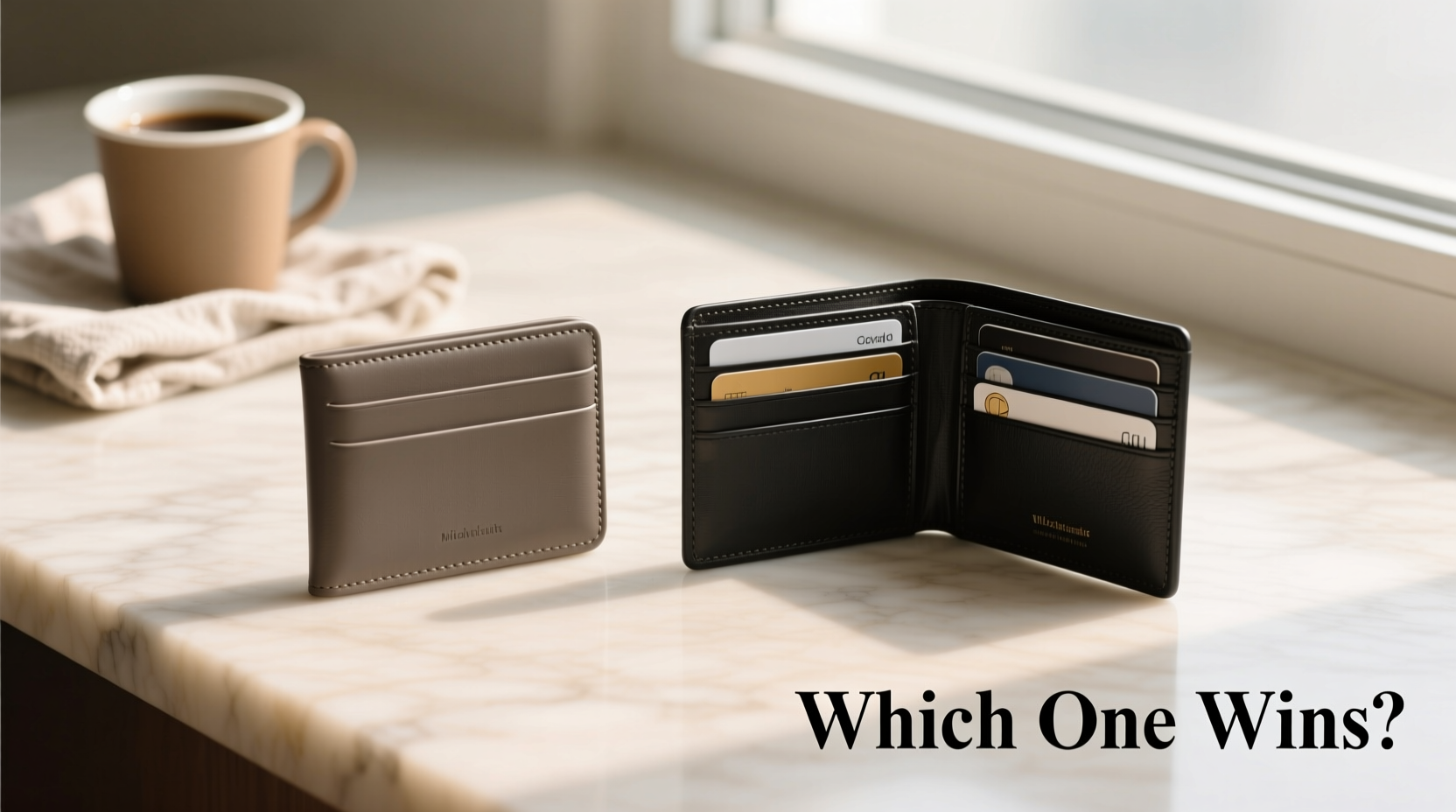
The fundamental contrast between minimalist and bifold wallets lies in their design philosophy and intended use.
- Minimalist wallets are designed to carry only the essentials—typically 4–6 cards and some cash. They’re often made from materials like aluminum, titanium, carbon fiber, or compact leather, with slim profiles that slip easily into front or back pockets without adding bulk.
- Bifold wallets, on the other hand, feature a classic fold-over design with multiple card slots, bill compartments, and sometimes even coin pouches. They offer more storage but come at the cost of thickness and weight.
The minimalist approach encourages intentional curation: asking “Do I really need eight credit cards every day?” Meanwhile, the bifold caters to those who prefer having everything on hand—loyalty cards, receipts, cash in multiple denominations, and more.
Practicality Breakdown: Key Factors Compared
To assess which wallet is more practical for daily use, consider these five critical factors:
1. Comfort and Pocket Fit
A wallet that distorts your pocket or causes discomfort after hours of sitting isn’t practical, no matter how much it holds.
Minimalist wallets excel here. Their slim profile prevents rear-pocket bulging and reduces pressure on the sciatic nerve—a common issue linked to prolonged sitting with thick wallets. Many users report improved posture and reduced lower back pain after switching to a minimalist model.
In contrast, even high-quality bifolds tend to expand over time. Leather stretches, cards pile up, and before long, what started as a sleek accessory becomes a bulky rectangle that warps pants and creates visible outlines.
2. Accessibility and Speed
How quickly can you access your most-used card or cash?
Minimalist wallets vary widely in mechanism. Some use spring-loaded ejectors, others rely on pull-tabs or friction-fit designs. While innovative, these systems can feel awkward at first. However, once mastered, retrieving a card takes less than a second—often faster than fumbling through a cluttered bifold.
Bifolds offer immediate visual access. You open the wallet and see all your cards at once. This can be an advantage if you frequently switch between different payment methods or need quick access to IDs, tickets, or coupons.
3. Capacity and Organization
If you regularly carry more than six cards, frequent flyer documents, or folded checks, a minimalist wallet may fall short.
Most minimalist models limit card capacity strictly. Overloading them risks damaging mechanisms or making retrieval difficult. Cash storage is also limited—usually accommodating only a few folded bills.
Bifolds provide structured organization: dedicated slots for IDs, multiple card sleeves, and full-length bill compartments. This makes them ideal for professionals, travelers, or anyone managing complex financial tools across institutions.
4. Durability and Longevity
Material choice plays a major role in longevity. Minimalist wallets often use aerospace-grade metals or reinforced polymers, making them highly resistant to wear, water, and crushing. However, moving parts (like ejector springs) can fail over time, especially with low-cost models.
Leather bifolds age beautifully but require maintenance. With proper care, full-grain leather develops a rich patina. Yet, poor-quality leather dries out, cracks, or stains easily. Stitching can unravel under heavy loads.
“Wallets aren’t just containers—they’re companions. The best ones evolve with you, not against you.” — Daniel Reyes, Product Designer & Carry Goods Consultant
5. Security and Theft Resistance
Thinner wallets are harder to steal unnoticed. A slim profile means less drag when someone attempts to pickpocket. RFID-blocking features are now common in both styles, protecting against digital skimming.
However, minimalist wallets with magnetic closures or sliding mechanisms can accidentally open if dropped. Bifolds, when properly closed, keep contents securely tucked inside—even when jostled.
Comparison Table: Minimalist vs Bifold Wallets
| Feature | Minimalist Wallet | Bifold Wallet |
|---|---|---|
| Average Thickness | 0.2–0.4 inches | 0.6–1.2 inches |
| Card Capacity | 4–8 cards | 6–15+ cards |
| Cash Storage | Limited (1–3 folded bills) | Full compartment (multiple bills) |
| Pocket Comfort | Excellent (front/back) | Fair to Poor (especially back pocket) |
| Durability | High (metal/composite), Medium (leather) | Varies (high-end leather lasts decades) |
| Retrieval Speed | Fast (with practice) | Moderate (can be slow if overstuffed) |
| Price Range | $30–$150 | $20–$300+ |
| Ideal For | Minimalists, urban commuters, tech-savvy users | Professionals, travelers, collectors |
Real-World Case Study: Two Users, Two Lifestyles
Case 1: Alex – Urban Commuter & Tech Worker
Alex lives in downtown Seattle, walks to work, uses public transit, and carries only a phone, keys, AirPods, and wallet. He owns four cards: debit, credit, office ID, and transit pass. He rarely carries cash.
After years of back pain from sitting on a thick leather bifold, he switched to a titanium minimalist wallet. Within a week, he noticed less strain during long meetings. His wallet slipped smoothly into his slim-fit jeans without distorting the fabric. Though initially skeptical about card access speed, he adapted quickly. After six months, he hasn’t looked back.
Case 2: Maria – Sales Executive & Frequent Traveler
Maria travels weekly for client meetings. Her wallet holds seven credit cards (including international ones), hotel loyalty cards, airport lounge access, driver’s license, business cards, and cash in three currencies. She values organization and redundancy.
She tried a minimalist wallet but found it impractical. Switching cards mid-meeting felt awkward, and she couldn’t store backup cash securely. She returned to a premium bifold with a removable money clip and RFID protection. It’s thicker, but she keeps it in a jacket pocket during meetings, reducing hip pressure.
These cases illustrate a key truth: practicality depends on context, not just design.
How to Choose Based on Your Lifestyle
Rather than declaring a universal winner, the smarter approach is alignment with your habits. Use this checklist to evaluate your needs:
✅ Minimalist Wallet Checklist – Do You…
- Carry fewer than six essential cards?
- Spend long hours sitting (office, driving, flying)?
- Prefer front-pocket carry for security and posture?
- Value sleek aesthetics and modern materials?
- Use mobile payments frequently (Apple Pay, Google Pay)?
✅ Bifold Wallet Checklist – Do You…
- Need to carry more than eight cards regularly?
- Handle cash transactions often (tipping, markets, small businesses)?
- Travel internationally or manage multiple accounts?
- Appreciate traditional craftsmanship and aging leather?
- Use physical tickets, receipts, or coupons daily?
Step-by-Step Guide: Transitioning to a More Practical Wallet
Whether you're upgrading or downsizing, follow this timeline to make the shift seamless:
- Week 1: Inventory Your Carry
Empty your wallet. Lay out every card, receipt, and piece of paper. Categorize by necessity: daily, occasional, emergency, obsolete. - Week 2: Digitize & Declutter
Scan expired cards, digitize loyalty programs via apps, and discard duplicates. Keep only what you use weekly. - Week 3: Test Scenarios
Spend a few days carrying only your top 3–4 cards and $20 cash. Note any gaps. Did you miss anything? - Week 4: Choose & Purchase
Based on your test, decide: Can you live with a minimalist wallet? Or do you need a streamlined bifold? Look for quality materials and ergonomic design. - Month 2: Adapt & Optimize
Break in your new wallet. Adjust card order for quick access. Consider adding RFID protection if needed.
“The most practical wallet is the one you forget you’re carrying.” — Jordan Lee, Ergonomic Design Researcher
Frequently Asked Questions
Can a minimalist wallet hold cash comfortably?
Yes, but with limitations. Most minimalist wallets accommodate 1–3 folded bills. If you regularly carry more than that—such as for tipping, vending, or emergencies—a bifold or separate money clip may be better.
Are minimalist wallets more secure?
In some ways, yes. Their slim profile makes them harder to steal from back pockets. Many include RFID-blocking shielding. However, spring-loaded models can accidentally eject cards if dropped, so choose designs with secure locking mechanisms.
Will a bifold wallet damage my clothes over time?
Over time, yes. A consistently thick wallet compresses fabric fibers, leading to permanent bulges and seam stress in pants pockets. High-waisted or tight-fitting trousers are especially vulnerable. Rotating wallets or using a slim alternative can extend clothing life.
Final Verdict: Which Is Actually More Practical?
For the majority of users in 2024, the minimalist wallet is the more practical choice—not because it holds more, but because it forces intentionality. Most people don’t need ten cards and stacks of cash every day. Mobile payments, digital IDs, and contactless banking have reduced our physical carry needs.
That said, practicality isn’t one-size-fits-all. If your job requires multiple forms of ID, international currency, or physical backups, a well-organized bifold remains indispensable.
The true measure of a wallet’s practicality isn’t its size or material—it’s how effortlessly it integrates into your routine. Does it slow you down? Cause discomfort? Force unnecessary decisions?
The best wallet disappears into your life. It doesn’t demand attention. It works when you need it and stays out of the way when you don’t.
Take Action Today
Don’t let habit dictate your carry. Take five minutes tonight to empty your wallet. Ask yourself: What am I really using? What am I just holding onto “in case”? Then, make a decision based on how you live now—not how you used to.
Whether you choose a sleek titanium sleeve or a refined leather bifold, choose it deliberately. Because practicality isn’t about following trends—it’s about designing your daily experience with purpose.




 浙公网安备
33010002000092号
浙公网安备
33010002000092号 浙B2-20120091-4
Comments
No comments yet. Why don't you start the discussion?