
In today’s hybrid work environment—where video calls, client meetings, and corporate presentations are part of daily life—the accessories you wear matter. Among them, your wristwear sends subtle but powerful signals about professionalism, attention to detail, and personal brand. Two dominant choices occupy modern wrists: the minimalist analog or smartwatch with clean design, and the feature-rich digital fitness tracker. While both serve timekeeping functions, their impact in a professional context differs significantly. This article examines not just aesthetics, but functionality, perception, and long-term suitability to help professionals make an informed decision.
The Role of Wristwear in Professional Perception
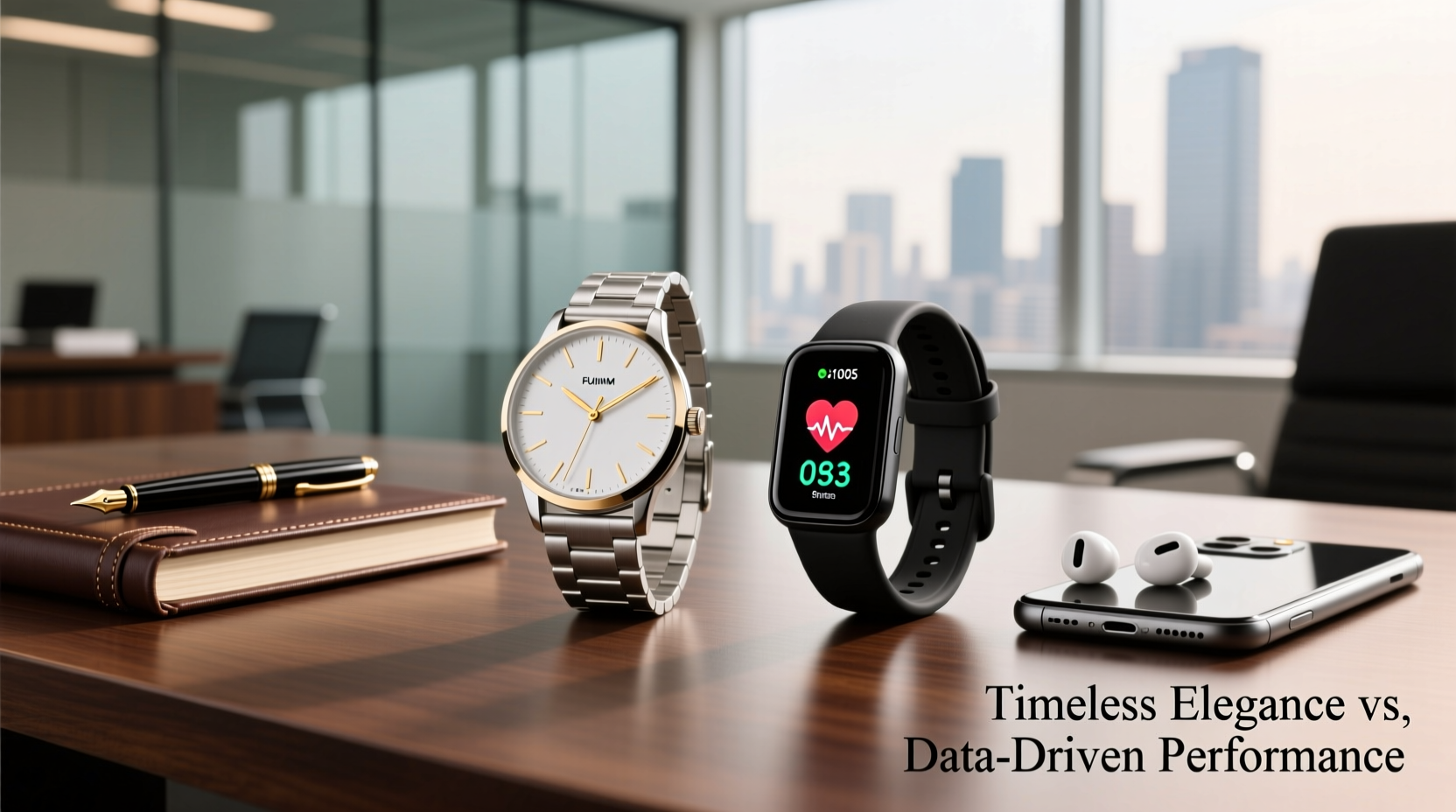
A watch has long been more than a tool—it's a symbol. In boardrooms and business lunches, a well-chosen timepiece communicates punctuality, discipline, and refinement. Even in an age when smartphones display the time, wearing a watch suggests intentionality. However, the rise of digital fitness trackers has introduced a new variable: utility over elegance.
Fitness trackers prioritize health metrics—heart rate, steps, sleep quality, notifications—over aesthetic subtlety. Their plastic bands, bright screens, and constant vibrations may be ideal for gym sessions or remote wellness tracking, but raise questions about appropriateness during formal meetings or client-facing roles.
Conversely, minimalist watches—whether mechanical, quartz, or smartwatches with restrained interfaces—emphasize simplicity. Clean dials, slim profiles, and neutral tones align with professional dress codes. They don’t distract; they complement.
“Accessories should enhance presence, not demand attention. A minimalist watch supports authority. A blinking fitness band can undermine it.” — Daniel Hartley, Corporate Image Consultant
Design & Aesthetics: First Impressions Matter
In professional environments, visual coherence between attire and accessories is essential. Consider two contrasting scenarios:
- A lawyer enters a courtroom wearing a tailored navy suit, polished oxfords, and a brushed steel minimalist watch with a leather strap.
- The same lawyer wears a black silicone fitness tracker pulsing with unread notifications from a meditation app.
The first projects control and composure. The second, despite identical competence, risks appearing informal or distracted.
Minimalist watches typically feature:
- Thin cases (6–8mm)
- Sleek metal or leather straps
- Neutral color palettes (silver, black, white, rose gold)
- No backlight unless activated
Digital fitness trackers, by contrast, often have:
- Bulkier builds (10mm+ thickness)
- Silicone or rubber bands
- Always-on displays with colored icons
- Vibrant touchscreens that light up frequently
These differences aren't trivial. Research from the Journal of Applied Social Psychology indicates that individuals wearing refined accessories are perceived as more competent and trustworthy in leadership roles.
Functionality Comparison: Utility vs Discretion
While appearance plays a key role, functionality cannot be ignored. Fitness trackers offer real-time data that some professionals find valuable—especially those managing stress, travel fatigue, or long workdays. But in high-stakes environments, discretion often outweighs convenience.
| Feature | Minimalist Watch | Digital Fitness Tracker |
|---|---|---|
| Time Display | Clear, uncluttered analog or digital face | Accurate but often surrounded by widgets |
| Notifications | Limited (on smart variants), subtle haptics | Frequent alerts with sound/vibration |
| Health Monitoring | Rare or basic (on hybrid models) | Comprehensive: HR, SpO2, sleep, activity |
| Battery Life | Months (mechanical) to days (smart) | 5–7 days average |
| Water Resistance | Moderate to high (varies by model) | Generally high (swim-safe) |
| Professional Suitability | High – discreet and elegant | Low to moderate – functional but conspicuous |
The table illustrates a core trade-off: depth of function versus social acceptability. For example, receiving a calendar alert on a muted Apple Watch in Meeting Mode appears controlled. Getting a flashing reminder to “stand up” during a pitch meeting can break focus and project poor judgment.
Real-World Scenario: The Finance Executive’s Dilemma
James R., a portfolio manager at a mid-sized investment firm in Chicago, wore a Fitbit Charge 5 for two years. He appreciated its stress tracking and step goals, especially during marathon trading days. However, after a client remarked, “You’re checking your watch a lot,” he realized his device was vibrating every 30 minutes with breathing prompts and heart rate spikes.
He switched to a Movado Bold Minimalist Watch—no smart features, just precision timekeeping. His clients noticed the change. One commented, “You seem more present now.” Internally, James found he was less distracted. Without constant biometric nudges, he relied on self-awareness rather than data to manage energy.
He didn’t abandon fitness tracking entirely. He now uses the Fitbit at home or during workouts, reserving the minimalist watch for office hours. This dual-device strategy allowed him to balance wellness and professionalism without compromise.
When a Digital Fitness Tracker Might Be Acceptable
Not all professional settings demand traditional formality. In tech startups, creative agencies, or health-focused industries, fitness trackers may even signal alignment with company culture. For instance:
- A UX designer at a wellness app startup wears a Garmin Venu to demonstrate product familiarity.
- A corporate wellness coordinator uses her Samsung Galaxy Fit to lead lunchtime mindfulness sessions.
- A remote software engineer keeps his Oura Ring (a discreet alternative) to optimize sleep for global team calls.
Even then, success depends on presentation. Using a leather band instead of silicone, disabling non-critical notifications, and selecting monochrome watch faces can reduce intrusiveness. Some hybrid smartwatches—like the Fossil Hybrid HR or Withings ScanWatch—offer fitness tracking beneath a classic exterior, blending the best of both worlds.
Actionable Checklist: Choosing the Right Device for Your Workplace
Use this checklist to evaluate what works for your role and environment:
- ✅ Assess your industry’s dress code: Is it formal, business casual, or relaxed?
- ✅ Identify how often you interact with clients or senior leadership.
- ✅ Determine whether health data is critical to your daily performance.
- ✅ Test notification settings: Can you silence everything except urgent calls?
- ✅ Consider switching bands: Can you use a metal or leather strap to elevate appearance?
- ✅ Evaluate alternatives: Would a hybrid watch meet both style and function needs?
- ✅ Observe colleagues: What do respected peers wear on their wrists?
Step-by-Step Guide: Transitioning from Tracker to Minimalist Wear
If you decide a minimalist watch better suits your professional image, follow this transition plan:
- Week 1: Audit Usage – Track how often you actually use your fitness data during work hours. Note which features matter most.
- Week 2: Research Options – Explore minimalist watches with potential smart capabilities (e.g., Withings, Mondaine, Nomos).
- Week 3: Test in Low-Stakes Settings – Wear the new watch to internal meetings or casual office days.
- Week 4: Full Integration – Switch completely during client-facing days. Keep the tracker at home or gym.
- Ongoing: Sync Data Strategically – Review fitness reports weekly outside work hours to maintain health awareness without interference.
This phased approach ensures you don’t lose valuable insights while upgrading your professional presence.
FAQ: Common Questions Answered
Can I wear a smartwatch like an Apple Watch in a professional setting?
Yes, if configured properly. Use a classic watch face (e.g., “Numerica” or “Solar”), pair it with a leather or metal band, and disable all non-essential notifications. In this setup, it functions like a minimalist smartwatch and remains appropriate for most business environments.
Are fitness trackers seen as unprofessional?
Not inherently, but context matters. In conservative fields like law, finance, or executive consulting, they may be perceived as too casual. In tech, healthcare, or fitness-related roles, they’re often accepted or even encouraged. Perception also depends on how prominently the device is used during interactions.
Is it okay to switch devices based on the occasion?
Absolutely—and many professionals do. Just as you might wear different shoes for the office versus the gym, changing wristwear is a smart adaptation. The key is consistency in each context. Frequent switching during a single day may appear disorganized.
Final Verdict: Why Minimalist Watches Hold the Edge
While digital fitness trackers offer undeniable utility, their design and behavior often clash with the expectations of professional decorum. Minimalist watches, by contrast, reinforce qualities valued in leadership: restraint, clarity, and timeless taste. They don’t buzz, flash, or demand attention. Instead, they quietly affirm reliability.
That said, the ideal solution isn’t always binary. Many modern minimalist smartwatches now integrate subtle health tracking—step count, sleep duration, heart rate—without compromising aesthetics. Brands like Withings, Citizen, and Frederique Constant have mastered this balance, offering timepieces that look traditional but deliver light wellness insights.
The ultimate choice depends on your role, environment, and priorities. But if influence, credibility, and polish matter in your career trajectory, the minimalist watch remains the superior choice for the professional setting.




 浙公网安备
33010002000092号
浙公网安备
33010002000092号 浙B2-20120091-4
Comments
No comments yet. Why don't you start the discussion?