
In the world of interior organization and decorative display, flexibility is king. Whether you're styling a home office, curating seasonal decor, or organizing children's artwork, the ability to rearrange, rotate, and refresh your layout without damage or hassle is essential. Two popular solutions have emerged as favorites among designers and homeowners: modular magnetic ornament display boards and corkboards with twine grids. Both promise easy reconfiguration, but they deliver in fundamentally different ways. Understanding their strengths, limitations, and ideal use cases can help you choose the right system for your space.
Understanding the Core Designs
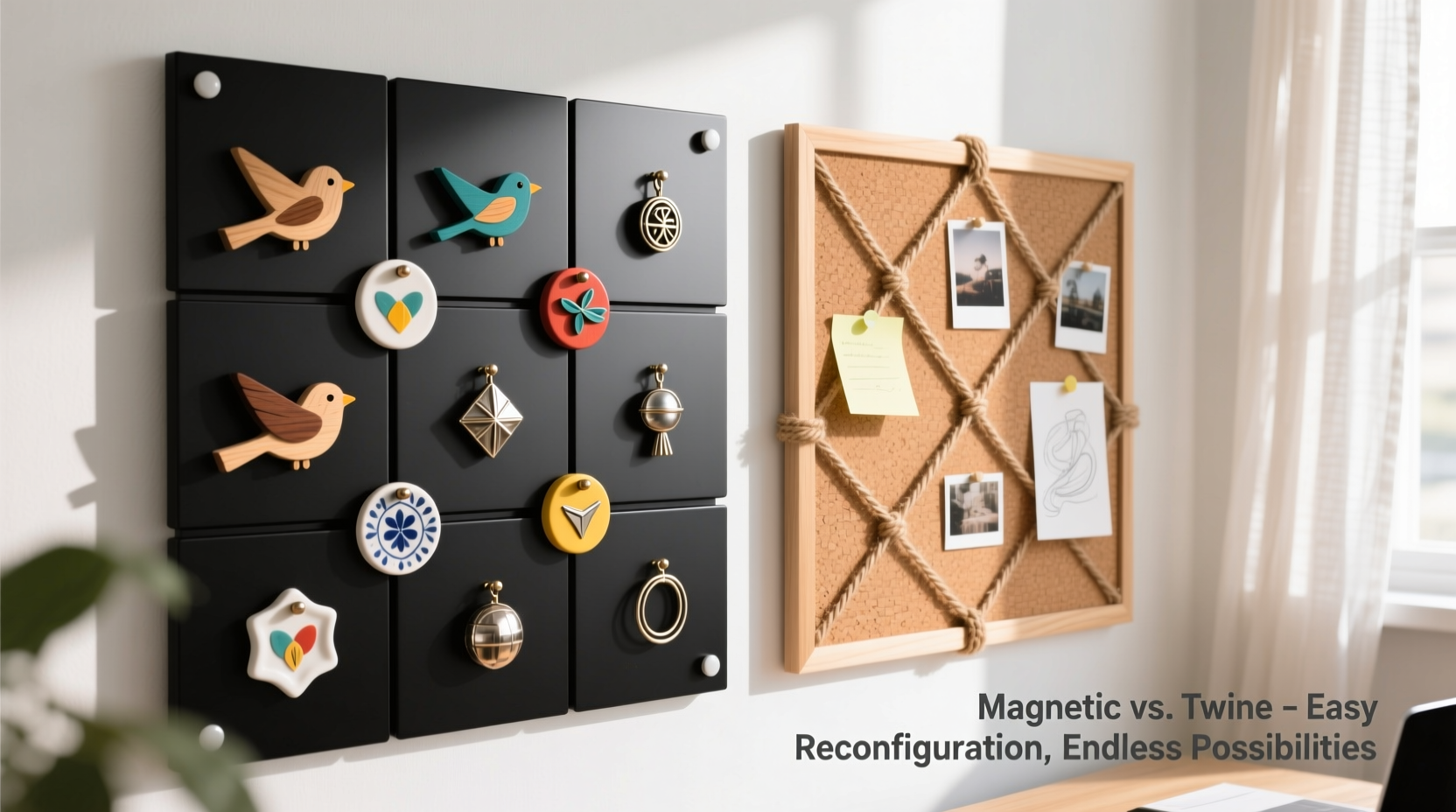
The primary difference between these two systems lies in their underlying structure and attachment mechanisms. A modular magnetic ornament display board relies on a ferrous (magnetic) surface—typically steel—and compatible magnetic accessories such as clips, hooks, or frames. These boards are often part of a larger ecosystem, allowing users to mix and match components across multiple panels.
Conversely, a corkboard with a twine grid uses a soft, porous surface that accepts pins or tacks. Overlaid across the cork is a crisscrossed network of twine or thin cord, creating a grid pattern. Items like photos, notes, or lightweight ornaments are then clipped or tied onto the twine using mini clothespins, ribbons, or clips. The result is a rustic, tactile display that’s highly customizable within its physical constraints.
“Display systems should serve both function and feeling. The best choice isn’t always the most durable—it’s the one that invites interaction and evolves with your life.” — Lena Torres, Interior Stylist & Organizational Designer
Flexibility and Reconfiguration: A Side-by-Side Comparison
Reconfiguration ease is the central promise of both systems. But how do they truly compare when it comes to daily adaptability?
| Feature | Modular Magnetic Board | Corkboard with Twine Grid |
|---|---|---|
| Attachment Method | Magnets | Pins + Twine Clips |
| Speed of Rearrangement | Near-instant; no tools needed | Moderate; requires unpinning and re-clipping |
| Surface Wear Over Time | Negligible | Cork degrades with repeated pinning |
| Weight Capacity per Point | High (up to 2–5 lbs depending on magnet) | Low to moderate (0.5–1 lb per clip) |
| Expansion Potential | High; tiles connect seamlessly | Limited; single-panel focus unless framed together |
| Aesthetic Versatility | Modern, minimalist, industrial | Rustic, cottage-core, bohemian |
The magnetic board excels in speed and durability. You can slide a magnetic photo frame from one corner to another in seconds, adjust spacing mid-layout, or swap out heavier items like small shelves or tool holders without consequence. Because there’s no puncturing, the surface remains pristine indefinitely.
The twine grid, while charming, demands more manual effort. Each move involves removing a pin, adjusting the twine if necessary, and reclipping. Frequent changes accelerate wear on the cork, especially near high-traffic zones. However, the texture and warmth of twine create an inviting, handmade feel that magnets alone can’t replicate.
Practical Applications and Ideal Environments
The best display solution depends heavily on context: where it’s used, who interacts with it, and what it holds.
Home Offices and Creative Studios
In professional or creative workspaces, efficiency and adaptability are paramount. A modular magnetic board shines here. Designers can shift mood boards, attach whiteboard sections, or integrate magnetic calendars alongside ornament displays. The ability to layer components—such as adding a dry-erase strip above a magnetic photo rail—makes it a multifunctional hub.
In contrast, a twine grid may suit freelance writers or artists seeking inspiration through tactile curation. Pinning fabric swatches, handwritten notes, or postcards adds a sensory dimension to brainstorming. However, frequent changes may lead to cork fatigue, requiring panel replacement every few years.
Kitchens and Seasonal Decor
Kitchens benefit from dynamic displays that rotate with holidays or seasons. Magnetic boards allow users to switch out themed clips—snowflakes in December, pumpkins in October—with minimal effort. Some models even support magnetic spice jars or utensil holders, merging utility with decoration.
Twine grids work well in farmhouse-style kitchens, where dried herbs, recipe cards, or tea bags can be hung from the lines. However, moisture and heat near stoves may degrade cork over time, and grease buildup can stain the twine.
Children’s Rooms and Classrooms
For kids, both systems offer engagement, but safety and simplicity matter most. Magnetic boards with large, colorful magnetic ornaments are easy for small hands to manipulate and pose no puncture risk. They also support educational tools like alphabet letters or number tiles.
Twine grids encourage fine motor development when children use clips, but supervision is needed due to pin use. In classrooms, teachers often prefer magnetic whiteboards with accessory rails for maximum versatility across subjects.
Installation, Maintenance, and Longevity
Setting up either system requires planning, but long-term maintenance differs significantly.
Installation Process
- Modular Magnetic Board: Mount the base panel securely to wall studs or use heavy-duty anchors. Panels often interlock edge-to-edge, enabling expansion. Ensure alignment is level before securing additional modules.
- Corkboard with Twine Grid: Stretch twine tightly across pre-drilled holes or eyelets at the board’s perimeter. Knots must be secure to prevent sagging. Over time, tension loosens, requiring periodic retightening.
Once installed, magnetic boards require virtually no upkeep. Wipe with a damp cloth if dusty. Avoid abrasive cleaners that could scratch the surface.
Corkboards need more attention. Dust accumulates in the pores, and spilled liquids can cause staining or mold. Clean gently with a vinegar-water solution and soft brush. Replace the entire board if cork becomes brittle or excessively pockmarked.
Durability Timeline
- Magnetic Board: 10+ years with proper care. Steel core resists warping, rust-resistant finishes available.
- Corkboard: 3–5 years under regular use. Lifespan shortens with frequent re-pinning or exposure to humidity.
Mini Case Study: The Urban Apartment Gallery Wall
Sophie, a graphic designer in Seattle, wanted a flexible gallery wall in her studio apartment. She frequently updated her portfolio and loved showcasing rotating art from local makers. Initially, she installed a large corkboard with twine grid, drawn to its handmade charm.
Within six months, however, the center of the board showed visible wear. Pins left permanent holes, and the twine sagged after hanging heavier prints. Changing layouts took 20 minutes and often resulted in dropped pins behind furniture.
She replaced it with a modular magnetic board system featuring a brushed steel surface and magnetic floating frames. Now, she swaps artwork in under two minutes. She added a magnetic calendar strip below for client deadlines. “It feels more professional,” she said. “And I don’t stress about damaging the wall or the board itself.”
The trade-off? The new system has a cooler, more industrial look. To soften it, she incorporated woven fabric inserts between panels and used matte-black magnetic clips for visual warmth.
Step-by-Step Guide: Choosing and Setting Up Your System
Follow this process to select and install the right display solution for your needs.
- Assess Your Needs: List what you’ll display—photos, ornaments, notes, tools. Note weight and frequency of change.
- Evaluate Your Wall Space: Measure dimensions and check for stud locations. Consider ceiling height and lighting.
- Determine Aesthetic Goals: Do you prefer modern minimalism or cozy texture? This guides material choice.
- Test Weight Requirements: If hanging ornaments or tools, ensure your chosen system supports the load. Magnets vary by strength—check product specs.
- Install with Precision: Use a level and stud finder. For magnetic boards, start with one panel and expand symmetrically. For twine grids, pre-mark hole positions and use waxed twine to reduce fraying.
- Begin Styling: Start with anchor pieces, then build around them. Leave breathing room for future additions.
- Review Monthly: After installation, assess usability. Is reconfiguration easy? Are materials holding up? Adjust placement or accessories as needed.
FAQ
Can I combine both systems in one space?
Yes. Many designers pair a magnetic board for functional elements (calendars, keys) with a smaller twine grid nearby for sentimental items (postcards, dried flowers). Just ensure visual harmony through color coordination or framing.
Are magnetic boards safe around electronics?
Most household magnetic boards use moderate-strength magnets unlikely to harm phones or laptops at a distance. However, avoid placing strong neodymium magnets directly against screens or hard drives.
Can I paint or customize a corkboard?
Yes, but carefully. Use water-based sealants first to protect the cork, then apply acrylic paint lightly. Avoid thick coats that block pin penetration. Twine can be dyed or swapped for ribbon to match themes.
Checklist: Before You Buy
- ☐ Measure wall space and plan layout
- ☐ Determine average item weight and size
- ☐ Confirm mounting hardware compatibility with your wall type
- ☐ Check product warranty and rust/corrosion resistance (for magnetic boards)
- ☐ Review accessory availability (clips, frames, extension panels)
- ☐ Decide on aesthetic finish (matte, glossy, textured)
- ☐ Read user reviews for real-world durability feedback
Conclusion
The choice between a modular magnetic ornament display board and a corkboard with twine grid ultimately reflects your priorities: precision and longevity versus warmth and character. The magnetic system offers unmatched reconfiguration speed, structural resilience, and scalability—ideal for dynamic, high-use environments. The twine grid delivers charm, accessibility, and a handcrafted sensibility perfect for personal spaces where aesthetics matter as much as function.
Neither option is universally superior. In many homes, both have a place—used in tandem or rotated seasonally. What matters most is designing a system that invites interaction, reduces friction, and evolves gracefully over time. By understanding the strengths of each, you empower yourself to create displays that are not just seen, but lived with.




 浙公网安备
33010002000092号
浙公网安备
33010002000092号 浙B2-20120091-4
Comments
No comments yet. Why don't you start the discussion?