
In recent years, a quiet revolution has been unfolding in the world of men’s wedding bands. While tungsten carbide once reigned supreme for its scratch resistance and low price, more grooms are now turning to moissanite engagement and wedding rings — not just for their brilliance, but for what they represent: sustainability, versatility, and long-term value. This shift isn’t just about aesthetics; it reflects deeper changes in consumer priorities around ethics, personal expression, and material integrity.
Tungsten was marketed as the “forever metal” — strong, industrial, and maintenance-free. But as couples seek rings that evolve with them, rather than resist change at all costs, moissanite is emerging as a compelling alternative. Let’s explore why this transition is happening and what it means for modern grooms making one of life’s most symbolic purchases.
The Rise and Fall of Tungsten Rings
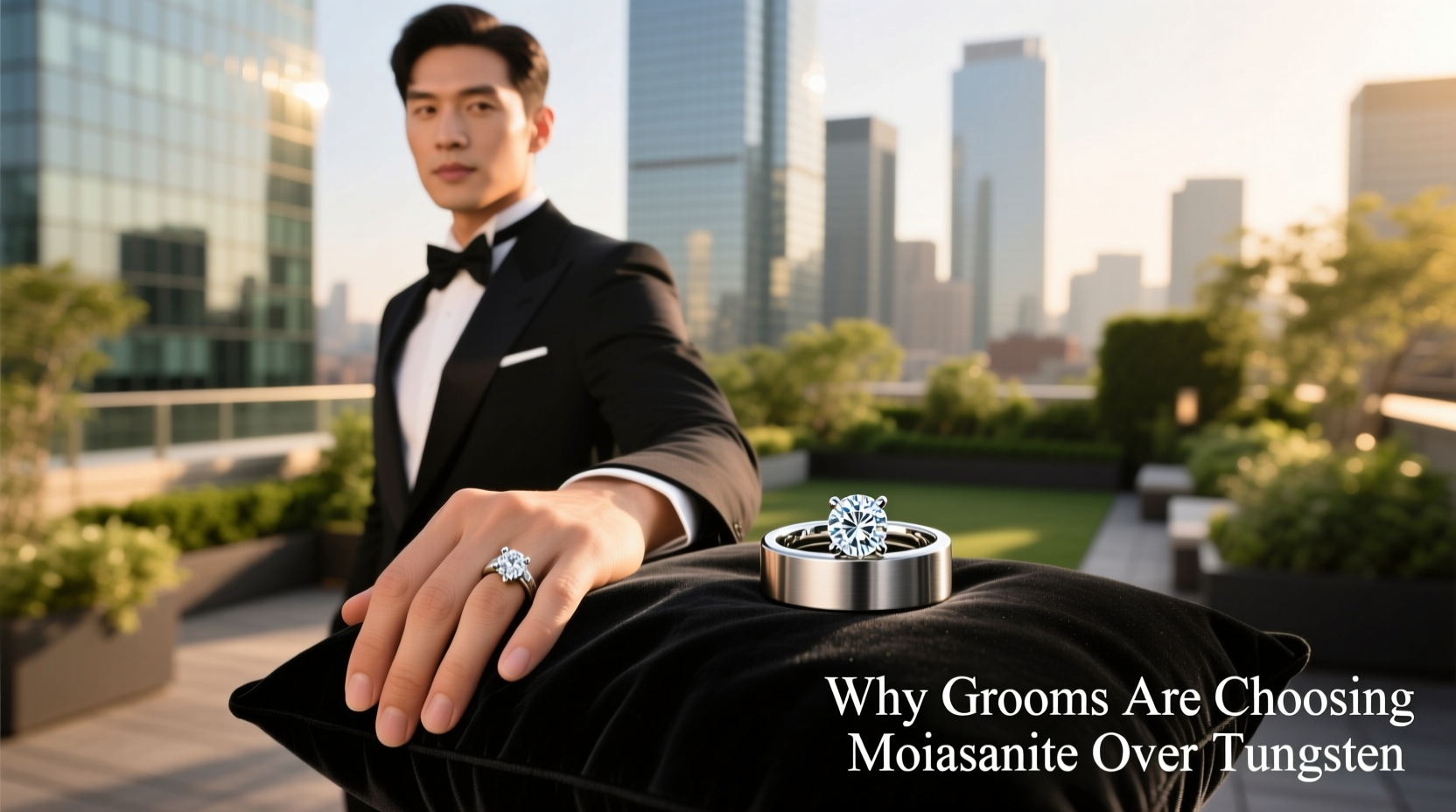
Tungsten carbide gained popularity in the 2000s as an affordable, durable option for men who wanted a ring that wouldn’t scratch or wear down easily. Its hardness (measured at 8.5–9.5 on the Mohs scale) made it ideal for those with active lifestyles or manual jobs. It also offered a sleek, gunmetal-gray finish that appealed to minimalist tastes.
However, its very strength became a liability. Unlike gold or platinum, tungsten cannot be resized. If a groom gains or loses weight, or simply wants a different fit later in life, the ring must be replaced entirely. More critically, tungsten is brittle under extreme pressure. In emergency situations — such as hand trauma — the ring may shatter during medical removal, which can complicate treatment.
“Tungsten’s brittleness poses real risks in emergencies. We’ve seen cases where ER teams struggled to remove rings safely.” — Dr. Alan Reeves, Emergency Medicine Specialist
Additionally, tungsten rings often contain cobalt binders, which can cause skin irritation or allergic reactions over time. And despite claims of being “maintenance-free,” these rings develop micro-scratches and lose their polish, requiring professional refinishing — if available.
What Is Moissanite and Why Is It Gaining Ground?
Moissanite is a lab-created gemstone composed of silicon carbide. First discovered in meteorites by French chemist Henri Moissan in 1893, today’s moissanite is grown in controlled environments, making it both sustainable and ethically sound. It ranks 9.25 on the Mohs hardness scale — slightly softer than diamond but harder than sapphire or ruby — and offers exceptional brilliance due to its higher refractive index.
While traditionally used in center stones, moissanite is now being incorporated into full-band designs and men’s wedding rings, especially in combination with precious metals like white gold, platinum, or titanium settings. These rings offer sparkle without sacrificing masculinity, appealing to grooms who want something unique yet timeless.
Unlike diamonds mined from the earth — often linked to environmental degradation and conflict zones — moissanite is traceable, eco-friendly, and typically more affordable. A 1-carat moissanite costs roughly 10% of a comparable diamond, allowing couples to allocate budget toward experiences, home ownership, or future planning.
Key Differences: Moissanite vs Tungsten Rings
| Feature | Moissanite Ring | Tungsten Ring |
|---|---|---|
| Durability | Hard (9.25), resistant to scratching, slight risk of chipping under extreme force | Extremely hard (8.5–9.5), but brittle; prone to cracking or shattering |
| Resizing | Possible if set in metal band (e.g., gold, platinum) | Impossible — must be replaced |
| Allergies | Hypoallergenic; no known sensitivities | Risk of cobalt-induced dermatitis |
| Ethics & Sustainability | Fully lab-grown, zero mining impact, carbon-neutral options available | Mining-intensive; tungsten extraction harms ecosystems |
| Appearance | Brilliant fire and sparkle; colorless to near-colorless | Metallic gray; limited aesthetic variation |
| Cost (approx.) | $300–$800 for a well-cut stone + setting | $50–$200 for basic band |
| Emergency Safety | Can be removed safely with standard tools | May shatter violently when cut; dangerous in trauma cases |
Real Shift: A Case Study of Modern Groom Preferences
Take James, a 32-year-old software engineer from Portland, who initially considered a black tungsten band because of its rugged look. After researching online forums and speaking with a jeweler, he learned about the resizing limitations and safety concerns. He then explored alternatives and fell in love with a matte-finish titanium ring featuring a small channel-set moissanite stripe.
“I didn’t want anything flashy,” James said, “but I also didn’t want a ring that could hurt me in an accident. The moissanite gives it character — it catches the light just enough. Plus, knowing it’s eco-friendly mattered to my fiancée.”
His story mirrors a growing trend: grooms aren’t rejecting durability — they’re redefining it. Strength isn’t just about resisting scratches; it’s about adaptability, safety, and meaning over decades.
How to Choose the Right Ring: A Practical Checklist
- ✅ Consider whether your finger size might change in the next 5–10 years
- ✅ Evaluate your job and daily activities — do they involve heavy machinery or chemicals?
- ✅ Check for metal allergies — ask for cobalt-free or nickel-free materials
- ✅ Think about long-term sentiment: Will you want to pass this ring down?
- ✅ Prioritize ethical sourcing — request certificates of origin for gemstones
- ✅ Ensure the ring can be resized or repaired if needed
- ✅ Test emergency removal procedures — ask your jeweler how easily it can be cut
Expert Insight: The Future of Men’s Wedding Bands
“The idea that men’s rings should be ‘tough’ above all else is outdated. Today’s grooms care about craftsmanship, responsibility, and personalization. Moissanite offers beauty with accountability.” — Lena Torres, Jewelry Designer & Ethical Sourcing Advocate
Torres notes that demand for customizable, meaningful men’s bands has increased by over 40% since 2020. “Clients want rings that reflect their values — whether that’s climate action, transparency, or emotional resonance. Moissanite fits perfectly within that ethos.”
Frequently Asked Questions
Can moissanite scratch or get damaged?
Moissanite is highly scratch-resistant and suitable for daily wear. While no gem is indestructible, chipping requires extreme, localized impact — far beyond normal use. With proper setting and care, moissanite retains its brilliance for generations.
Is tungsten really cheaper in the long run?
While upfront cost is lower, tungsten’s inability to resize often leads to replacement costs. Over ten years, replacing multiple bands due to fit issues can exceed the price of a single, resizable moissanite-accented ring.
Does moissanite look fake?
Modern moissanite, especially premium grades (like Forever One or Charles & Colvard), is nearly indistinguishable from diamond to the untrained eye. Its double refraction creates more fire, which some prefer. When set tastefully, it radiates elegance without pretense.
Conclusion: Rethinking What Lasts
The move away from tungsten rings isn’t just about fashion — it’s a thoughtful recalibration of what durability truly means. A ring that survives daily wear but fractures in an emergency, cannot be resized, or causes skin irritation fails the test of lifelong companionship. Moissanite, particularly when integrated into thoughtfully designed bands, offers a balance of resilience, ethics, and enduring beauty.
Grooms today aren’t looking for armor. They’re seeking symbols — rings that reflect growth, partnership, and conscious living. As jewelry evolves beyond tradition, materials like moissanite represent not just innovation, but intentionality.




 浙公网安备
33010002000092号
浙公网安备
33010002000092号 浙B2-20120091-4
Comments
No comments yet. Why don't you start the discussion?