
When \"Molly's Game,\" directed by Aaron Sorkin and starring Jessica Chastain, hit theaters in 2017, it quickly gained attention not only for its sharp dialogue and gripping narrative but also for its R rating. For many viewers, especially those unfamiliar with the MPAA (Motion Picture Association of America) classification system, the question arises: Why is this film rated R? Understanding the reasoning behind the rating offers insight into the film’s tone, audience suitability, and thematic depth. This article breaks down the specific elements that contributed to the R rating, helping viewers make informed decisions about whether the film aligns with their personal or family viewing preferences.
What Does an R Rating Mean?
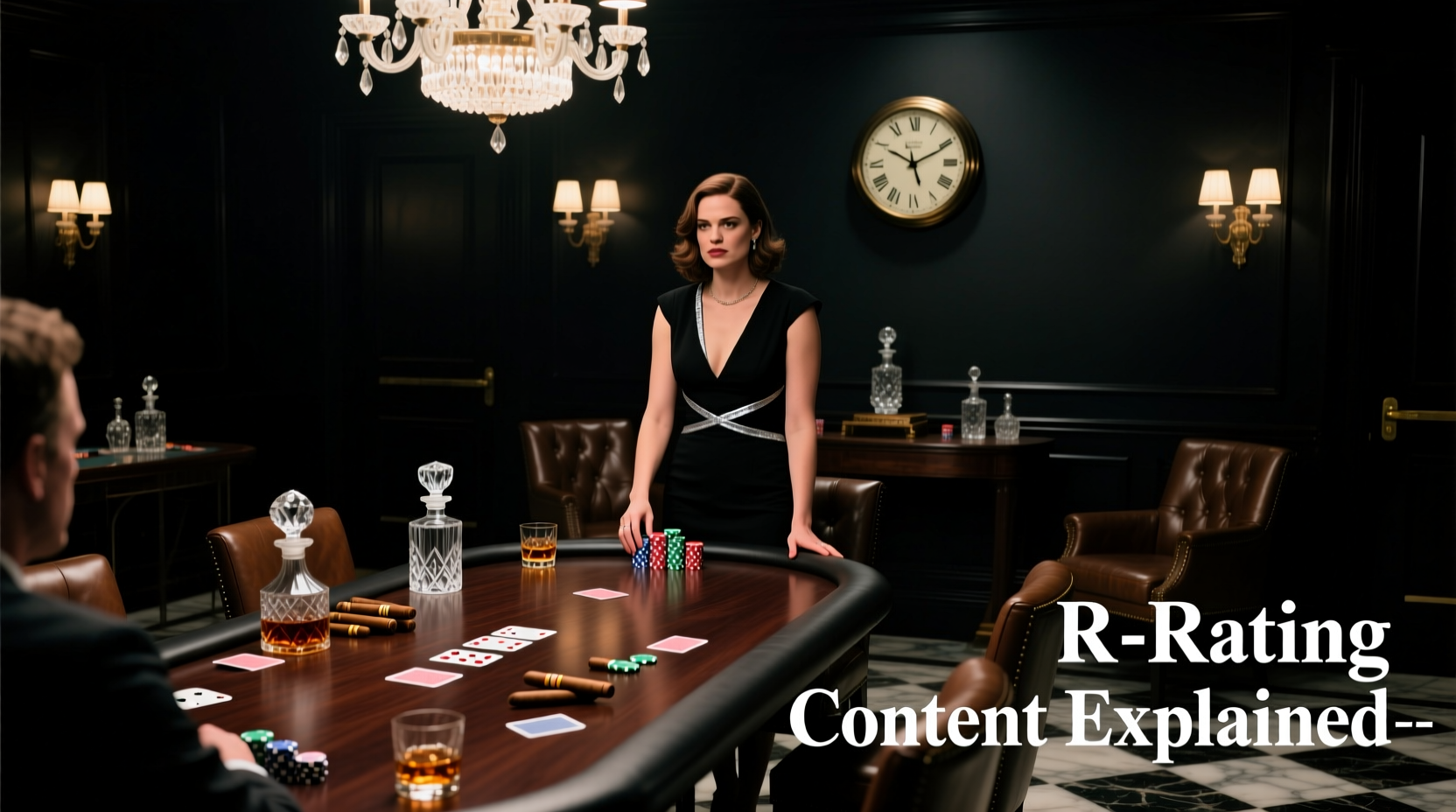
An R rating from the MPAA signifies that the film contains material unsuitable for children under 17 without parental accompaniment. The designation typically stems from strong language, sexual content, drug use, violence, or mature themes. In the case of \"Molly's Game,\" the rating is primarily attributed to pervasive profanity, adult themes, and depictions of substance use—elements woven into the fabric of the story rather than used gratuitously.
The official MPAA rating descriptor for the film reads: “Strong language, drug content, and some nudity.” While brief, this summary points to three key areas that parents, educators, and general audiences should consider when evaluating the film’s appropriateness.
Language: The Driving Force Behind the R Rating
One of the most prominent reasons for the R rating is the film’s extensive use of strong language. Throughout the movie, characters—especially Molly Bloom herself—use explicit profanity as a tool of empowerment, frustration, and realism. The script, adapted from Bloom’s memoir, retains much of the raw, unfiltered speech common in high-stakes environments like underground poker games.
Aaron Sorkin is known for his rapid-fire, dialogue-heavy writing style. In \"Molly's Game,\" this translates into frequent use of expletives, including multiple instances of the F-word. According to linguistic analysis of the film, the word appears over 50 times—a frequency well beyond what the MPAA considers acceptable for a PG-13 rating.
Themes and Content: Power, Risk, and Moral Ambiguity
Beyond language, the film explores complex adult themes such as ambition, corruption, gender dynamics in male-dominated spaces, and the consequences of living outside societal norms. Molly Bloom operates at the intersection of wealth, celebrity, and crime, organizing high-stakes poker games for Hollywood stars, Wall Street moguls, and Russian oligarchs. These environments naturally involve drinking, gambling, and illicit behavior—all presented with minimal gloss.
The narrative doesn’t glorify these actions but instead examines them through a legal and ethical lens, particularly during Molly’s FBI investigation and courtroom scenes. However, the mere depiction of illegal gambling operations, money laundering, and associations with organized crime figures contributes to the film’s mature tone.
“Sorkin doesn’t shy away from showing how power corrupts, even when the protagonist believes she’s playing by her own moral code.” — David Ehrlich, Film Critic, IndieWire
Drug Use and Substance Depiction
Drug use is another contributing factor to the R rating. While there are no prolonged scenes of drug consumption, the film includes references to and brief depictions of cocaine use among players in Molly’s underground games. These moments are not sensationalized but are presented as part of the decadent lifestyle surrounding elite gambling circles.
Molly herself admits to past cocaine use, which becomes relevant during her legal defense. The film uses these disclosures to underscore vulnerability and human fallibility rather than to entertain. Still, any depiction of illegal drug use—even in a cautionary context—can trigger stricter MPAA scrutiny.
Nudity and Sexual Content
The “some nudity” mentioned in the MPAA descriptor refers to non-sexualized but brief partial nudity. One scene features a male character appearing shirtless during a tense moment in a locker room setting. Another involves background extras in revealing attire at a party scene, consistent with the opulent, hedonistic atmosphere of the world Molly inhabits.
There are no explicit sex scenes, but the film does imply sexual relationships and transactions, particularly in discussions about certain players’ behaviors. These implications, combined with suggestive dialogue, reinforce the adult nature of the environment without crossing into explicit territory.
Breakdown of R-Rating Contributors
| Content Category | Presence in Film | MPAA Impact |
|---|---|---|
| Strong Language | Frequent use of F-word and other profanities (>50 instances) | Primary reason for R rating |
| Drug Use | References and brief depictions of cocaine use | Significant contributing factor |
| Nudity | Limited partial nudity (non-sexual contexts) | Minor but noted element |
| Thematic Elements | Illegal gambling, moral ambiguity, FBI investigation | Contextual maturity justification |
| Sexual Content | Suggestive dialogue; implied relationships | Secondary factor |
Is the R Rating Justified?
Some viewers may question whether the R rating is overly strict, especially given the absence of graphic violence or explicit sexual content. However, the cumulative effect of persistent strong language, adult subject matter, and realistic portrayals of illicit activity justifies the classification. The film targets a mature audience capable of engaging with nuanced narratives about ethics, legality, and personal consequence.
It’s worth noting that a PG-13 version would require substantial editing—particularly in reducing profanity—which would compromise the authenticity of Sorkin’s dialogue and the intensity of the performances. The R rating preserves the film’s integrity while serving as a clear signal to audiences about its mature content.
Mini Case Study: A Parent’s Perspective
Sarah, a high school teacher and mother of two teenagers, decided to watch \"Molly's Game\" after hearing praise for its storytelling. She appreciated the film’s intelligence and pacing but chose not to let her 16-year-old son view it due to the language and adult themes. “The swearing wasn’t just occasional—it was constant,” she said. “And while the message about accountability is valuable, the delivery isn’t appropriate for younger teens without guidance.” Her experience reflects a common dilemma: balancing cinematic merit with age-appropriate content.
Viewer Guide: Who Should Watch?
\"Molly's Game\" is best suited for adult audiences and older teens (17+) who can process complex moral questions and tolerate strong language. It can serve as a discussion starter about legality, personal responsibility, and gender roles in business—provided it’s viewed in a thoughtful context.
Checklist: Is This Film Right for You or Your Viewer?
- ☐ Can tolerate frequent strong language (including repeated use of the F-word)
- ☐ Comfortable with discussions of illegal activity and moral gray areas
- ☐ Open to non-graphic but present references to drug use
- ☐ Interested in legal dramas, biographical stories, or high-stakes environments
- ☐ Prepared to engage critically with themes of power, gender, and consequence
Frequently Asked Questions
Can I show \"Molly's Game\" in a high school classroom?
While the film has educational value in subjects like law, ethics, or creative writing, its R rating and strong language make it inappropriate for standard classroom screening without administrative approval and parental consent. Teachers may consider using short, relevant clips with contextual framing instead.
Is there any graphic violence in the film?
No. The film contains no physical violence or gory scenes. Tension arises from dialogue, legal pressure, and psychological stakes rather than physical conflict.
Does the nudity include sexual situations?
No. The nudity is minimal and incidental—such as a character in underwear or partially clothed in a locker room. There are no sex scenes or explicit nudity.
Final Thoughts: Embracing Mature Storytelling
\"Molly's Game\" earns its R rating not through shock value, but through honest, unvarnished storytelling. The language, themes, and content reflect the real-world complexities of Molly Bloom’s journey—from Olympic hopeful to underground poker queen to defendant facing federal charges. The rating serves as a responsible guidepost, ensuring that viewers enter this world with appropriate expectations.
For adults seeking intelligent cinema that challenges as much as it entertains, the film is a compelling choice. Its classification isn’t a barrier, but a marker of its commitment to authenticity and depth.




 浙公网安备
33010002000092号
浙公网安备
33010002000092号 浙B2-20120091-4
Comments
No comments yet. Why don't you start the discussion?